
Last updated November 3, 2026
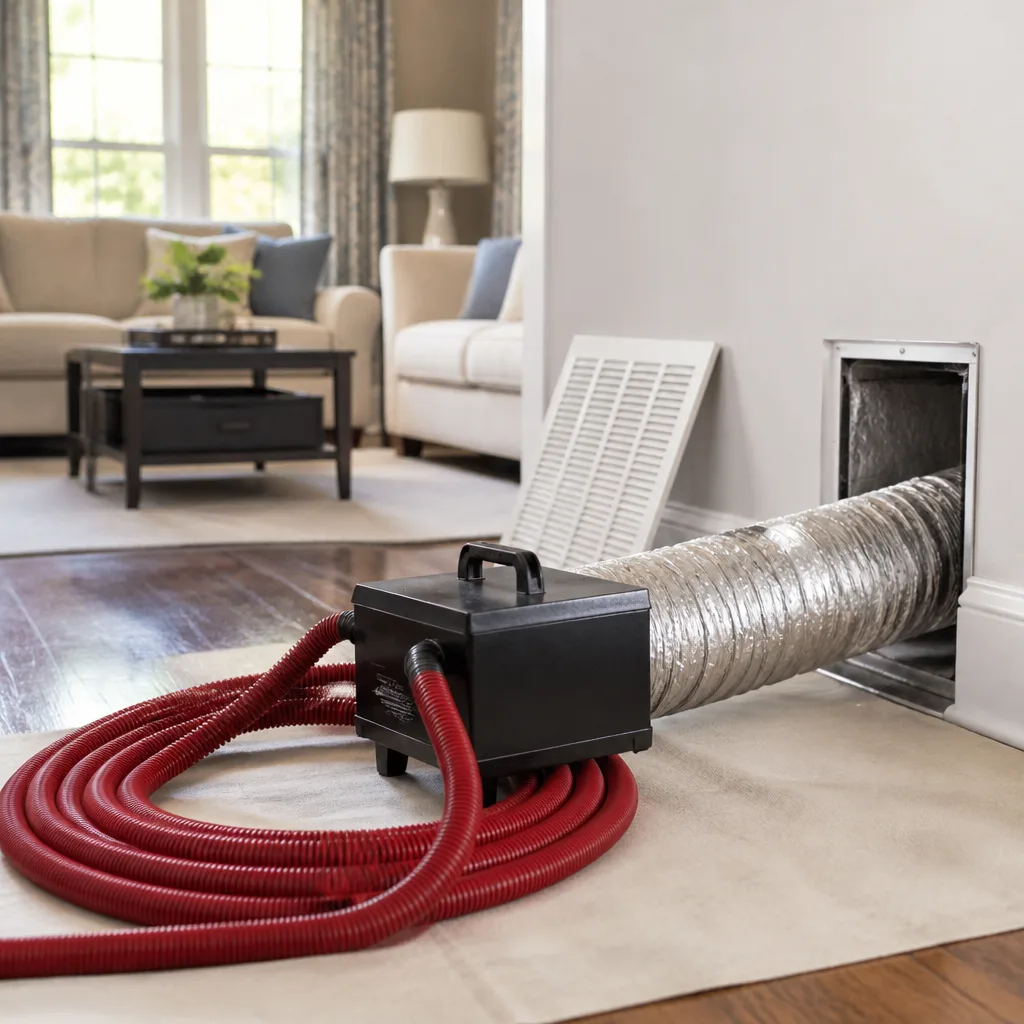 Whole-home duct cleaning
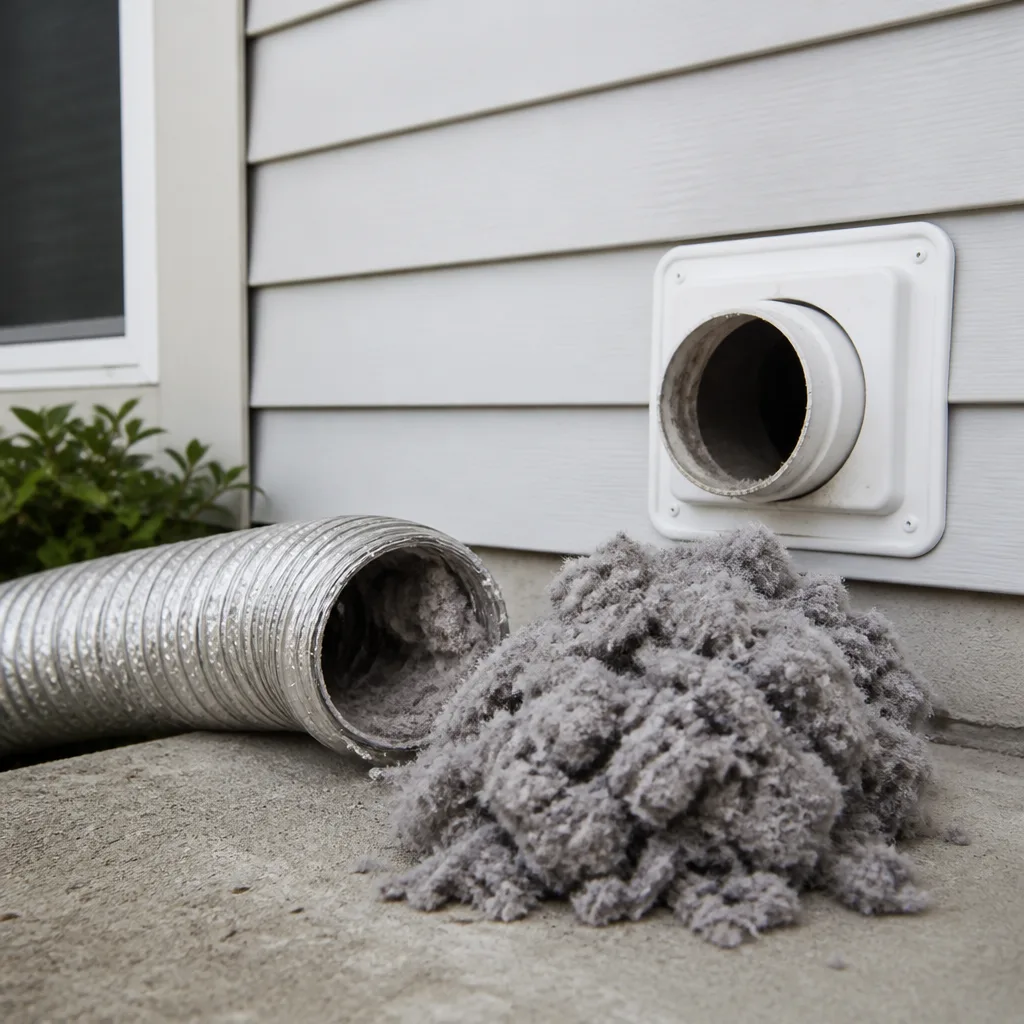 Dryer vent cleaning
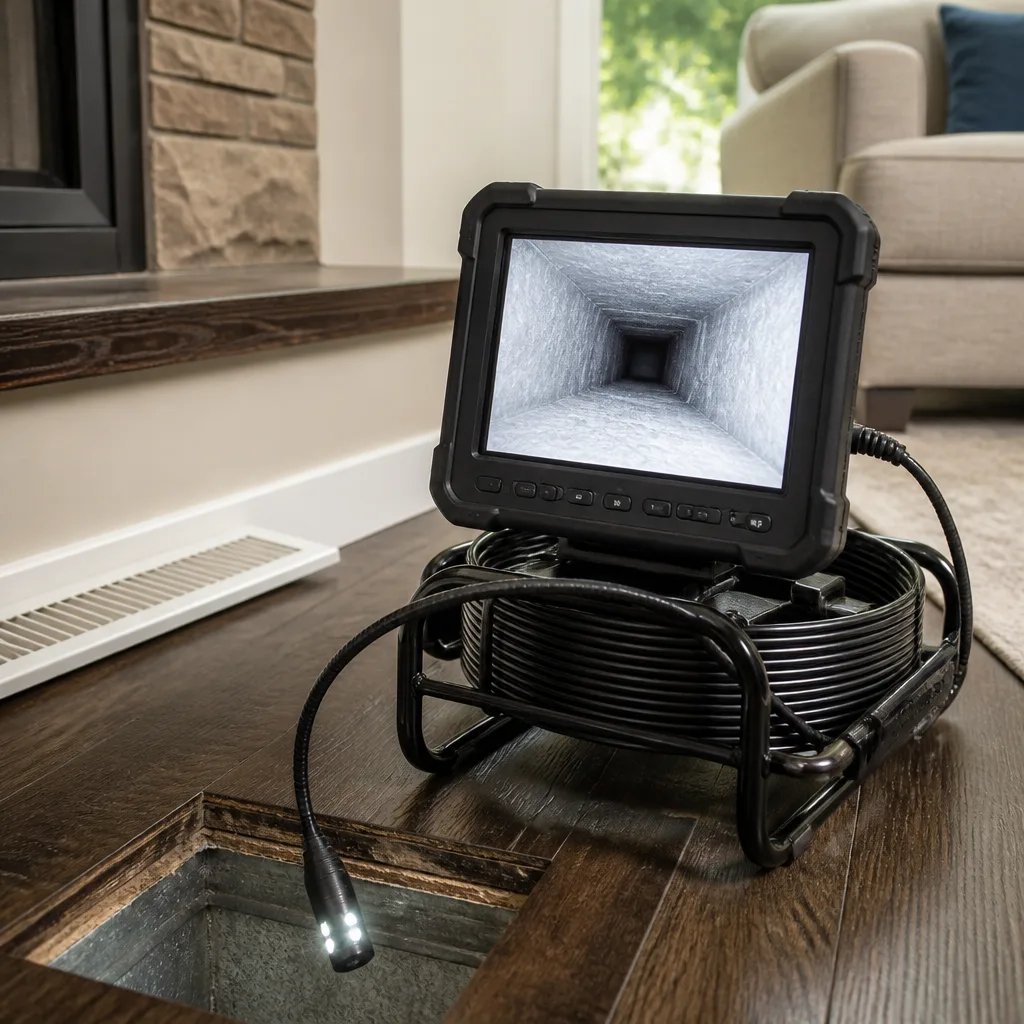 Camera inspection
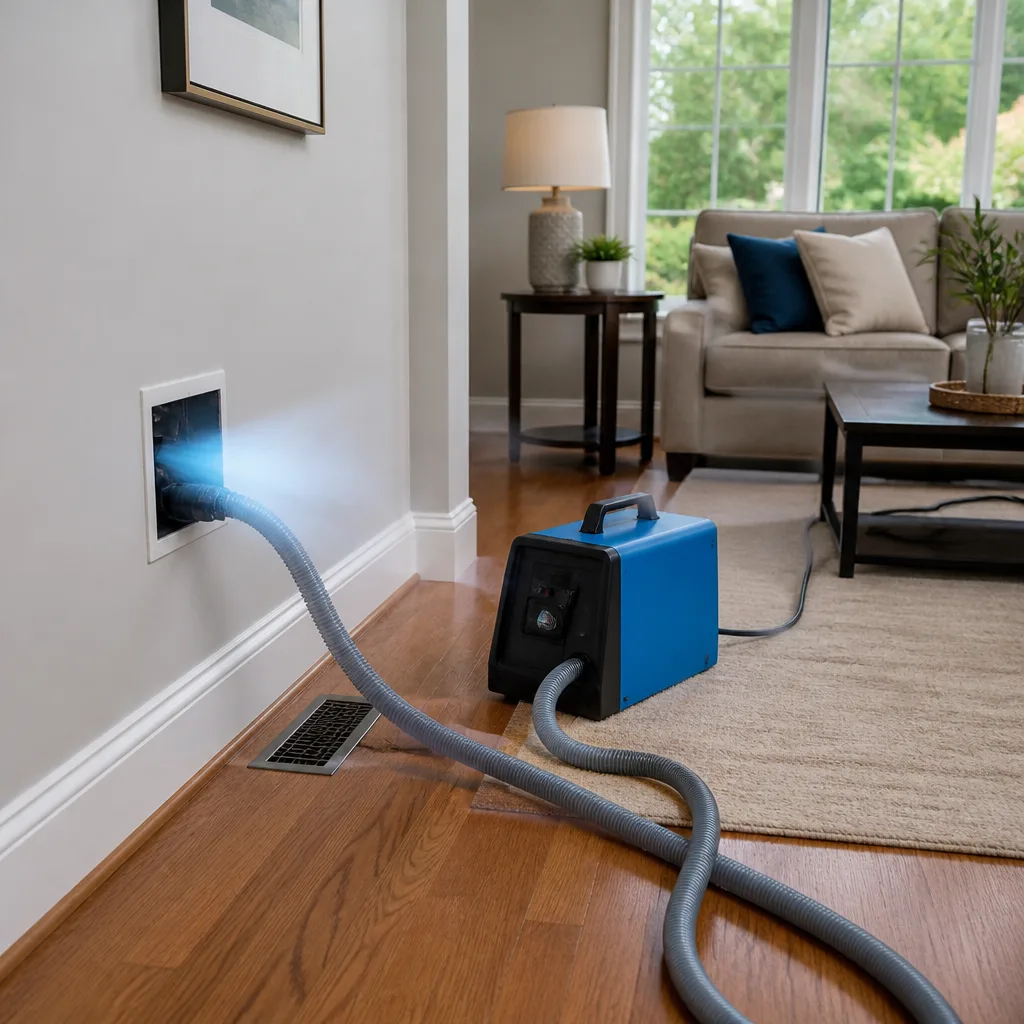 Sanitizing & deodorizing
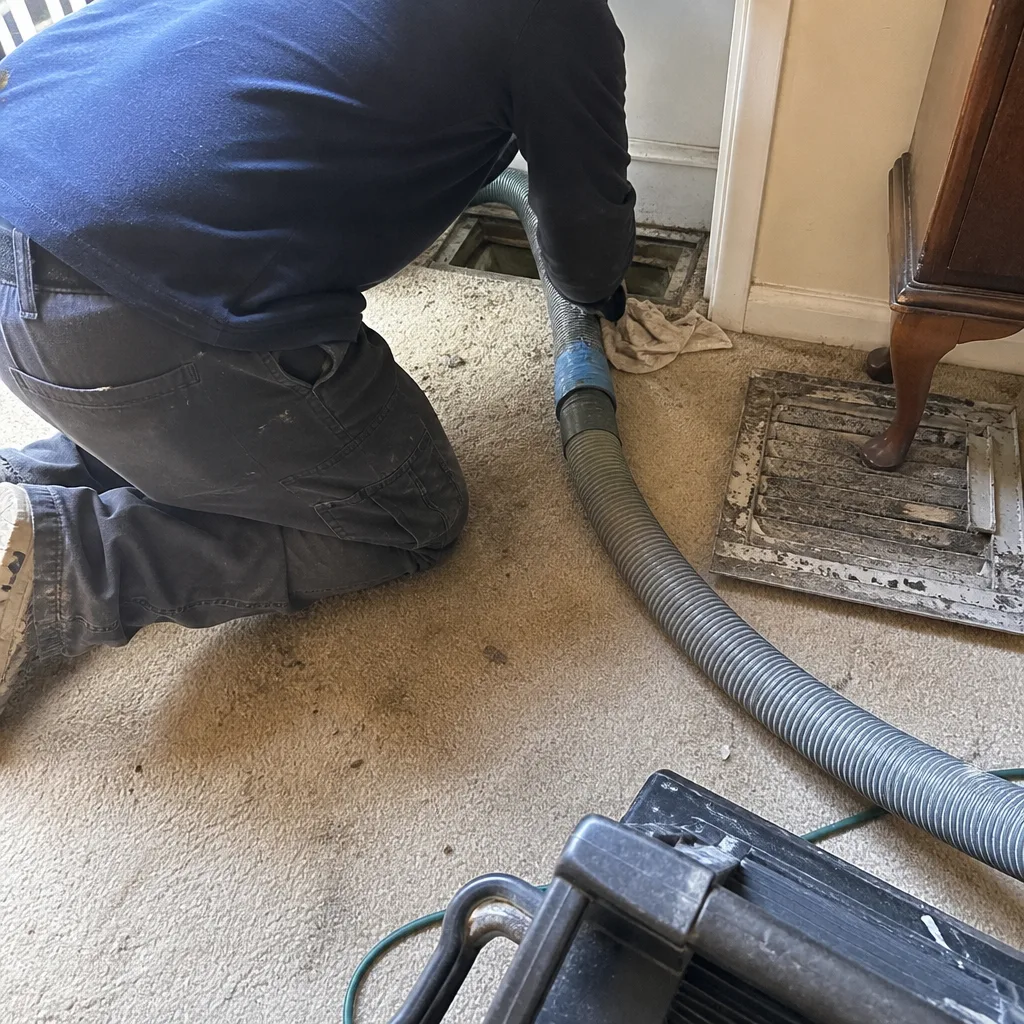
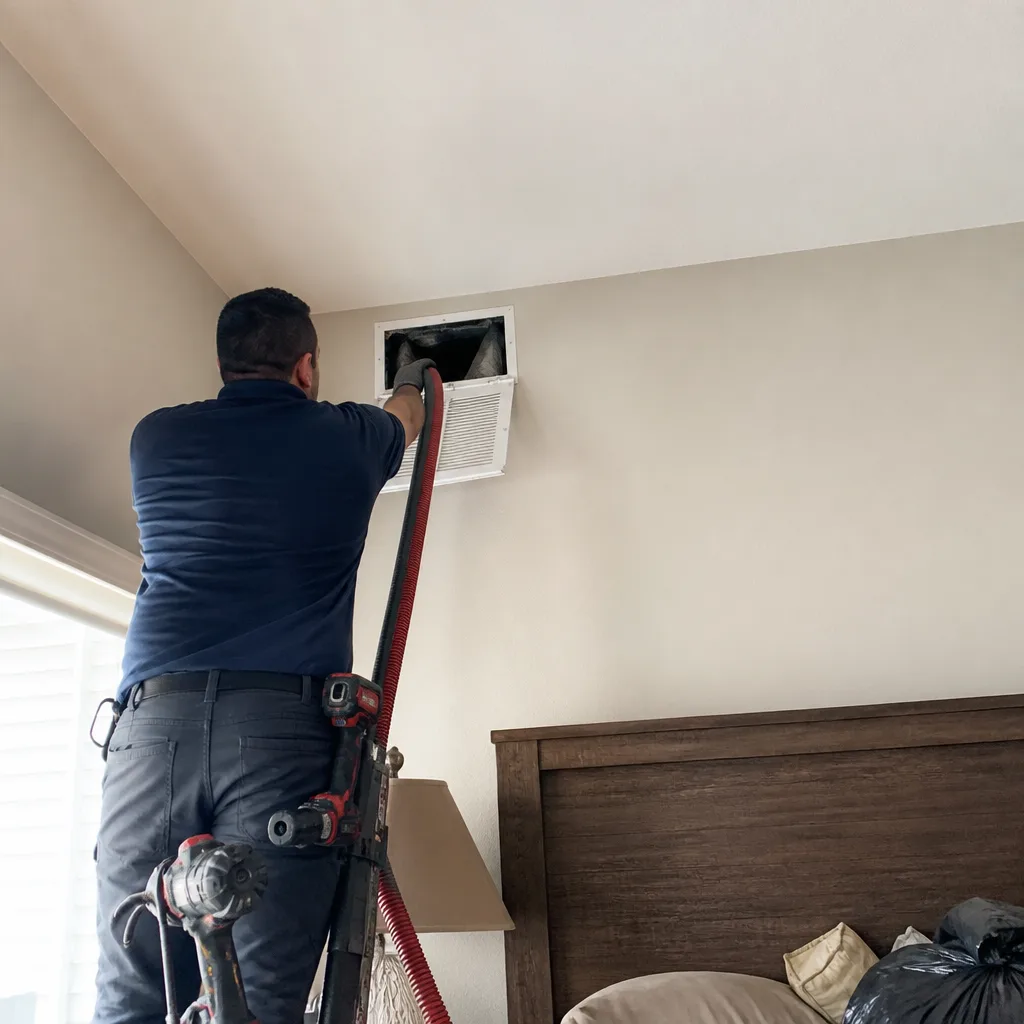
Whole-system duct and dryer vent check with before-and-after photos - you see exactly what came out of your vents
That "$99 whole-house special" is a bait ad - the real number appears once they are in your hallway, or the "clean" is a shop-vac at the register. We photograph the inside of your ducts before and after instead.
Choosing the Right Air Duct Cleaning Brand: A Buyer’s Guide for Dublin
Yelp stars measure customer satisfaction, not cleaning effectiveness. A crew that’s friendly, fast, and leaves no mess can still score 4.8 stars while their 150 CFM portable unit left 60% of your ductwork untouched. When Dublin homeowners ask us how to pick a duct cleaning service, we tell them to look past the review page and ask one question first: what equipment are you bringing to my house? Our Complete Guide to Air Duct Cleaning in Dublin explains why the brand name on the cleaning system matters more than the brand name on the van, how to verify a contractor actually owns the gear they claim, and what professional-grade specifications mean for the air moving through your home. By the end, you’ll know more about duct cleaning equipment than most contractors expect you to know.
Styles & brands we work with
- Whole-home duct cleaning
- Dryer vent cleaning
- Camera inspection
- Sanitizing & deodorizing
Quick Answer
The right Air Duct Cleaning brand for your Dublin home is one backed by a contractor who owns professional-grade rotary brush and negative-air equipment from established manufacturers like Rotobrush, Nikro, or Abatement Technologies, not a generalist HVAC company running a portable shop-style vacuum. In Dublin’s dry, dusty Tri-Valley climate, equipment quality is the single most reliable predictor of whether your ducts get genuinely cleaned or just superficially agitated. Ask for the model names, ask about HEPA filtration capacity, and walk away from any contractor who can’t answer those questions in thirty seconds.
Table of Contents
- Why Equipment Brand Is the Most Reliable Quality Signal
- Rotobrush, Nikro, and Abatement Technologies: What Each System Does
- The Shop-Vac Baseline: Why CFM Numbers Matter in a Dublin Duct System
- Seven Questions to Ask Any Duct Cleaning Contractor Before You Book
- Equipment Investment Signals Business Model: Why $49 Coupons and $40,000 Systems Don’t Mix
- Before-and-After Proof: How to Verify the Work Was Actually Done
- Dublin-Specific Considerations: Climate, Home Styles, and What They Mean for Your Ducts
- Common Mistakes to Avoid
- When to Call a Professional
- Frequently Asked Questions
- The Bottom Line
Why Equipment Brand Is the Most Reliable Quality Signal
Here’s the uncomfortable truth about the duct cleaning industry: entry barriers are low, and regulation is thin. Anyone with a utility van and a consumer-grade vacuum can print business cards and start taking appointments. That means reviews, which reward punctuality and pleasantness, tell you almost nothing about whether the job was done right. The customer can’t see inside their own ducts, so satisfaction is often a measure of the crew’s manners, not their machinery.
Equipment brand, on the other hand, is a signal that’s hard to fake. Professional-grade duct cleaning systems from Rotobrush, Nikro, and Abatement Technologies cost between $15,000 and $40,000 per unit. They require training to operate properly. They’re purchased by companies whose entire business model depends on doing this job repeatedly and well. A contractor who owns a Nikro HEPA system didn’t buy it to run a bait-and-switch coupon operation. The unit economics don’t work.
In Dublin, this matters more than in coastal cities. Our climate produces fine, powdery dust that settles deep into duct runs. Light-agitation equipment stirs that dust up without extracting it, and within weeks it resettles exactly where it started. Agitation paired with proper negative-air extraction is the only method that removes it. The brand of agitation brush and the brand of the vacuum unit together determine whether you get a real cleaning or an expensive dust rearrangement.
We’ve worked on Dublin homes where a previous contractor’s cleaning left visible dust lines a foot into the supply registers. The homeowner paid for a service, the previous company had glowing reviews, and the ducts were never actually cleaned. The tell was always visible after the fact: a consumer-grade vacuum cannot maintain enough airflow volume to pull debris from a 25-foot duct run, period. Knowing the brand names before you book prevents becoming that homeowner.
Rotobrush, Nikro, and Abatement Technologies: What Each System Does
Three manufacturers dominate the professional duct cleaning equipment space, and each was designed for a different part of the job. Understanding what each one does helps you ask smarter questions when evaluating a Dublin contractor.
Rotobrush: The Agitation Workhorse
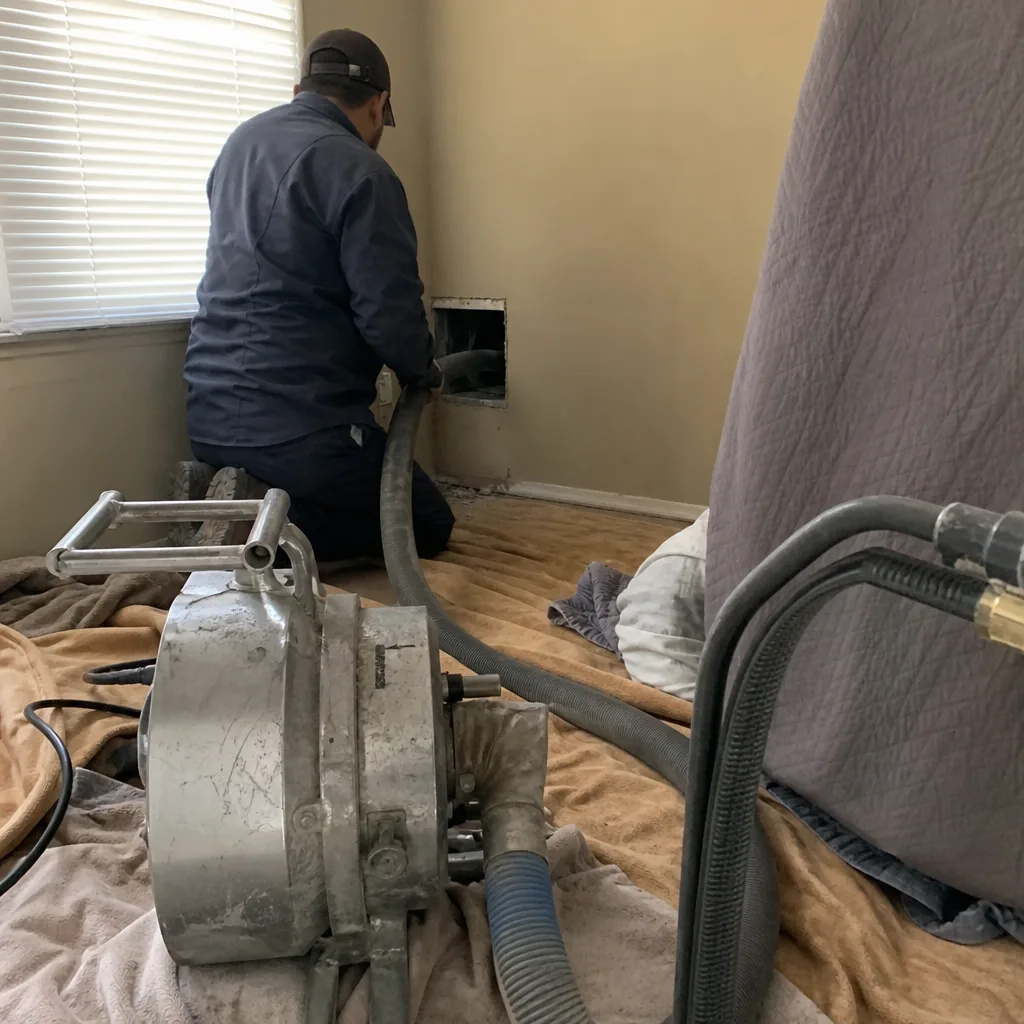
Rotobrush systems use a rotating brush head attached to a flexible shaft that’s fed through the duct system. The brush spins at high speed against the duct walls, physically scrubbing away caked dust, pet hair, and construction debris. The key word is physical. A Rotobrush doesn’t rely on air velocity alone; it mechanically agitates the duct surface, breaking the bond between debris and duct wall that ordinary vacuum suction can’t touch.
In Dublin ranch homes built in the 1960s and 1970s, we regularly encounter duct interiors coated in decades of accumulated kitchen grease mixed with dust. That film, once it cakes, requires mechanical agitation to remove. A vacuum alone, no matter how powerful, slides right over it. Rotobrush equipment is designed for exactly this scenario. It’s the difference between wiping a counter with a dry cloth and scrubbing it with a brush.
Nikro: The HEPA Filtration and Extraction Specialist
Where Rotobrush handles agitation, Nikro systems handle extraction and filtration. Nikro equipment is built around powerful vacuum units rated for continuous professional use, and their higher-end systems incorporate HEPA filtration that captures 99.97% of particles at 0.3 microns. For Dublin homeowners with allergy or asthma concerns, that filtration spec is not a marketing detail. It means the particles dislodged during cleaning are trapped inside the machine, not exhausted back into your living room through an inferior filter.
We run both Rotobrush and Nikro systems because one is an agitation tool and the other is an extraction tool. Contractors who own only one system are either doing half the job or renting the other half. A company that owns both made a deliberate equipment investment that signals they understand the complete cleaning process. That’s worth asking about directly.
Abatement Technologies: Remediation-Grade Containment
Abatement Technologies built its reputation in the asbestos and mold abatement industry, where containment is a safety requirement, not a courtesy. Their negative-air machines and filtration units create a controlled pressure differential: air moves into the containment zone, passes through HEPA filtration, and exits clean. In a residential duct cleaning context, this level of containment prevents dust from migrating into your home during the cleaning process.
We use Abatement Technologies negative-air equipment on Dublin jobs because the alternative is unacceptable: a contractor cleans your ducts while fine dust leaks from access points into your hallways, bedrooms, and kitchen. You shouldn’t have to vacuum your house after paying someone to clean your ducts. The brand name matters here because Abatement Technologies doesn’t make consumer-grade equipment. Their entry point is professional remediation, and that’s the standard we want for every residential job.
The Shop-Vac Baseline: Why CFM Numbers Matter in a Dublin Duct System
Let’s talk numbers. CFM, or cubic feet per minute, measures how much air a vacuum system moves. It’s the single most important specification in duct cleaning, and it’s where consumer equipment fails decisively.
A typical consumer shop vacuum moves between 100 and 180 CFM at the hose inlet. That sounds adequate until you understand what’s happening inside a duct. When you insert a vacuum hose into a duct system, the airflow has to travel the length of the duct run, pick up debris, and carry it back to the collection chamber. Every foot of duct, every bend, every register opening introduces resistance. By the time a 150 CFM consumer vacuum reaches 15 feet into a supply run, the effective airflow at the cleaning point is negligible. The vacuum is making noise, but it’s not extracting anything.
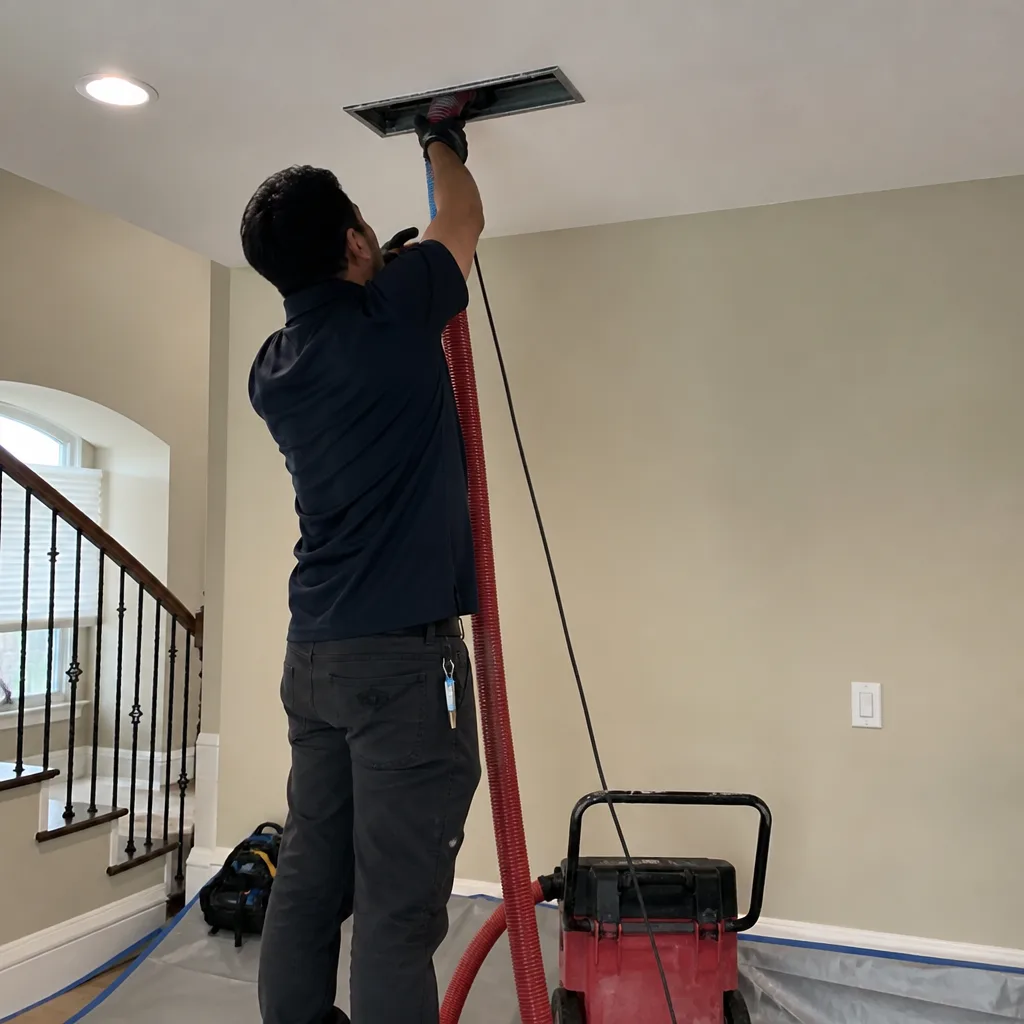
Professional duct cleaning systems are designed to overcome this distance loss. A properly configured Nikro vacuum unit moves 4,000 to 6,000 CFM at the collection point, connected to the duct system through a sealed access port rather than a flimsy hose crammed through a register opening. That airflow volume is why professional systems extract debris from a 30-foot duct run in a two-story Dublin home. The vacuum is pulling from the far end, not pushing through the near end.
The CFM gap explains why the most common complaint we hear from Dublin homeowners is “the last company cleaned but the dust came back in three months.” The dust never left. It was loosened, redistributed, and left in place. When we bring Rotobrush agitation and Nikro extraction capabilities into the same duct system, the debris is physically scrubbed free and then transported out under serious airflow. That’s the difference between cleaning a duct and rearranging dust.
Seven Questions to Ask Any Duct Cleaning Contractor Before You Book
A contractor with real equipment will answer these questions quickly and specifically. A contractor borrowing brand names from competitors’ websites will hesitate, deflect, or give vague answers. Here’s what to ask, in order:
- What specific equipment models do you own and operate? Listen for actual model names, not just brand names. “We use a Rotobrush” is vague. “We run a Rotobrush aiR+ PRO and a Nikro NIKRO 1000” tells you they own and understand their equipment.
- Do you use negative-air containment during cleaning? The correct answer is yes. Negative air pressure keeps dislodged dust from wandering into your home. If the contractor doesn’t understand the question, that’s your answer.
- What HEPA filtration capacity does your extraction system provide? Professional systems should filter through HEPA media rated at 99.97% efficiency at 0.3 microns. If they can’t name a filtration spec, assume it’s a standard shop filter.
- How do you access the duct system for cleaning? Professional crews cut or access at the plenum or create sealed access points. Consumer-grade operations shove a hose through the register opening, which reduces effective airflow dramatically.
- Can you show me before-and-after documentation from a previous job in Dublin? Ask specifically for duct wall depth photos or scope video. A photo of a clean register face is not proof of duct work. A video showing the duct wall at depth is.
- Do you also inspect and repair ductwork during the job? Air duct repair in Dublin is a separate discipline from cleaning. A contractor who only cleans and never flags damage is leaving money and air quality on the table. The best companies identify leaks, broken seals, and crushed sections while they’re in there.
- What happens if I’m not satisfied with the cleaning? Listen for a concrete answer, not a vague promise. The answer should involve re-cleaning, not a coupon for next time. Strong contractors stand behind their process because their equipment produces consistent results.
These questions don’t require you to become an equipment expert. They require the contractor to demonstrate that they are one. When someone answers all seven clearly and without hesitation, you’ve found a company that owns its equipment and knows how to use it. That’s the company you want in your Dublin home.
Equipment Investment Signals Business Model: Why $49 Coupons and $40,000 Systems Don’t Mix
Let’s talk about the economics of duct cleaning, because they explain nearly everything about why some Dublin homeowners get exceptional service while others get a coupon and a disappointment.
A professional-grade Rotobrush system costs between $15,000 and $25,000 depending on configuration. A Nikro extraction unit runs $5,000 to $15,000 for serious HEPA-equipped models. Abatement Technologies negative-air machines start around $3,000 and climb quickly. Add the van, the training, the insurance, and the labor, and a properly equipped duct cleaning operation represents a six-figure capital investment before the first job is booked.
Now consider the $49 whole-house duct cleaning coupon that circulates through Dublin mailbox flyers. For that price, the company has to complete the job in under an hour, pay a technician, cover fuel, and still turn a profit. That math only works with one method: a portable vacuum through the register openings, a quick surface pass, and out the door. The technician might be perfectly polite. The job might even “look” done from the register face. But no amount of goodwill changes the physics: a $49 service cannot deploy the equipment required to actually clean a residential duct system.
The equipment investment signals something deeper about the business model. A contractor who spent $40,000 on professional cleaning systems built their business around doing this job repeatedly, with a reputation that sustains repeat and referral work. Their revenue comes from quality outcomes and long-term customer relationships, not from high-volume, low-quality one-time jobs. When you see air duct cleaning in Dublin priced at honest market rates, that’s not premium pricing. That’s the cost of equipment that actually works.
We see the results of this dynamic all the time in Dublin homes. Somebody books the low-price crew, the ducts are superficially agitated, and six months later the dust is back and the homeowner is paying for the job again, this time with a real contractor. The coupon wasn’t a discount. It was a down payment on doing the job twice.
Before-and-After Proof: How to Verify the Work Was Actually Done
The single most preventable scam in duct cleaning is the before-and-after photo that proves nothing. Here’s how it works: the contractor photographs a register grille before cleaning, showing a layer of dust on the visible surface. Then they photograph the same grille after wiping it with a cloth. The “before and after” looks convincing, and the homeowner has no idea the photos captured a cosmetic wipe, not a duct cleaning.
The actual proof of cleaning lives deeper. The duct wall surface, three feet or more into the run, is where accumulated debris collects. That’s what needs to be photographed before and after. The right documentation comes from a scope camera or duct inspection camera pushed into the duct run itself. Look for these specific elements in the documentation:
- Depth reference: Photos should show the actual duct interior wall, not just the register opening or the first few inches of pipe.
- Lighting consistency: Before and after photos should use similar lighting conditions. A dark “before” next to a brightly lit “after” is a red flag.
- Time stamps or job references: The photos should clearly correspond to your specific job, not a stock library of someone else’s ducts.
- Coverage of multiple locations: A real duct cleaning documents several duct runs, not one photogenic spot near the air handler.
- Video when available: A video walkthrough of the duct interior is even stronger evidence than stills. It shows the full circumference of the duct, not a single framed angle.
Ask before you book what documentation the contractor provides. The answer tells you a lot. “We take photos” is weak. “We run an inspection camera through every major duct run and provide you with before-and-after documentation at depth” is the answer of a contractor who has nothing to hide. If you can see the duct wall condition in the before photo and the cleaned surface in the after photo, you’re looking at proof of work. If you’re only seeing register faces, you’re looking at a wipe-down.
One more note: documentation also matters for verifying the condition of the ductwork itself. A scope camera often reveals damage that cleaning alone can’t address: separated seams, crushed sections, rodent intrusion. We flag these findings because duct repair and cleaning solve different problems, and pretending otherwise wastes your money. Clean ducts with a gaping leak still pull attic air into your living space. The cleaning is part of the picture, not the whole picture.
Dublin-Specific Considerations: Climate, Home Styles, and What They Mean for Your Ducts
Dublin’s climate shapes what ends up in your ducts, and that shapes what kind of equipment the job demands. We live and work here, and we’ve seen how the Tri-Valley’s specific conditions affect duct systems differently than homes in Oakland or San Francisco.
First, the dust. Dublin sits in a valley that channels wind through the foothills, and the region’s dry summers produce fine, powdery dust that finds its way into every home. It’s not the heavy, greasy dust of urban environments. It’s lighter, easier to dislodge, and easier to redistribute if the extraction system isn’t strong enough. That fine dust settles deep into ducts, and light agitation simply suspends it in the air column, where it resettles after the cleaning crew leaves. Strong negative-air extraction is not optional in Dublin. It’s the bare minimum for actually removing the material.
Second, the home stock. Dublin’s housing boom came in waves: ranch homes from the 1960s and 1970s, two-story homes from the 1980s through 2000s, and newer construction in the eastern hills. Each generation has different duct characteristics. Older ranches often have rigid metal ducts that have never been cleaned in forty years. Those need serious mechanical agitation to break through decades of accumulation. Newer homes have flexible ductwork in attic spaces, which is more fragile and requires equipment that cleans effectively without tearing the material. A contractor running a single equipment setup without adapting to the duct type is guessing, not cleaning.
Third, the seasonal dynamic. Dublin summers push air conditioning systems hard, and that means duct systems cycle constantly. Every time the blower runs, it distributes whatever is in the ducts. If the ducts haven’t been cleaned in years, that’s decades of accumulated particulate blasting through your registers every cycle. Homeowners with allergy issues notice it most in the summer and fall, when systems run most frequently. This is also when we see increased demand for dryer vent cleaning in Dublin, because dry summer lint in a dryer exhaust is a fire hazard that compounds with every load.
Finally, the air quality awareness angle. Dublin homeowners increasingly invest in whole-house air quality systems from Aprilaire and Honeywell, whether that’s a whole-home dehumidifier, a media filter cabinet, or a full filtration setup. Those systems work best when the ductwork they’re installed in is clean. A Honeywell media filter can’t compensate for a duct system packed with old debris. If you’ve invested in premium air quality equipment, the duct cleaning contractor you choose should be familiar with those systems and how cleaning interacts with them. The wrong equipment can damage filters, dislodge sensors, or introduce moisture where a humidifier expects dry airflow. We work with these systems regularly because Dublin homeowners with Aprilaire and Honeywell installations are exactly the kind of customer who expects more from a duct cleaning than a surface pass.
Common Mistakes to Avoid
- Choosing based on the lowest price without asking about equipment. The $49 or $99 “whole-house” cleaning almost never involves professional-grade extraction equipment. It’s a surface pass with a vacuum hose, and the dust returns within months. In Dublin’s fine-dust climate, this is a near guarantee.
- Accepting before-and-after photos of register faces as proof of work. A clean grille is not a clean duct. Demand depth documentation with a scope camera, showing the actual duct wall surface before and after.
- Assuming all contractors use the same equipment. The gap between a consumer shop vacuum and a Nikro HEPA extraction unit is measured in thousands of CFM and in actual cleaning outcomes. Never assume parity.
- Ignoring dryer vent cleaning as a separate service. Your dryer vent is part of your duct health picture, and a clogged vent is a fire risk. In Dublin, where summer lint dries quickly and accumulates fast, this is not an upsell. It’s a separate fire-safety service.
- Treating cleaning and repair as interchangeable. Cleaning removes debris. Repair fixes leaks, separations, and crushed sections. A company that only cleans and never flags damage isn’t giving you the full picture.
- Choosing a contractor who can’t name their equipment. If you ask “what system do you use?” and get a vague answer about “professional-grade tools,” you’re talking to someone who doesn’t own professional equipment. Walk away.
- Assuming a Google rating reflects cleaning quality. Reviews measure customer experience, not duct wall condition. A five-star crew with a shop vac left dust in the ducts. The rating and the outcome are unrelated.
When to Call a Professional
Duct cleaning is not a DIY project, and it’s not a handyman task. The equipment required to do it correctly costs more than a used car, and the training to operate it safely takes months. If you’ve noticed visible dust blowing from registers when your system starts, if your home has never had its ducts cleaned despite being more than a decade old, or if you see mold-like growth or pest evidence around register openings, it’s time. If you just moved into a Dublin home with unknown duct history, it’s time. If someone in your household has allergy or asthma symptoms that improve away from home, it’s time. Duct Cleaning Dublin offers free estimates for Dublin homeowners. Call (855) 356-4417 and ask about the equipment we use. If the person who answers can’t tell you, call someone else.
Frequently Asked Questions
In Dublin, professional air duct cleaning for a standard single-family home typically ranges from $450 to $900 for a complete system, depending on home size, number of duct runs, and the level of buildup. For a deeper dive into the process, see our Complete Air Duct Cleaning Guide for Dublin Homeowners. Homes with multiple HVAC zones, older ductwork, or never-cleaned systems run higher. The range reflects the cost of running professional-grade equipment from manufacturers like Rotobrush and Nikro, with proper negative-air containment. A quote significantly below this range almost certainly means consumer-grade equipment and a surface pass that won’t remove deep dust from Dublin’s dry-climate homes. Call (855) 356-4417 for an exact quote on your Dublin home. Estimates are free.
Because most cheap duct cleaning quotes are for a fundamentally different service that uses a portable vacuum through the register openings instead of professional extraction equipment. The equipment required to genuinely clean a residential duct system costs $20,000 to $50,000 for a proper setup, and that investment has to be amortized across every job. A $99 “whole-house” cleaning uses a shop vacuum that moves 150 CFM at the inlet, while professional systems move 4,000 to 6,000 CFM at the collection point. The cheap quote isn’t a discount on the same service. It’s the price of a different, less effective procedure. In Dublin specifically, where fine dust settles deep into duct runs, the cheaper service often leaves most of the material in place.
You know the work was actually done when the contractor provides depth documentation showing the duct wall surface before and after cleaning, captured with an inspection camera or scope, not photographs of register faces. Request this documentation before you book. Ask specifically for video of the duct interior at depth. A contractor who can’t or won’t provide depth evidence is telling you something important about their process. After the cleaning, you should also notice reduced dust accumulation on surfaces in the weeks following the service. In Dublin homes with significant buildup, the difference is usually noticeable within the first two weeks. Call (855) 356-4417 to ask about our documentation process.
In Dublin’s dry, dusty Tri-Valley climate, most homes benefit from professional duct cleaning every 3 to 5 years. Homes with pets, recent renovations, allergy or asthma sufferers in the household, or duct systems older than two decades should consider cleaning every 2 to 3 years. New construction dust settles into ducts within the first year, so a newer home is not automatically a clean one. The interval depends on how much material accumulates, which depends on internal and external factors. A good rule: if visible dust blows from registers when the system starts, you’re overdue.
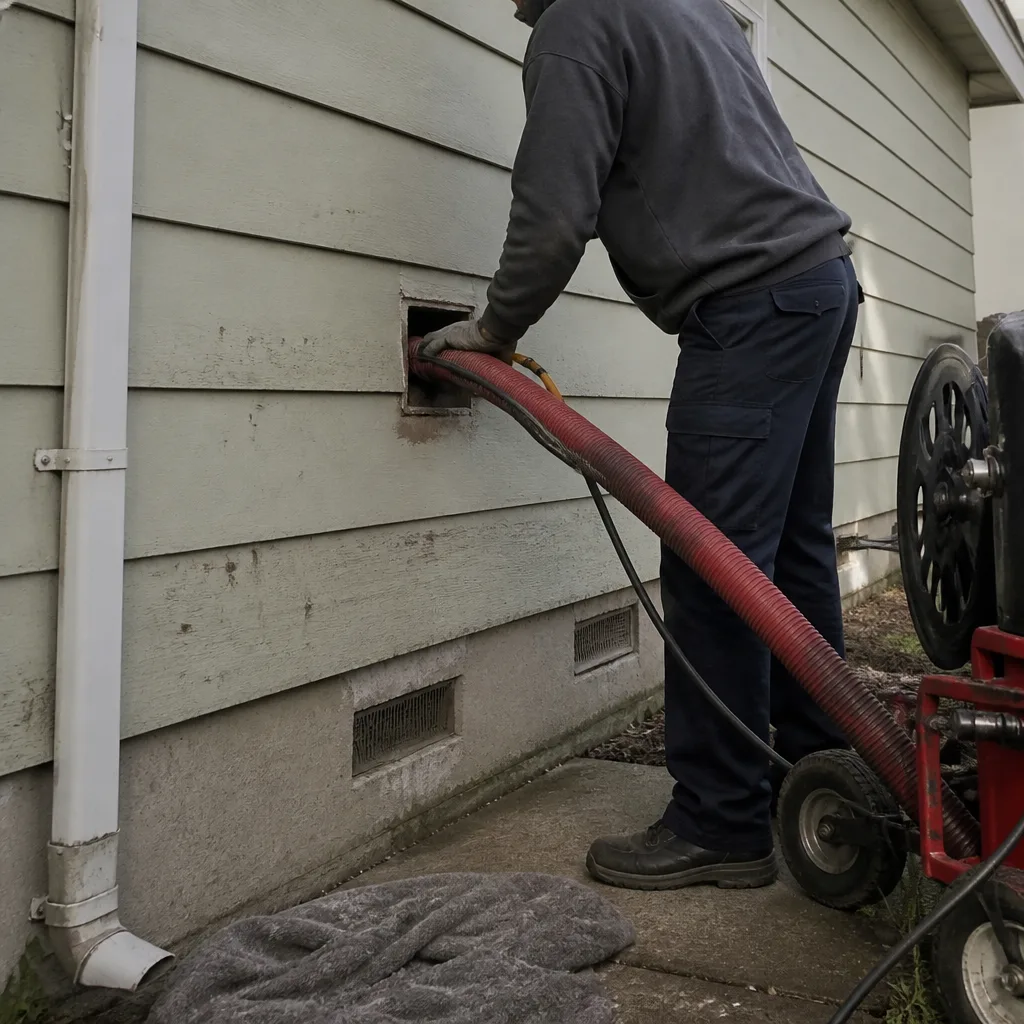
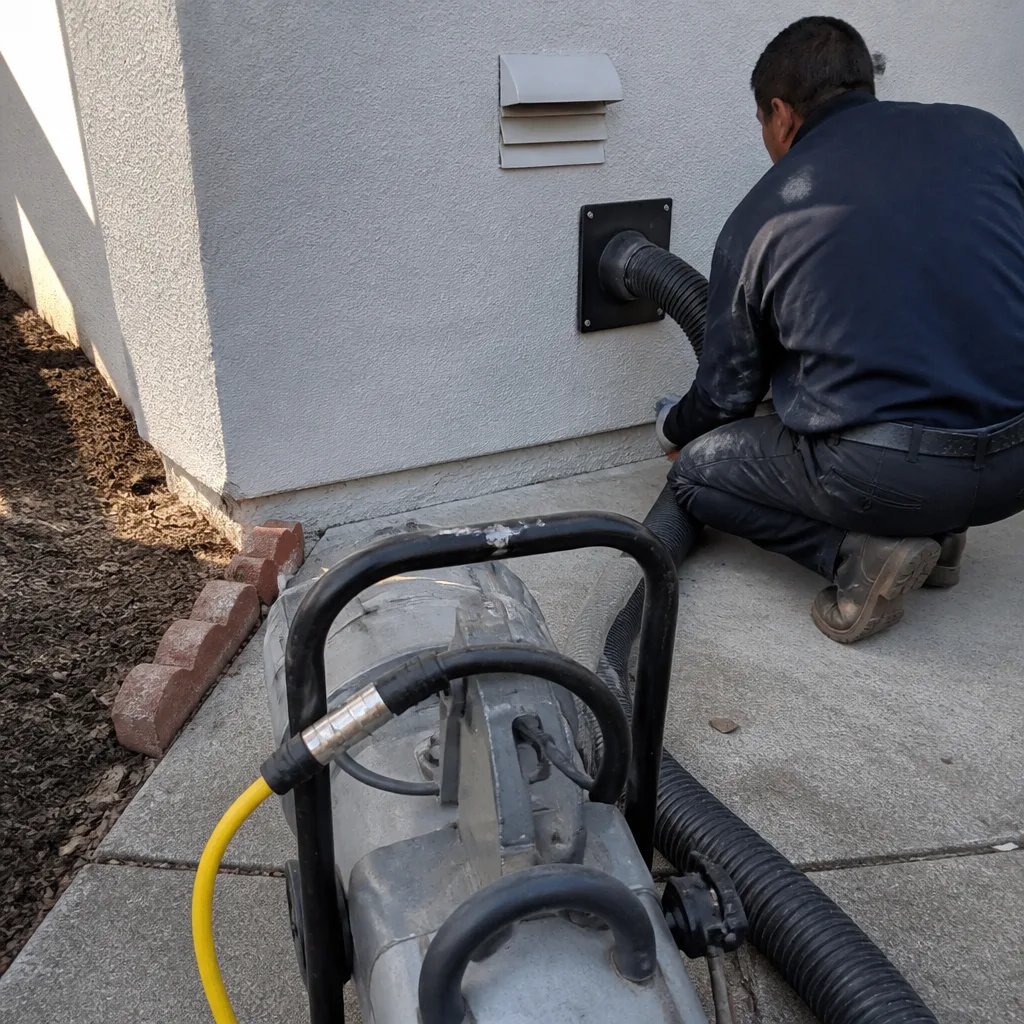
Dryer vent cleaning is a distinct fire-prevention service, not a courtesy add-on. Lint accumulation in a dryer vent restricts airflow and creates a genuine fire hazard; the U.S. Fire Administration identifies dryer vent fires as a leading cause of residential fires annually. In Dublin’s dry summer months, lint inside a vent dries quickly and becomes more combustible. If your dryer takes longer than 45 minutes to dry a normal load, if the exterior vent flap doesn’t open fully, or if the laundry room feels warm during operation, the vent needs attention. We treat it as a separate, serious service, not a checkbox.
Cleaning ducts before listing a Dublin home removes a common buyer objection and demonstrates that the mechanical systems have been maintained, especially in older ranch and two-story homes where buyers expect deferred maintenance. In a competitive Dublin market, buyers notice visible dust around registers and inquire about duct condition during inspections. A pre-listing cleaning with depth documentation also gives you evidence to present during negotiations. For homes with whole-house air quality systems like those from Aprilaire or Honeywell, cleaned ducts make those features more credible to buyers who understand what they’re looking at.
The Bottom Line
Choosing the right air duct cleaning brand in Dublin comes down to equipment, not adjectives. The brand names that matter are on the cleaning systems themselves: Rotobrush for mechanical agitation, Nikro for HEPA extraction, Abatement Technologies for containment. A contractor who owns this equipment made a capital investment that only makes sense in a business built on doing the job properly. A contractor who runs a portable vacuum made no such investment, and the physics of airflow mean their service cannot deliver the outcome you’re paying for. Ask the seven equipment questions, demand depth documentation of the work, and treat suspiciously cheap quotes as what they are: a different service with a lower ceiling for quality. The air in your Dublin home moves through those ducts every day. What’s in them matters. Choose accordingly.
Written by the team at Duct Cleaning Dublin, serving Dublin since 2017.
See the difference
 Before
 After
 Before
 After
 Before
 After