
Last updated November 3, 2026
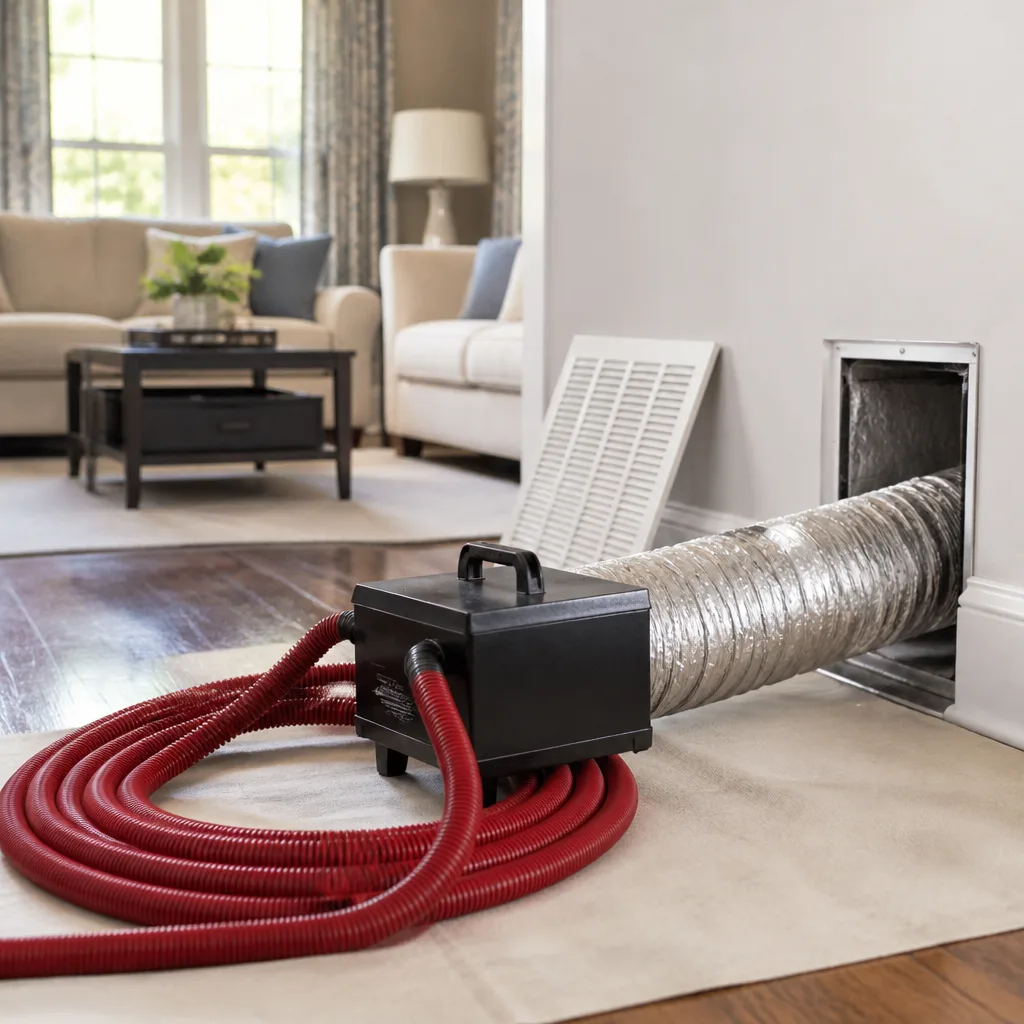 Whole-home duct cleaning
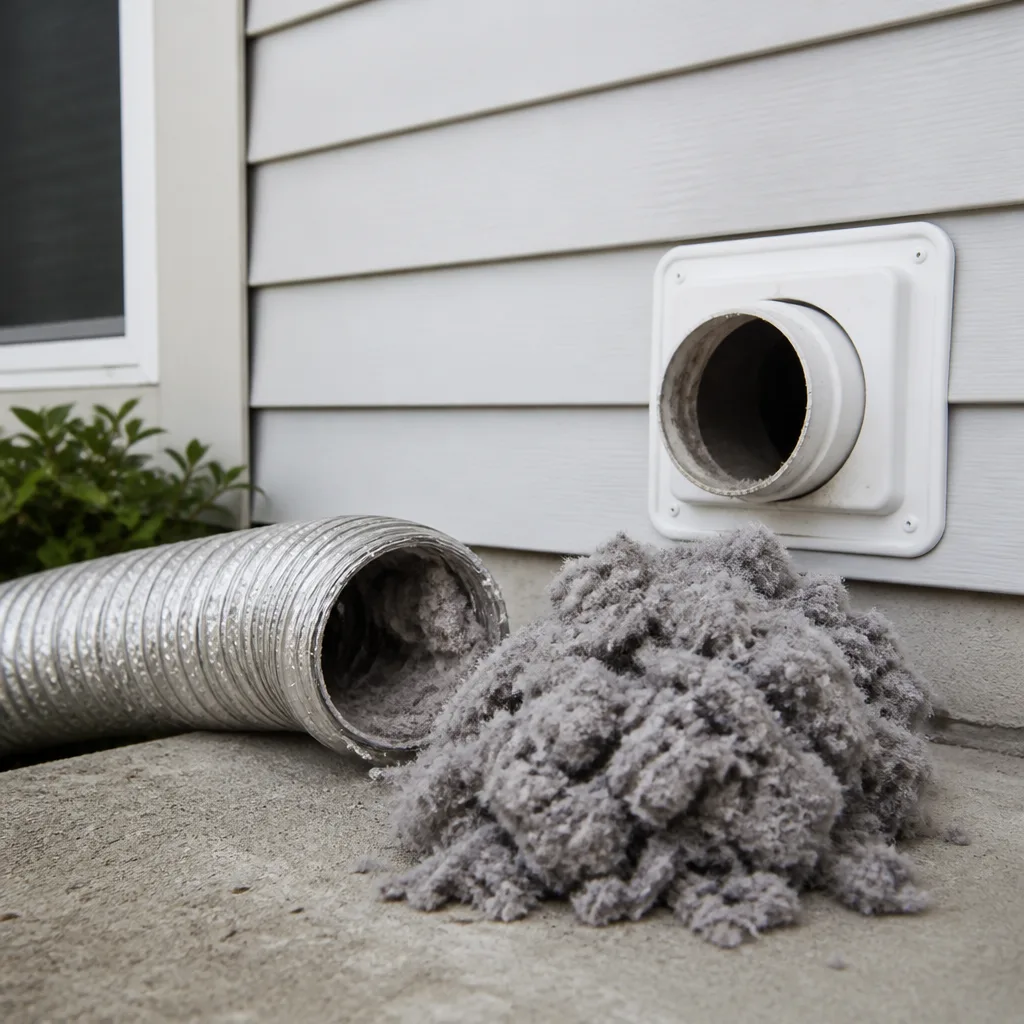 Dryer vent cleaning
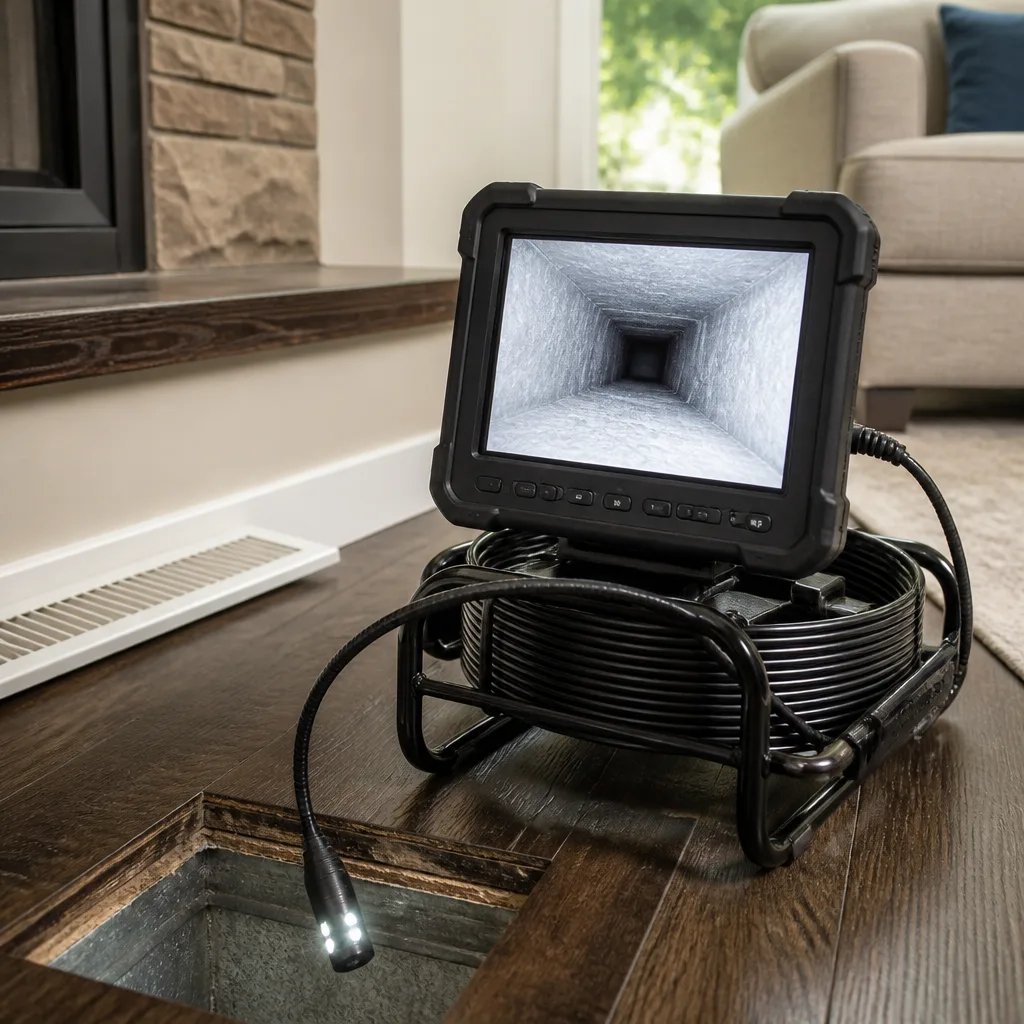 Camera inspection
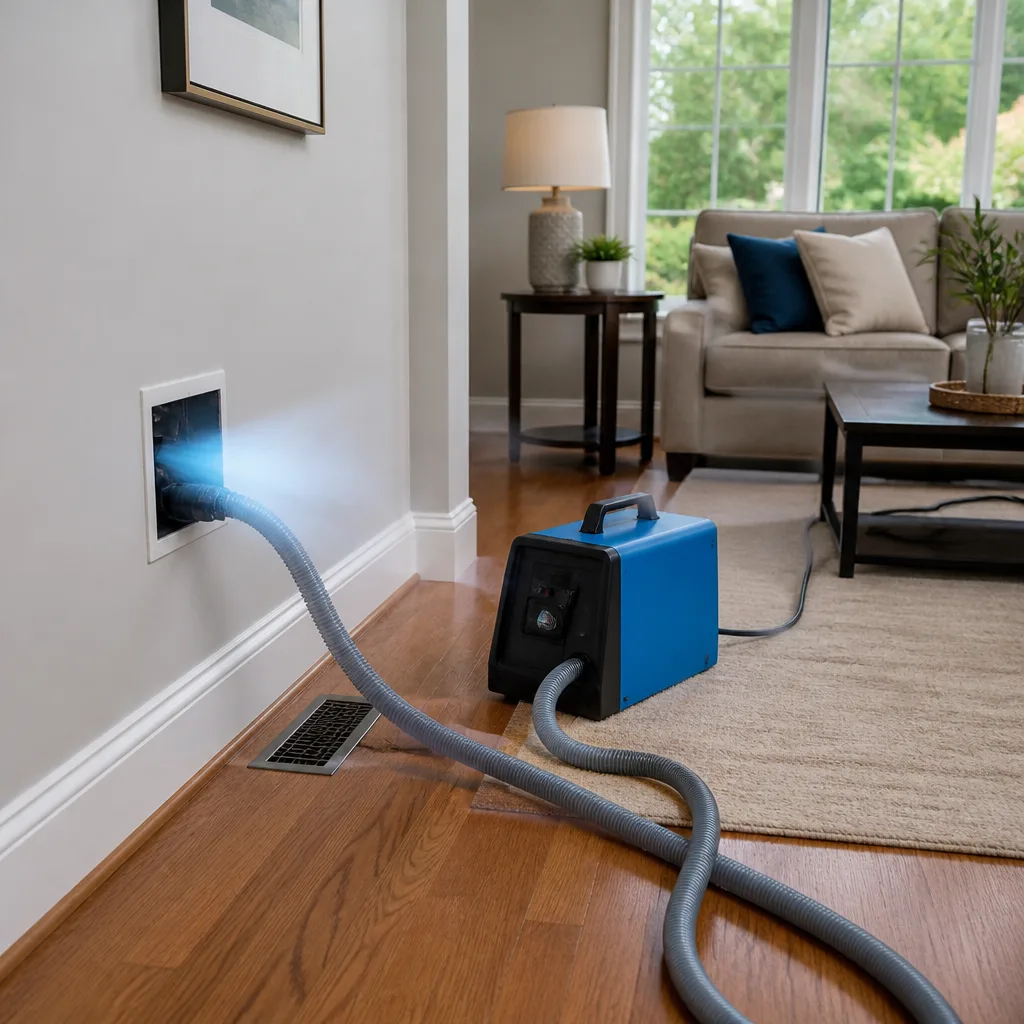 Sanitizing & deodorizing
Whole-system duct and dryer vent check with before-and-after photos - you see exactly what came out of your vents
That "$99 whole-house special" is a bait ad - the real number appears once they are in your hallway, or the "clean" is a shop-vac at the register. We photograph the inside of your ducts before and after instead.
The Complete Air Duct Cleaning Guide for Dublin Homeowners
The NADCA recommends cleaning air ducts every 3 to 5 years, but that number was never calculated for a ZIP code where Tri-Valley winds push fine particulate through attic crawlspaces six months a year. Dublin sits at the eastern edge of the coastal fog belt, which means we get the dry inland heat that bakes dust into ductwork plus enough damp shoulder-season air to glue it in place. This guide walks you through how Dublin’s specific climate affects your ducts, what a real cleaning involves, how to inspect your own system before calling anyone, and when cleaning alone won’t solve the problem. For more detail, see The Complete Guide to Air Duct Cleaning in Dublin.
Quick Answer
Air duct cleaning in Dublin should be done every 2 to 4 years, not the national average of 3 to 5, because the Tri-Valley’s hot summers and persistent winds drive more particulate into residential HVAC systems than coastal Bay Area homes experience. A legitimate cleaning uses contractor-grade agitation and negative-air extraction equipment, costs roughly $450 to $900 for a typical Dublin single-family home, and takes 3 to 6 hours. Air Duct Cleaning in Dublin requires a specialist who understands both the local climate and the difference between flex duct and sheet metal systems common in Dublin’s housing stock.
Styles & brands we work with
- Whole-home duct cleaning
- Dryer vent cleaning
- Camera inspection
- Sanitizing & deodorizing
Table of Contents
- Why Dublin’s Climate Demands a Different Cleaning Schedule
- Equipment Matters: Negative-Air Systems vs. Shop Vacuums
- Your Pre-Call Inspection: What to Check Room by Room
- Flex Duct vs. Sheet Metal: How Material Changes the Job
- When Cleaning Won’t Fix It: Repair and Resealing Red Flags
- What Air Duct Cleaning Actually Costs in Dublin
- Dryer Vent Cleaning: The Fire Safety Conversation
- Common Mistakes to Avoid
- When to Call a Professional
- Frequently Asked Questions
Why Dublin’s Climate Demands a Different Cleaning Schedule
Dublin’s microclimate is genuinely unusual among Bay Area cities. We sit in the Tri-Valley basin, shielded from the Pacific’s moderating influence by the East Bay hills, which means our summers hit the 90s while Daly City shivers in the 60s. That heat matters for your ductwork because it bakes the fine particulate that settles inside. What starts as loose dust becomes a hard, caked layer that resists normal airflow and gradually coats your HVAC’s coils and blower assembly.
Then comes the wind. The Diablo winds and regular afternoon breezes that sweep through Dublin neighborhoods like Silvergate, Positano, and the Ranch carry fine soil particulate from the surrounding foothills directly into attic spaces and crawlspace vents. In our experience working on Duct Cleaning Dublin home systems throughout the area, we consistently find homes here accumulate dust at roughly twice the rate of comparable houses in Oakland or Fremont, simply because the dust delivery system is more aggressive.
The damp shoulder seasons compound the problem. October and March bring morning fog and light rain that raise the relative humidity inside ductwork just enough to make particulate adhere to surfaces. Then the heat kicks back on, and the cycle repeats: bake, bond, build. This is why a national guideline like “every 3 to 5 years” doesn’t map cleanly onto Dublin. In a mild coastal home, ductwork might genuinely go five years before needing attention. In a 2,000-square-foot Dublin home with the HVAC running heavily from June through September, significant accumulation is common at the two-year mark.
What this means practically: if you’ve never had your ducts cleaned and your home is more than seven years old, you’re overdue. If you’ve had it done but can’t remember when, the Dublin-specific benchmark is three years. And if you have allergy or asthma sufferers in the home, we’d suggest checking at the two-year mark regardless.
Equipment Matters: Negative-Air Systems vs. Shop Vacuums
The single biggest variable in whether air duct cleaning actually accomplishes anything is the equipment being used. This is also where most homeowners get burned, because the industry is saturated with operations running consumer-grade or light commercial vacuum setups that simply cannot create the static pressure needed to pull debris from the full length of a residential duct run.
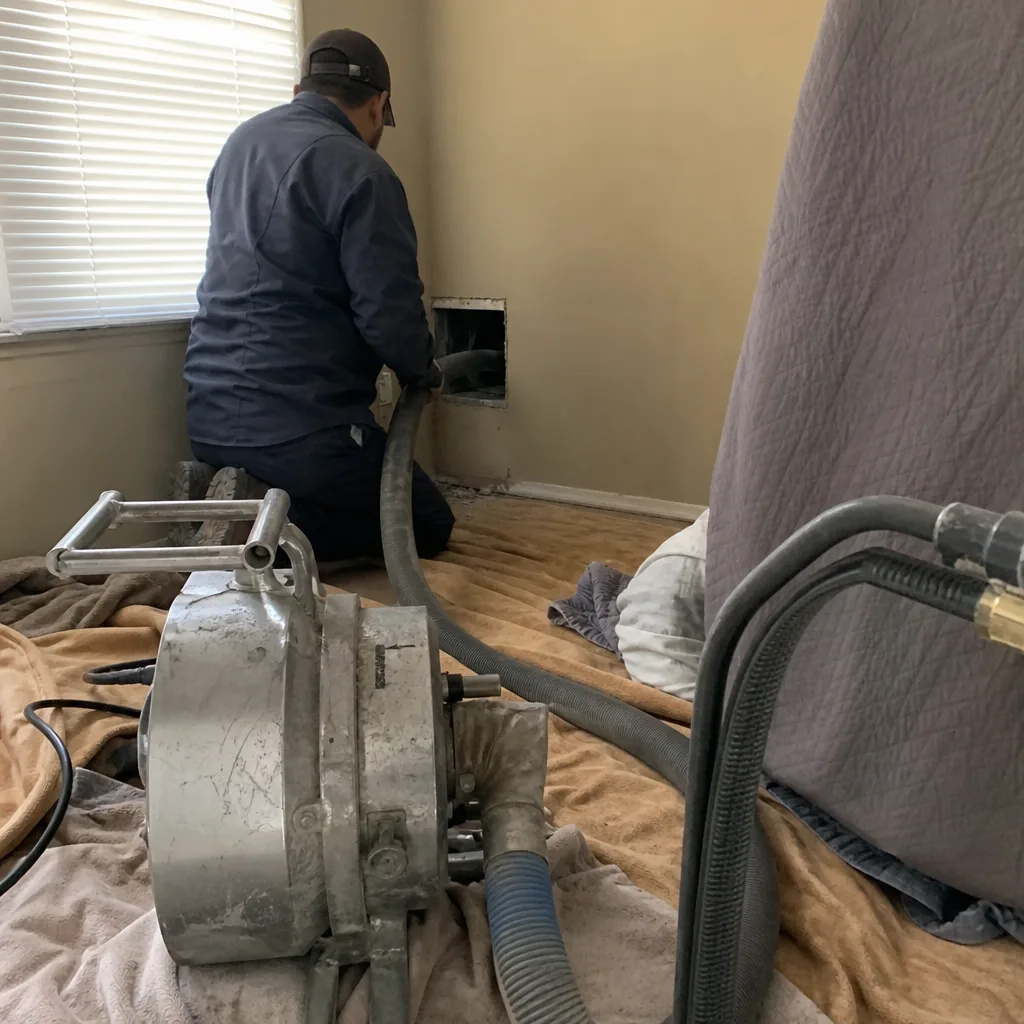
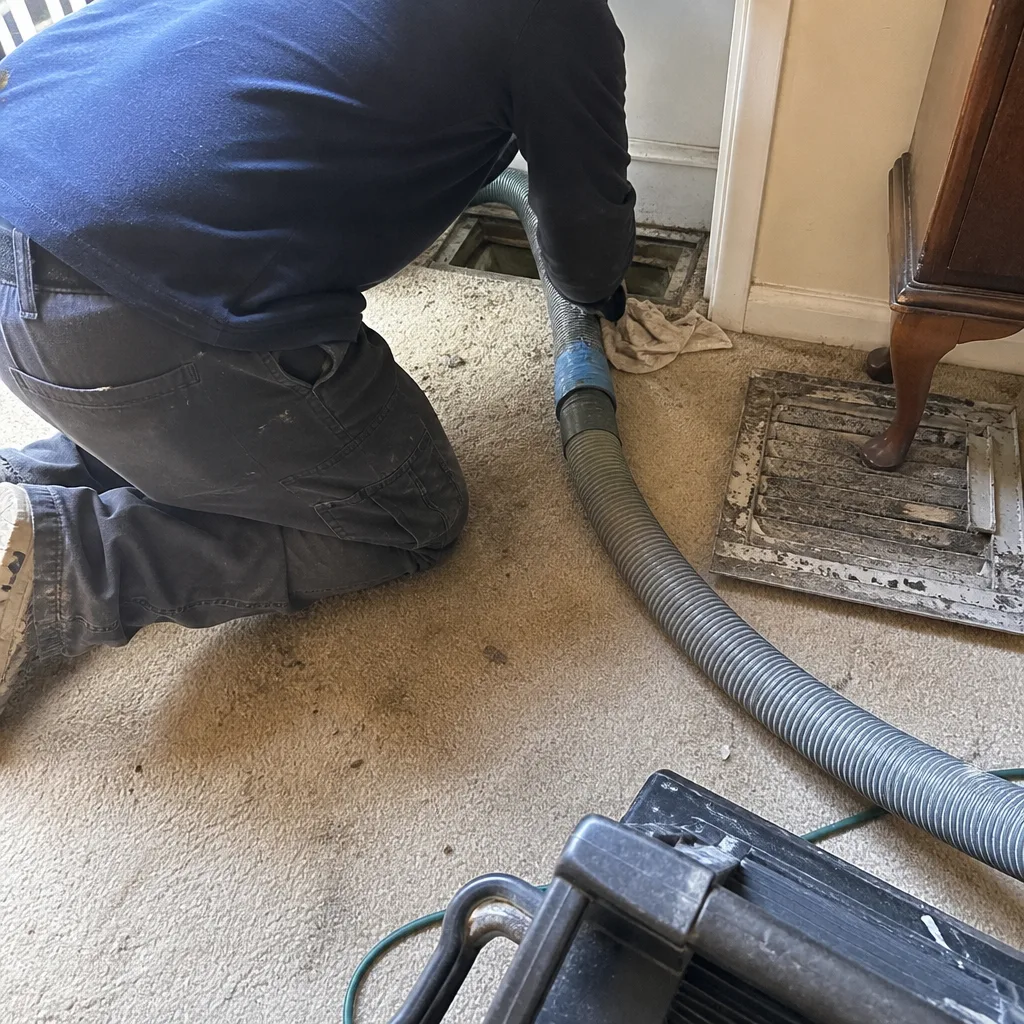
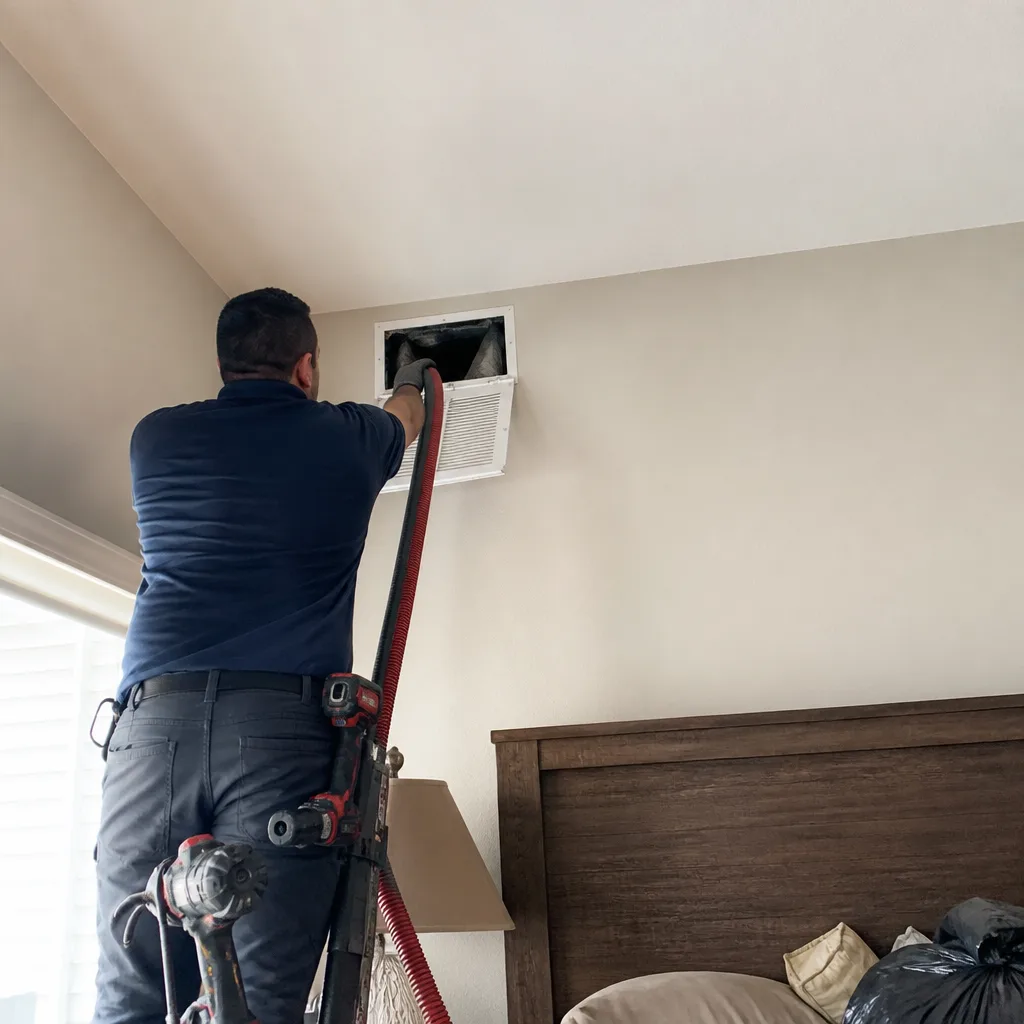
A proper cleaning relies on two things happening simultaneously: agitation and extraction. Agitation means physically dislodging the particulate that’s bonded to duct walls. Extraction means pulling that loosened debris out of the system and containing it, not blowing it through your living room. The equipment that accomplishes this properly falls into two professional categories. Rotobrush systems spin stiff nylon or carbide-tipped brushes through the duct interior while simultaneously vacuuming, dislodging bonded particulate and extracting it in a single pass. Nikro systems use compressed air to create a powerful negative-pressure environment, pulling loosened debris through HEPA filtration. Both approaches work, but the differences matter depending on your home.
We run both Rotobrush rotary brush systems and Nikro HEPA-equipped equipment on every cleaning job because Dublin’s housing stock isn’t uniform. A two-story home built in the 1990s in the Gale Ranch area typically has sheet metal trunk lines in the attic with flex duct branches running down to upper-floor registers. A single-story slab home from the 1960s, more common in the older Dublin neighborhoods west of San Ramon Road, often has ductwork running through the concrete slab itself, which presents entirely different access challenges. The right tool for one is the wrong tool for the other.
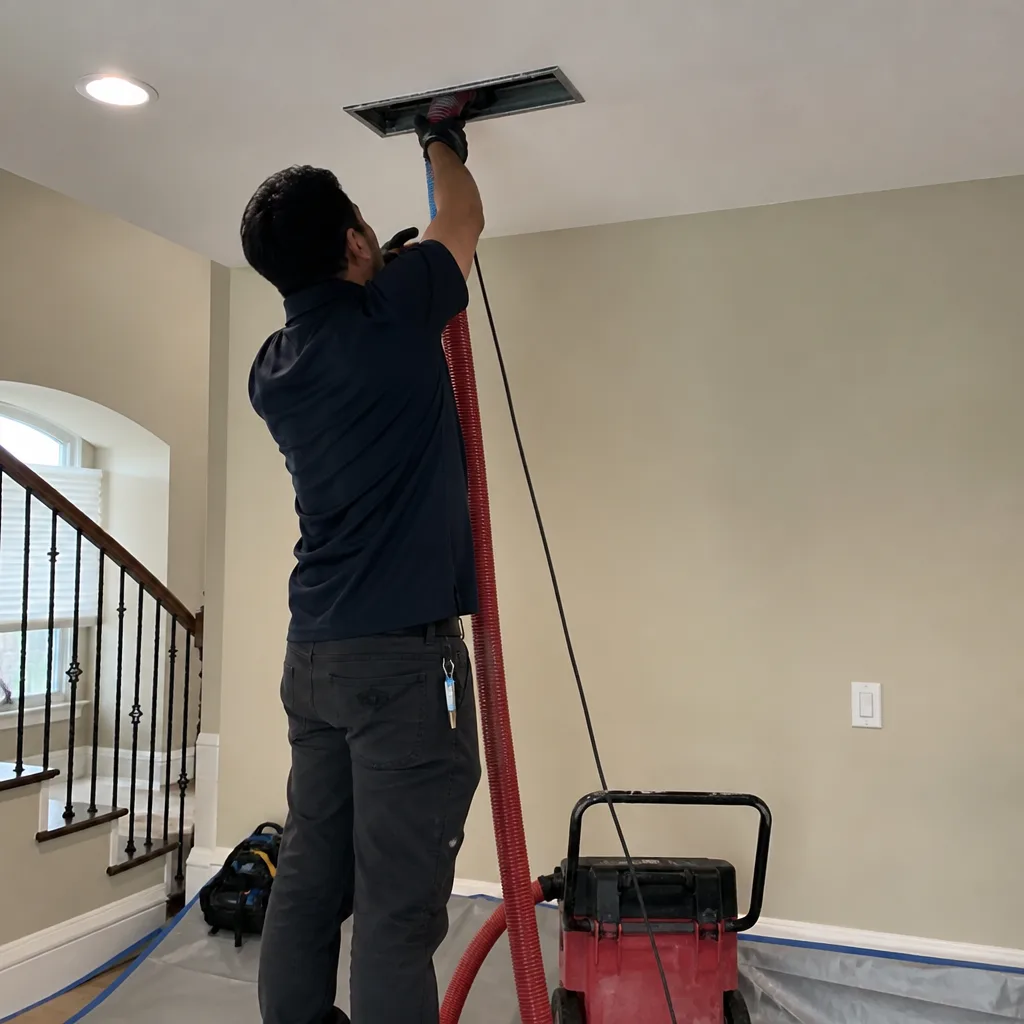
Then there’s containment. We use Abatement Technologies negative-air and filtration equipment on residential jobs, which is the same category of equipment used in mold remediation and hospital construction. For most homes, this is overkill in the best way. It means the debris we loosen is captured and contained, not redistributed through the home’s living spaces. The difference between a professional negative-air setup and a shop vac attached to a makeshift port is roughly the difference between pressure-washing a deck and wiping it with a damp sponge. One removes material; the other moves it around.
If a Dublin homeowner asks us what to look for in a duct cleaning company, the first item is always the equipment list. For a deeper comparison, read our DIY vs Professional Air Duct Cleaning: The Dublin Homeowner’s Decision Guide. If they can’t name the system they use, walk away. Professional-grade equipment, not a shop vac and a coupon.
Your Pre-Call Inspection: What to Check Room by Room
Before you call anyone, spend twenty minutes walking through your own home. A pre-call inspection does two things: it gives you a baseline understanding of what’s actually happening in your ducts, and it makes you a harder mark for any company that wants to sell you a cleaning you don’t need. Here’s the room-by-room checklist we recommend for Dublin homeowners.
Step one: the registers. Remove a floor or wall register in the main living area and the primary bedroom. Look at the interior of the duct with a flashlight. You’re checking for visible dust accumulation, debris that shouldn’t be there (drywall chunks, insulation, pet hair), and any signs of condensation staining that would indicate a different problem entirely.
Step two: the return air path. Find your main return grille, usually located in a hallway ceiling or wall. Slide the filter out and inspect both sides. A filter that’s visibly coated on the intake side after only a few weeks in Dublin’s summer is a sign that your system is processing unusually high particulate loads. If the filter collapses into the return housing when removed, that’s a stronger signal still.
Step three: the rooms you actually live in. Go room by room through the house and note which rooms consistently accumulate dust faster. Rooms on the southwest exposure in Dublin homes take the brunt of afternoon heat and wind, which means their duct runs often show heavier buildup. If your guest bedroom stays cleaner than your west-facing home office, that pattern tells you something about where the particulate is entering and how your system distributes it.
Step four: the attic and crawlspace. If you have access, take a look at the ductwork itself. Look for visible gaps at connection points, sagging flex duct runs, torn outer jackets, or sections that have been crushed by stored boxes. Any one of these conditions means your duct system is pulling unconditioned air and attic particulate directly into the breathing path. That’s a repair issue, not a cleaning issue, and we’ll cover it below.
None of these observations require special tools or technical knowledge. They’re the same checks we perform on an initial walk-through, and they’ll help you have a more productive conversation with any contractor who walks through your door.
Flex Duct vs. Sheet Metal: How Material Changes the Job
Not all ductwork is created equal, and Dublin’s housing stock contains a genuinely mixed bag. Homes built before roughly 1980 in the Dublin area commonly have rigid sheet metal ductwork. Homes built during the massive Tri-Valley expansion of the 1980s through 2000s often have some combination of sheet metal trunks with flex duct branches, or all-flex duct systems. Newer construction, particularly in Dublin’s eastern neighborhoods, tends toward well-sealed flex duct systems with higher efficiency ratings.
The material matters because it changes both the cleaning method and the frequency. Sheet metal has a smooth interior surface that resists particulate adhesion but shows accumulation more visibly when it does build. It’s also more forgiving of aggressive agitation methods. A Rotobrush rotary brush system can work through sheet metal runs thoroughly without risking damage, and the process is relatively straightforward. Sheet metal systems in older Dublin homes often haven’t been cleaned in decades, and the volume of material we extract from these jobs is frequently shocking to homeowners.
Flex duct is different. The interior liner is a thin plastic film supported by a helical wire coil, and it tears easily if mistreated. What many homeowners don’t realize is that the same delicate interior that makes flex duct vulnerable to damage also makes it more prone to particulate adhesion, because the ribbed surface creates turbulence that encourages deposition. Flex duct requires a gentler touch: lower-pressure agitation, careful brush selection, and an operator who knows how much force is too much. This is why we run both Rotobrush and Nikro systems. The right tool for one is the wrong tool for the other, and a company that only owns one type of equipment will either under-clean your sheet metal or over-stress your flex duct.
Frequency shifts too. Flex duct systems in Dublin’s climate typically show meaningful accumulation at the two-to-three-year mark, while sheet metal systems with good filtration may stretch to four years. Neither follows the generic national timeline.
When Cleaning Won’t Fix It: Repair and Resealing Red Flags
Here’s a truth most duct cleaning companies won’t tell you: cleaning is sometimes the wrong service entirely. We clean, repair, and protect because clean ducts and damaged ducts aren’t the same problem. If your ductwork has gaps, tears, or disconnections, a thorough cleaning will simply be undone within months as attic air and particulate pour back into the system through the same openings.
Dublin’s climate makes this particularly relevant. The same temperature swings that bake dust into your ducts also stress the connections and materials themselves. Attic temperatures in Dublin’s summer can exceed 140 degrees, which causes metal to expand, flex duct adhesives to soften, and tape seals to fail. When the attic cools at night, everything contracts. Repeat that cycle a few thousand times and you have a system that’s quietly working itself apart.
Here are the red flags that indicate Air Duct Repair in Dublin should precede or accompany cleaning. If you see visible gaps at any duct connection in the attic. If you can feel air blowing from duct seams when the system runs. If rooms at the end of long duct runs never cool properly even with the HVAC running constantly. If your energy bills have climbed without a matching change in usage. If you see loose duct insulation hanging in the attic. Any one of these means your system is leaking conditioned air into unconditioned space and pulling attic particulate back in.
In these cases, the right sequence is repair first, then clean. Resealing and repairing the ductwork restores the system’s integrity, and then the cleaning extracts the years of accumulated particulate from the now-sealed system. Doing it the other way around is like mopping a floor while the roof leaks.
One more Dublin-specific note: many of the older homes in the area have duct runs that pass through concrete slabs. These systems develop their own failure modes, usually related to ground moisture intrusion or corrosion at the slab penetrations. If you have a slab-ducted home and notice a musty smell when the HVAC kicks on, that’s a repair conversation, not a cleaning one. Cleaning cannot fix moisture intrusion from below.
What Air Duct Cleaning Actually Costs in Dublin
The honest answer is that air duct cleaning in Dublin ranges from about $450 to $900 for a typical single-family home, with most jobs landing in the $550 to $700 range. That’s for a full-system cleaning using professional agitation and negative-air extraction equipment on a home with one HVAC system and 8 to 15 registers. Larger homes with multiple systems, or homes in Dublin’s newer developments with more complex zoning, run higher.
Here’s how the pricing typically breaks down:
| Service Component | Typical Range | Notes |
|---|---|---|
| Full system cleaning (single HVAC) | $450 – $700 | Includes all supply and return ducts, registers, and plenums |
| Second HVAC system | $150 – $250 | Common in larger Dublin homes |
| Dryer vent cleaning (add-on) | $75 – $150 | Should be a distinct service with its own tools |
| Access panel installation | $50 – $100 | Required on some older systems without service access |
| Duct repair or resealing | Variable | Quoted after inspection; never a flat add-on |
The spread between $450 and $900 is largely explained by system size, accessibility, and the amount of accumulated material. A three-bedroom, two-bath Dublin home with a standard attic system and reasonable access falls toward the lower end. A two-story home with flex duct runs through finished ceilings, a second system in a tight attic, or fifteen-plus registers falls toward the higher end.
What you should never see is a quote structured as a per-vent or per-register price below the cost of a professional service call. Bait-and-switch pricing in this industry works exactly like this: a low per-vent price gets the van in the driveway, and then the number of vents, the accessibility, the condition, and the “recommended sanitizing” all pile on until the invoice bears no resemblance to the quote. A legitimate company quotes one flat price per system after an inspection, and that price doesn’t change when the technician shows up.
Call us at (855) 356-4417 for an exact quote on your Dublin home. We walk through the system with you, quote one flat price per system, and the estimate is free.
Dryer Vent Cleaning: The Fire Safety Conversation
Dryer vents live in a strange category: they’re part of your home’s air movement system, but they’re rarely included in “duct cleaning” packages, and they should be treated as a distinct service with a distinct set of tools and priorities. We treat Dryer Vent Cleaning in Dublin as its own service because the failure mode isn’t dusty air. It’s fire.
The U.S. Fire Administration attributes roughly 2,900 residential dryer fires each year, and the leading cause by a wide margin is lint accumulation in the vent line. Dublin’s climate doesn’t change the physics, but it does change the usage patterns. Homes here run dryers year-round, and the long vent runs common in Dublin’s two-story homes, where laundry rooms often sit on the upper floor and the vent terminal is on the roof or at a distant exterior wall, accumulate lint faster than shorter runs because dryer airflow weakens over distance.
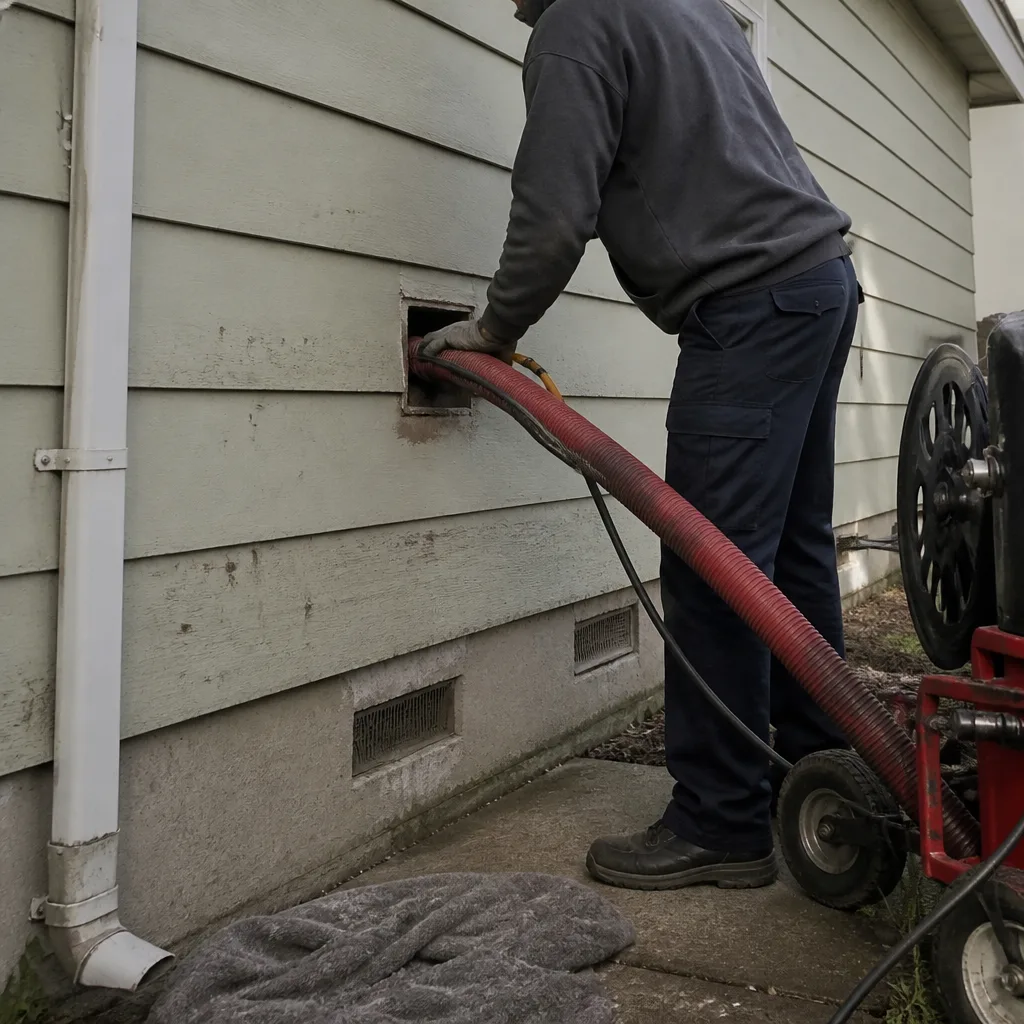
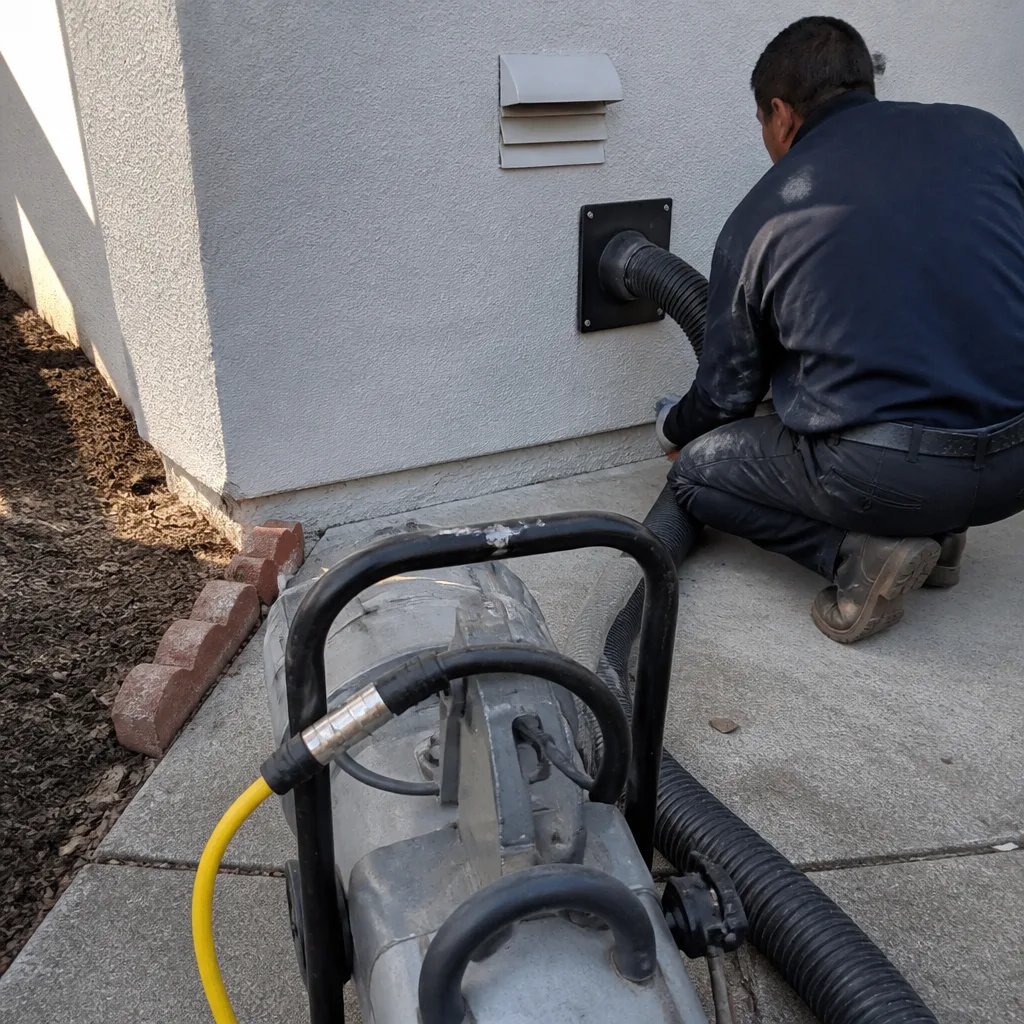
A proper dryer vent cleaning involves running a rotating brush through the full length of the vent line, from the dryer connection to the exterior termination, and verifying clear airflow at the outlet. It’s not a job for a leaf blower or a shop vac, and it’s not something a generalist HVAC company should treat as an upsell checkbox. Your dryer vent is a fire hazard waiting to be ignored. We take it seriously.
Signs your Dublin home’s dryer vent needs attention: clothes take more than one cycle to fully dry, the dryer housing feels unusually hot during operation, you notice a burning smell while the dryer runs, or you can’t remember the last time the vent was cleaned and your home is more than five years old. Any one of these justifies a service call.
Common Mistakes to Avoid
- Hiring on price alone. Dublin’s market has plenty of cut-rate operations running consumer-grade equipment. A $199 whole-house cleaning means someone is bringing a shop vac and a YouTube tutorial. You’re paying for nothing.
- Assuming cleaning fixes everything. Damaged, disconnected, or leaking ductwork needs repair, not more cleaning. If no one inspects the system before quoting, walk away.
- Skipping the dryer vent. It’s the highest-stakes run of air-moving infrastructure in your home. Treat it as a separate, fire-safety-critical service.
- Following the national timeline. Dublin’s climate puts more particulate in your ducts than coastal homes experience. If you’re following a 5-year schedule, you’re operating on a framework built for a different climate.
- Ignoring the filter. The filter is your system’s first line of defense. Running a cheap fiberglass filter in Dublin’s dusty summers guarantees faster duct loading. Use at least a MERV 8 pleated filter and change it during peak cooling season.
- Trusting before-and-after photos. Photos of the inside of a duct are easy to fake, stage, or misrepresent. We provide them because homeowners deserve documentation, but a photo alone shouldn’t be your primary trust signal. The equipment list, the inspection process, and the flat-price guarantee matter more.
- Not asking what “cleaning” includes. Some companies clean supply ducts but not returns. Some skip plenums. Some don’t touch the blower assembly. Get a written scope before you pay anything.
When to Call a Professional
You should call a professional Air Duct Cleaning services company if you’ve lived in your Dublin home for more than three years and have never had the ducts inspected or cleaned. You should call if you’re seeing persistent dust accumulation despite regular filter changes, if anyone in the home has unexplained allergy or respiratory symptoms that improve when they’re away from the house, if you’ve completed any renovation work that generated drywall dust or construction debris, or if you’re preparing a home for sale and want the HVAC system to present well to buyers.
You should also call if you’re purchasing a home in Dublin and the previous owners can’t document any duct maintenance history. Duct Cleaning Dublin offers free estimates throughout Dublin. Call (855) 356-4417 and we’ll inspect the system, walk you through what we find, and quote one flat price before any work begins.
Frequently Asked Questions
Every 2 to 4 years for most Dublin homes, compared to the national 3-to-5-year guideline. The Tri-Valley’s combination of hot summers, persistent wind, and damp shoulder seasons accelerates particulate accumulation in ductwork. Homes with allergy or asthma sufferers, pets, or recent renovation history should target the shorter end of that range. Call (855) 356-4417 for a free inspection and a recommendation specific to your system.
Remove a couple of registers and inspect the duct interior with a flashlight. Visible dust accumulation, debris like drywall chunks or insulation, or a persistent dusty smell when the HVAC runs are all indicators. Also note whether your filter is loading up unusually fast, which signals high particulate in the system. If you’re unsure, a professional inspection costs nothing and settles the question.
Cheap cleaning typically uses a shop vac or consumer-grade vacuum with no meaningful agitation, which removes loose surface dust but leaves the bonded particulate that actually restricts airflow and harbors allergens. Professional systems like Rotobrush and Nikro combine aggressive agitation with high-powered negative-air extraction, often through HEPA filtration, removing the bonded material that cheap setups can’t touch.
If your ducts are genuinely loaded with particulate, cleaning can reduce the volume of allergens circulating through your home’s air distribution. The effect is most noticeable in Dublin homes where the HVAC runs heavily during summer and the ducts have accumulated years of Tri-Valley dust. It’s not a cure, but it removes one significant source of indoor particulate.
Because the operator is using consumer-grade equipment, skipping entire portions of the system, or planning to upsell you once they arrive. Professional cleaning on a standard Dublin home costs $450 to $900 for a reason: the equipment, the time, and the labor are real. A quote below that range is advertising a service that isn’t being performed.
Yes, if it’s been more than two years since the last cleaning. Dryer vent cleaning is a distinct service with fire-safety implications, not a quick add-on. Dublin’s long vent runs in two-story homes accumulate lint efficiently, and the failure mode is structural fire, not dusty air. It’s the highest-stakes piece of air-moving infrastructure in your home.
Not if the company uses proper containment. Negative-air systems from manufacturers like Abatement Technologies create a vacuum environment that pulls loosened debris through filtration instead of letting it escape into living spaces. The process should leave your home cleaner, not dirtier. If a contractor can’t explain their containment method, assume they don’t have one.
The Bottom Line
Dublin homeowners can’t rely on national cleaning timelines. Our climate’s combination of summer heat, persistent wind, and damp shoulder seasons loads residential ductwork with particulate faster than most Bay Area homes experience, which means a 2-to-4-year cleaning cycle is more realistic. The difference between a real cleaning and a wasted service call comes down to equipment: professional agitation and negative-air extraction remove bonded material that shop-vac setups leave behind. And if your ductwork has gaps, tears, or disconnections, repair comes first. We clean, repair, and protect. If you’re in Dublin and ready for a straight answer about your system, call (855) 356-4417 and we’ll inspect it together.
Written by the team at Duct Cleaning Dublin, serving Dublin since 2017.
See the difference
 Before
 After
 Before
 After
 Before
 After