
Last updated November 2, 2026
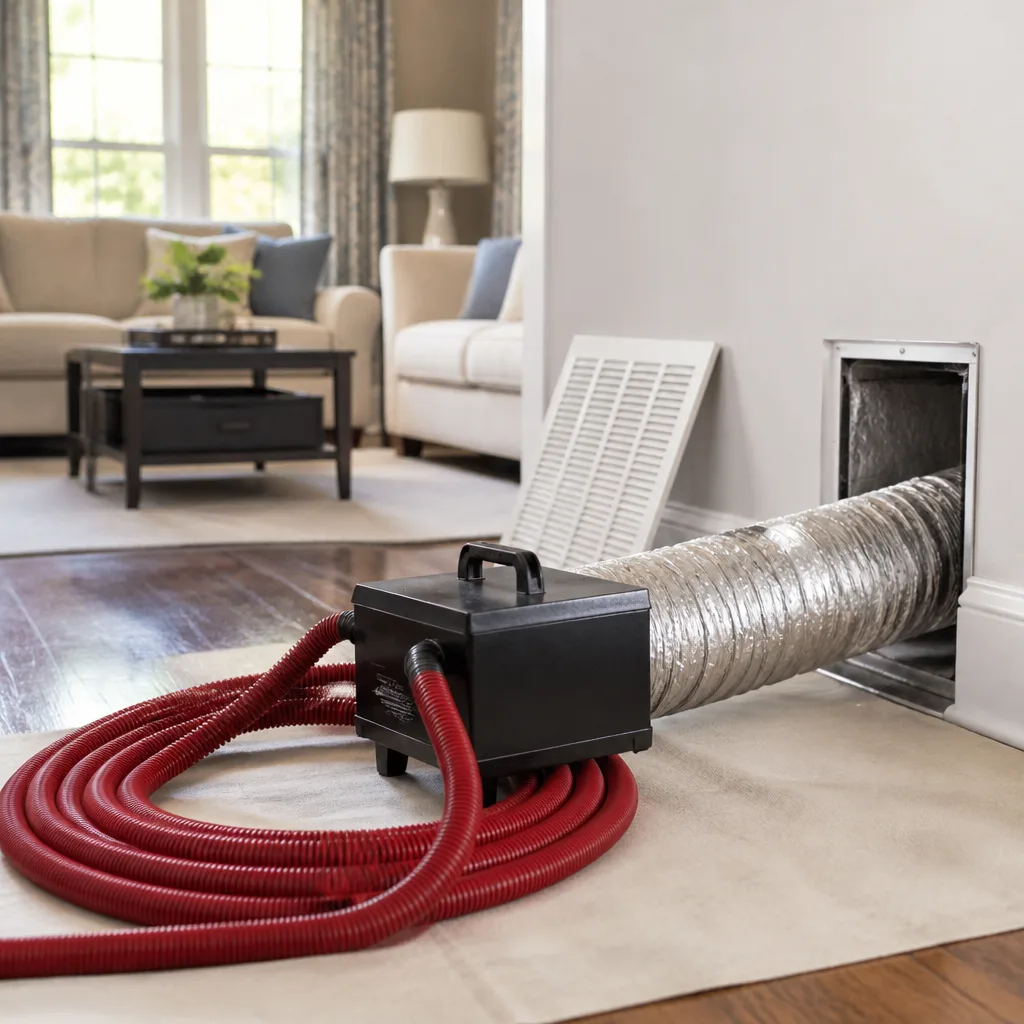 Whole-home duct cleaning
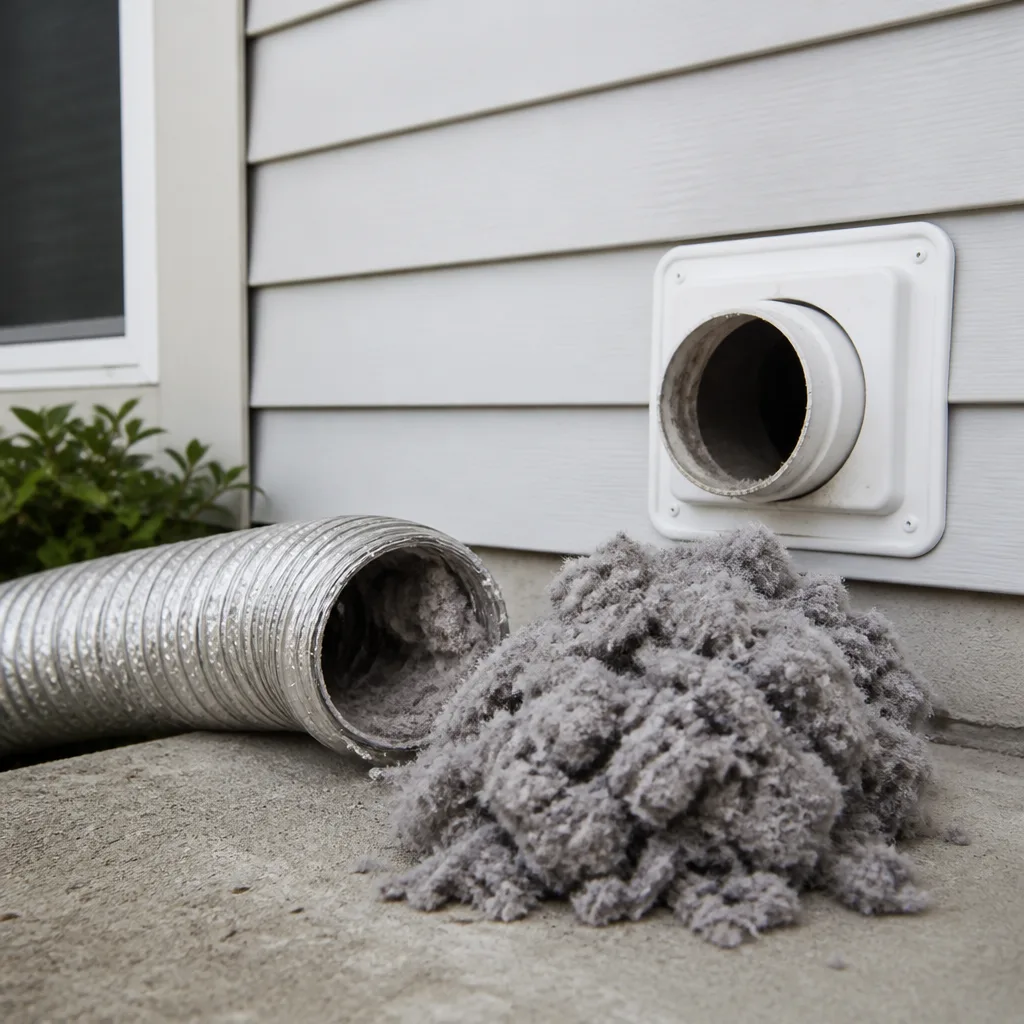 Dryer vent cleaning
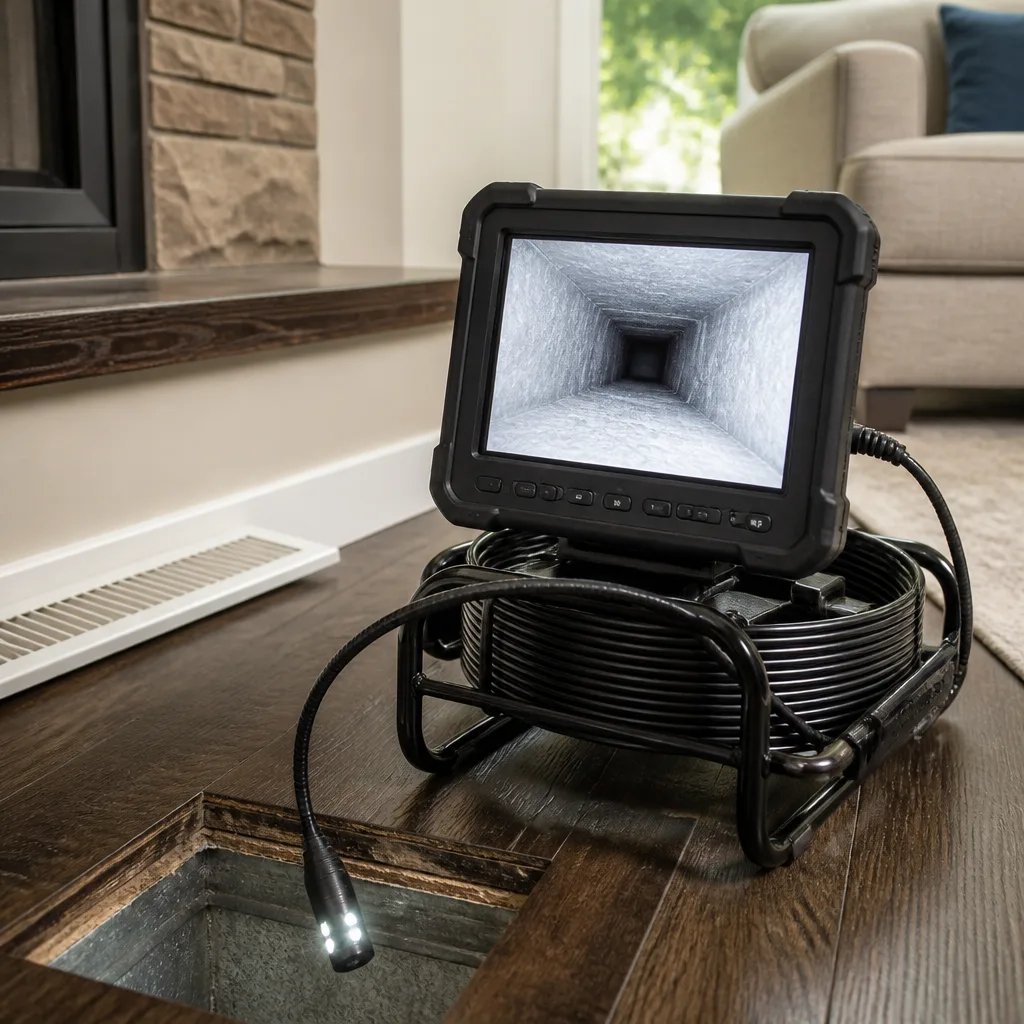 Camera inspection
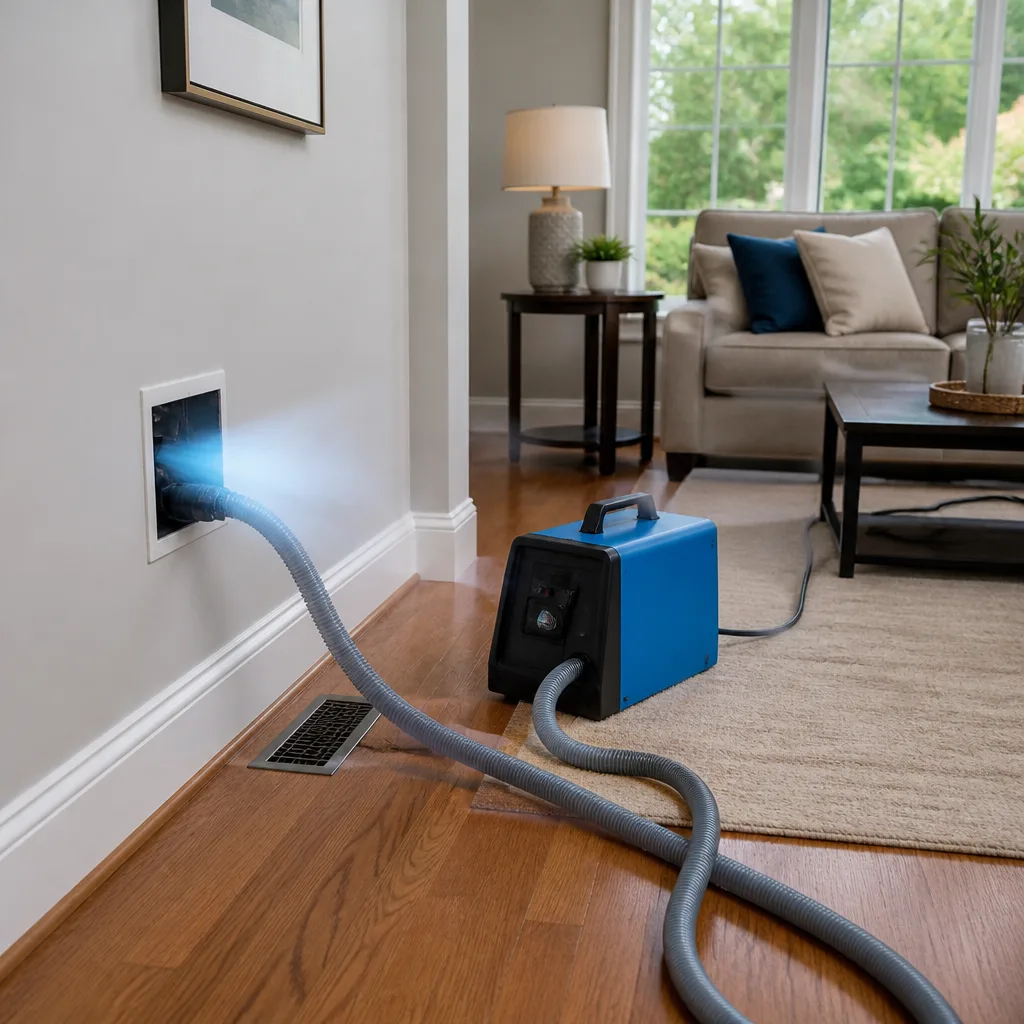 Sanitizing & deodorizing
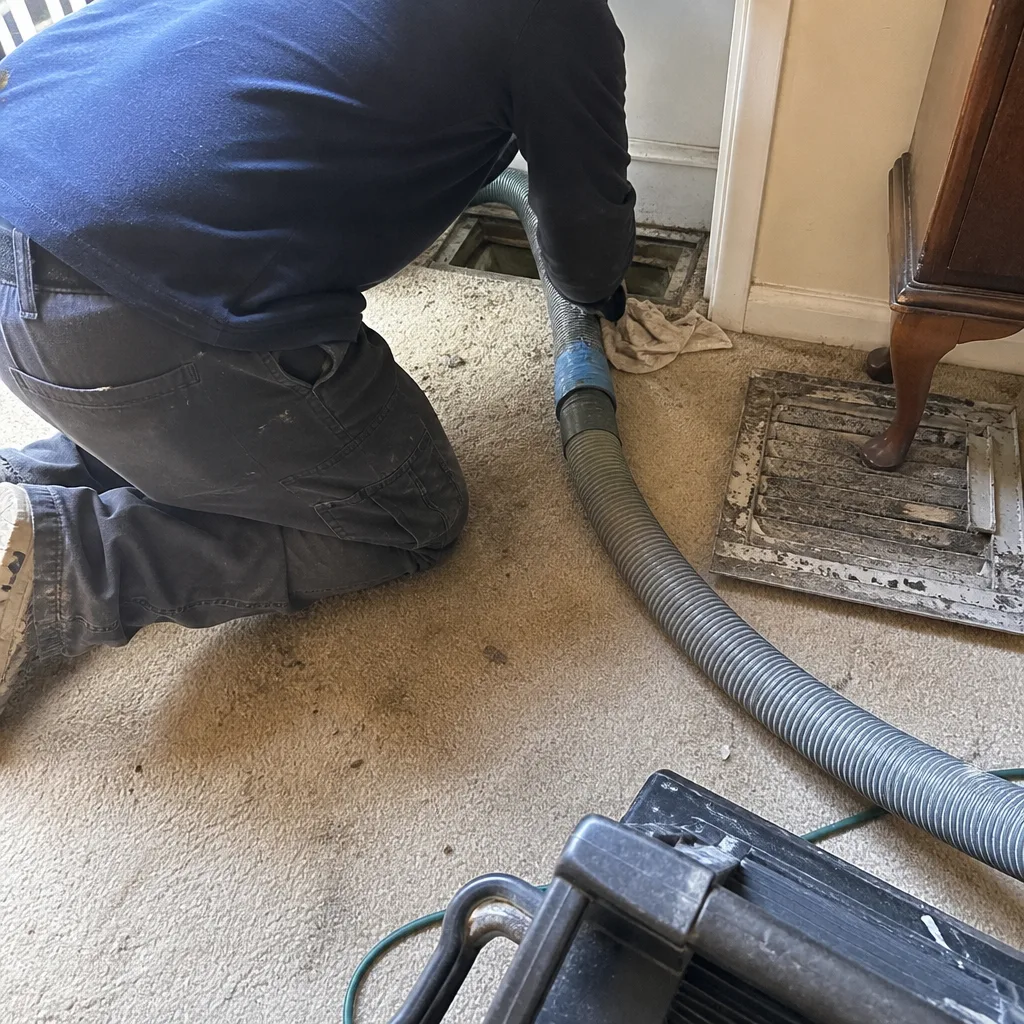
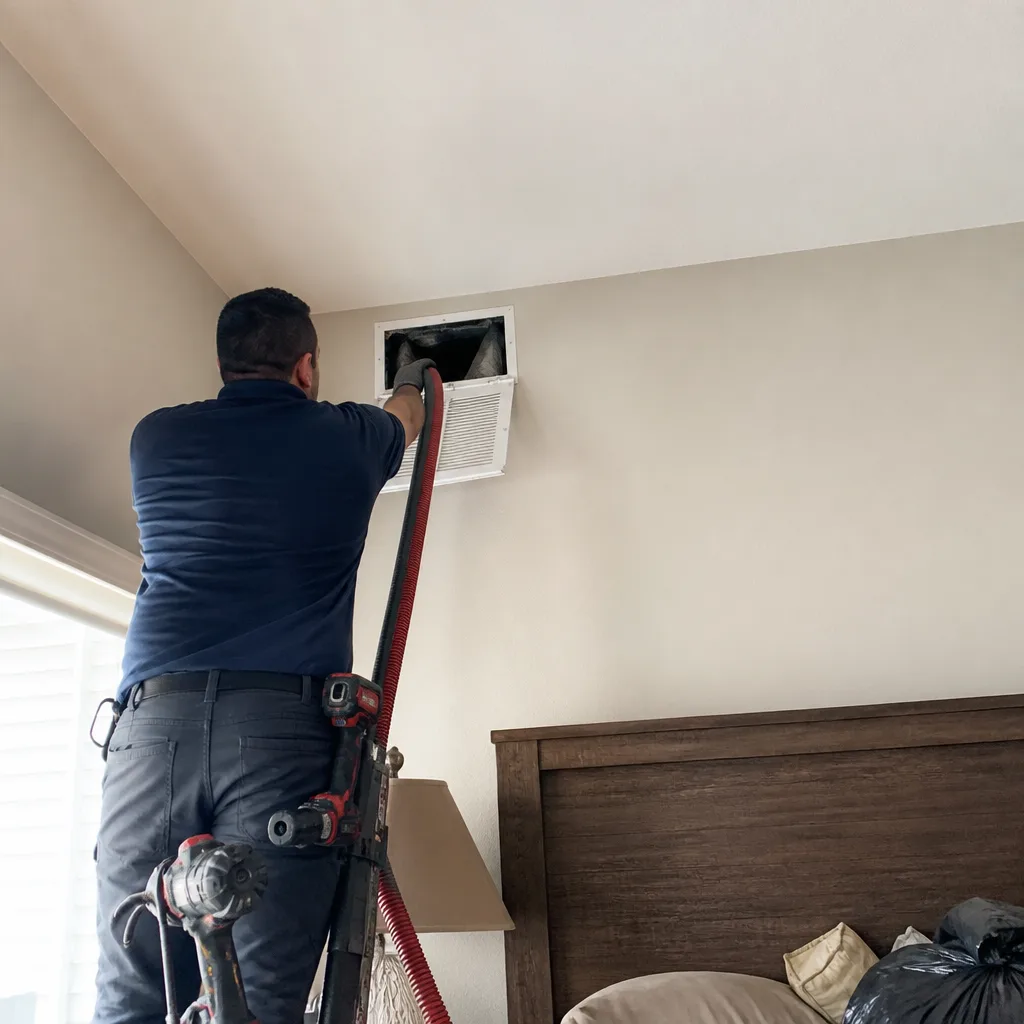
Whole-system duct and dryer vent check with before-and-after photos - you see exactly what came out of your vents
That "$99 whole-house special" is a bait ad - the real number appears once they are in your hallway, or the "clean" is a shop-vac at the register. We photograph the inside of your ducts before and after instead.
DIY vs Professional Air Duct Cleaning: The Dublin Homeowner’s Decision Guide
A $60 dryer vent cleaning kit from Home Depot is a legitimate DIY tool for a straight 6-foot dryer exhaust run. That same kit inserted into a 2,000 sq ft Dublin home’s supply trunk with three 90-degree elbows accomplishes almost nothing except stirring debris closer to the registers. Most homeowners who attempt full-system duct cleaning with consumer equipment end up spending a weekend, bruising their knuckles in crawl spaces, and walking away with ductwork that looks exactly the same as when they started. This guide draws an honest line between what a Dublin homeowner can realistically handle and what genuinely requires Air Duct Cleaning services with contractor-grade equipment. By the end, you’ll know which tasks make sense to tackle yourself, which ones will damage your system, and why the physics of negative pressure matters more than brush rotation.
Styles & brands we work with
- Whole-home duct cleaning
- Dryer vent cleaning
- Camera inspection
- Sanitizing & deodorizing
Quick Answer
For most Dublin homes, do-it-yourself duct cleaning is limited to three tasks: cleaning registers and grilles, clearing short straight dryer vent runs, and replacing filters with a visual inspection. Full duct system cleaning requires negative-pressure equipment moving 2,000+ CFM at the collection point, which consumer tools cannot produce. A shop vac and a brush will not remove compacted debris from a supply trunk with multiple elbows.
Table of Contents
- The Physics Problem: Why CFM and Negative Pressure Matter More Than Brush Rotation
- The Three Legitimate DIY Duct Tasks (And How to Do Them Right)
- Where DIY Duct Cleaning Causes Real Damage
- The Break-Even Calculation: Rental Costs and Time vs. Professional Service
- How to Inspect and Document Ductwork Before and After Cleaning
- Dublin, CA Specific Factors: Climate, Duct Age, and What Contractors See Here
- What Contractor-Grade Equipment Actually Does Differently
- Common Mistakes to Avoid
- When to Call a Professional
- Frequently Asked Questions
- The Bottom Line
The Physics Problem: Why CFM and Negative Pressure Matter More Than Brush Rotation
Here’s what most DIY duct cleaning guides don’t tell you: the brush is not what removes debris from your ducts. The brush is what loosens debris. What actually removes it is air volume at the collection point. Without sufficient airflow pulling loosened debris toward a containment unit, you’re essentially sweeping dirt from one section of duct into another.
This is the core misunderstanding behind most failed DIY attempts. A standard shop vac pulls 100 to 200 CFM (cubic feet per minute) through a 1.5-inch hose. That’s not remotely enough to create meaningful negative pressure inside a 6-inch or 8-inch supply trunk. What happens instead is the loosened dust cloud simply re-settles a few feet down the run, and within weeks it’s back where it started. Professional systems generate 2,000 to 4,000 CFM at the connection point, which creates genuine negative pressure across the entire branch being cleaned.
Negative pressure matters for a second reason: containment. When a professional cleaning setup in Dublin is operating correctly, the duct system is placed under vacuum during agitation. Loose particulate is pulled toward the collection device rather than pushed into living spaces through register openings. A DIY approach using positive airflow or insufficient vacuum often aerosolizes dust into the home, which is worse than leaving the ducts alone entirely.
In our experience with Dublin homes, the duct runs that frustrate DIY attempts most are the 25 to 40-foot supply trunks common in 1990s and early-2000s subdivisions, the runs with tight 90-degree boots at register connections, and any flex duct that has developed a low spot. Each of those configurations requires air volume that consumer vacuums simply don’t produce.
The Three Legitimate DIY Duct Tasks (And How to Do Them Right)
1. Register and Grille Cleaning
This is the single most useful DIY task in your duct system, and it takes about 20 minutes. Register covers and grilles accumulate dust, pet hair, and cooking grease where they meet the floor or wall. Clean them quarterly and you’ll immediately reduce visible dust settling on surfaces.
Here’s the correct process:
- Remove each register cover. Most lift straight out or require two screws. Keep screws in a small container so you don’t lose one.
- Vacuum the register opening as far as you can reach with a hose attachment. This removes loose debris from the boot, the sheet metal transition between the duct run and the register.
- Wash the register covers in warm soapy water. For stubborn grease on kitchen register covers, use a degreaser and a scrub brush.
- Dry covers completely before reinstalling. Wet metal left in place rusts and attracts more dust.
- While each register is off, look inside the boot with a flashlight. Note any visible mold, large debris, or disconnected sections so you have an accurate picture of your system’s condition.
2. Dryer Vent Clearing on Short Straight Runs
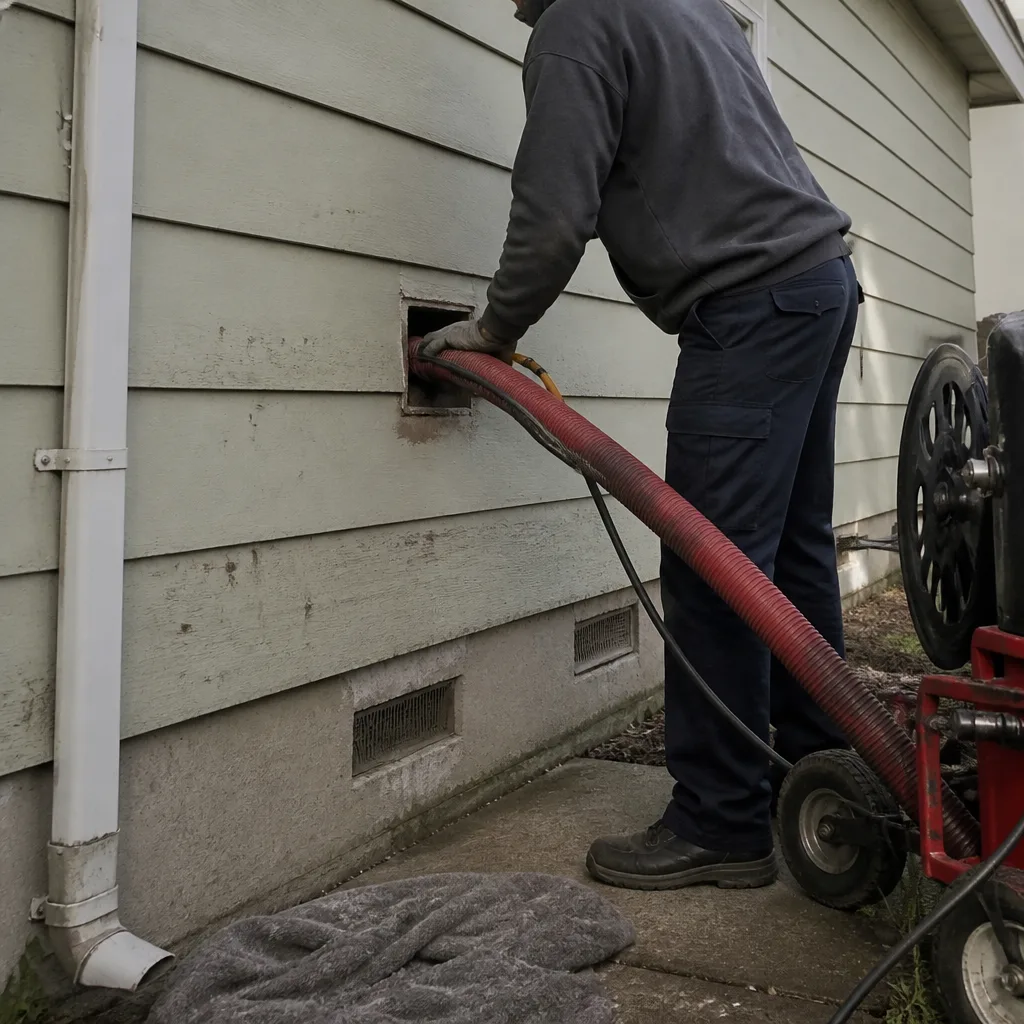
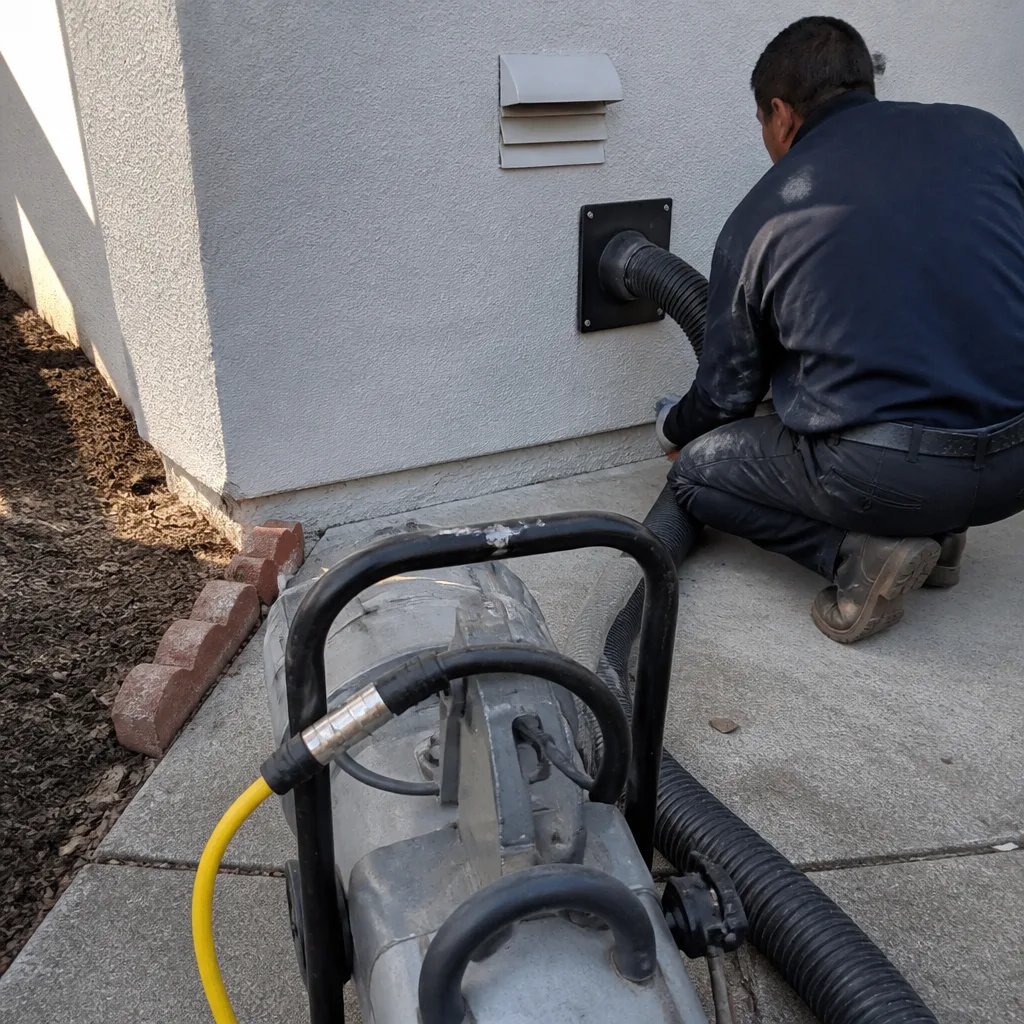
If your dryer is located on an exterior wall or within 6 feet of one with no more than one elbow, the $40 to $60 consumer kits work reasonably well. The key is understanding what you’re working with. A straight short run lets the brush reach the entire length and the lint you dislodge gets pushed out the exterior termination point. That’s the only scenario where forward airflow works effectively.
For anything longer than 6 feet, with multiple elbows, or venting vertically through a roof, a consumer kit removes only the first few feet of accumulation. The rest stays packed in place, which is exactly the configuration that creates dryer vent fires. For these conditions, professional Dryer Vent Cleaning in Dublin is the rational choice, not an upsell.
3. Filter Replacement with Visual Inspection
Replacing your HVAC filter is not technically duct cleaning, but it’s the single highest-impact maintenance task a Dublin homeowner can do. Check your filter monthly during summer cooling season, when the AC runs hard and pulls more air through the return. Most Dublin homes need a filter change every 60 to 90 days, but homes with pets or along the 580 corridor with dust-heavy conditions may need it more often.
While the filter is out, inspect what you can see of the return plenum and evaporator coil from the filter slot. A flashlight and a phone camera can document visible debris on the coil fins. That’s useful baseline information, whether you pursue professional Air Duct Cleaning in Dublin or continue monitoring on your own.
Where DIY Duct Cleaning Causes Real Damage
Most DIY duct cleaning damage happens in the first 20 minutes, before a homeowner realizes the tool they bought is inappropriate for the material they’re working in. Duct systems in Dublin homes are typically constructed from one of three materials: rigid sheet metal, flexible duct with a plastic liner, or fiberglass duct board. Each responds differently to mechanical agitation.
Flex duct liner tears. Flex duct uses a thin polyethylene inner liner coiled around a wire frame. A rigid brush designed for metal ducts can catch the liner or the wire coil and tear it open. Once the liner is compromised, conditioned air escapes into wall cavities or attic space instead of reaching rooms. The visible symptom is usually a sudden reduction in airflow to that register, followed by an energy bill increase. Whatever the temporary benefit of brushing, a torn liner requires Air Duct Repair in Dublin work that costs several times more than professional cleaning would have.
Mastic-sealed joint separation. Sheet metal duct sections are joined with mastic sealant at installation. Properly applied mastic remains flexible for years but it doesn’t tolerate aggressive mechanical agitation from a brush being forced through a joint at a bad angle. When mastic seals crack, the duct system leaks. Leaky ducts pull unconditioned attic air into the supply stream during cooling season and push conditioned air into the attic during heating season. The energy penalty shows up as higher PG&E bills, but the comfort penalty shows up first, typically as rooms that never quite reach set temperature.
Duct board puncture. Fiberglass duct board is rigid insulation board formed into duct shapes. It’s common in older Dublin homes and in truss-built attics. A rigid brush head, especially the metal coil brush heads sold for chimney cleaning, can puncture or gouge duct board on curved runs. Once the interior surface is damaged, raw fiberglass edges collect dust more aggressively and can send glass fibers through the system into living areas.
Improper register boot insertion. When a brush with a drill attachment gets pushed too far through a register boot, it can dislodge the connection between the boot and the main trunk. That’s a hidden failure: the register still looks fine from above, but the duct run is now open to the wall cavity or subfloor. Every cubic foot of air that should arrive at that register instead leaks into a floor void.
The Break-Even Calculation: Rental Costs and Time vs. Professional Service
Homeowners who recognize that a shop vac won’t do the job sometimes assume the next step up is renting commercial equipment. That assumption breaks down quickly in the Dublin market, where availability of true negative-pressure duct cleaning equipment for rental is essentially nonexistent.
Here’s a realistic accounting for a 3-bedroom, 2-bath Dublin home with 20 to 30 registers and 300 to 400 linear feet of ductwork:
- Rotary brush kit with extendable rods: $80 to $150 purchase
- HEPA-filtered negative air machine rental (if you can find a local equipment house that carries them): $150 to $300 per day
- Attachment adapters to connect the negative air machine to your duct system: $40 to $80 unless the rental includes them
- Personal protective equipment (respirator, gloves, knee pads): $40 to $60
- Your time: 6 to 10 hours for a first-timer doing a full system, plus transport time to the rental yard twice (pickup and return)
Total cash outlay: $310 to $590. Total time commitment: a full weekend day. Total risk: you’re using equipment you’ve never operated on a system you can’t fully see, with no recourse if the seal at the plenum is imperfect and the negative air machine pulls dust through gaps into your living space.
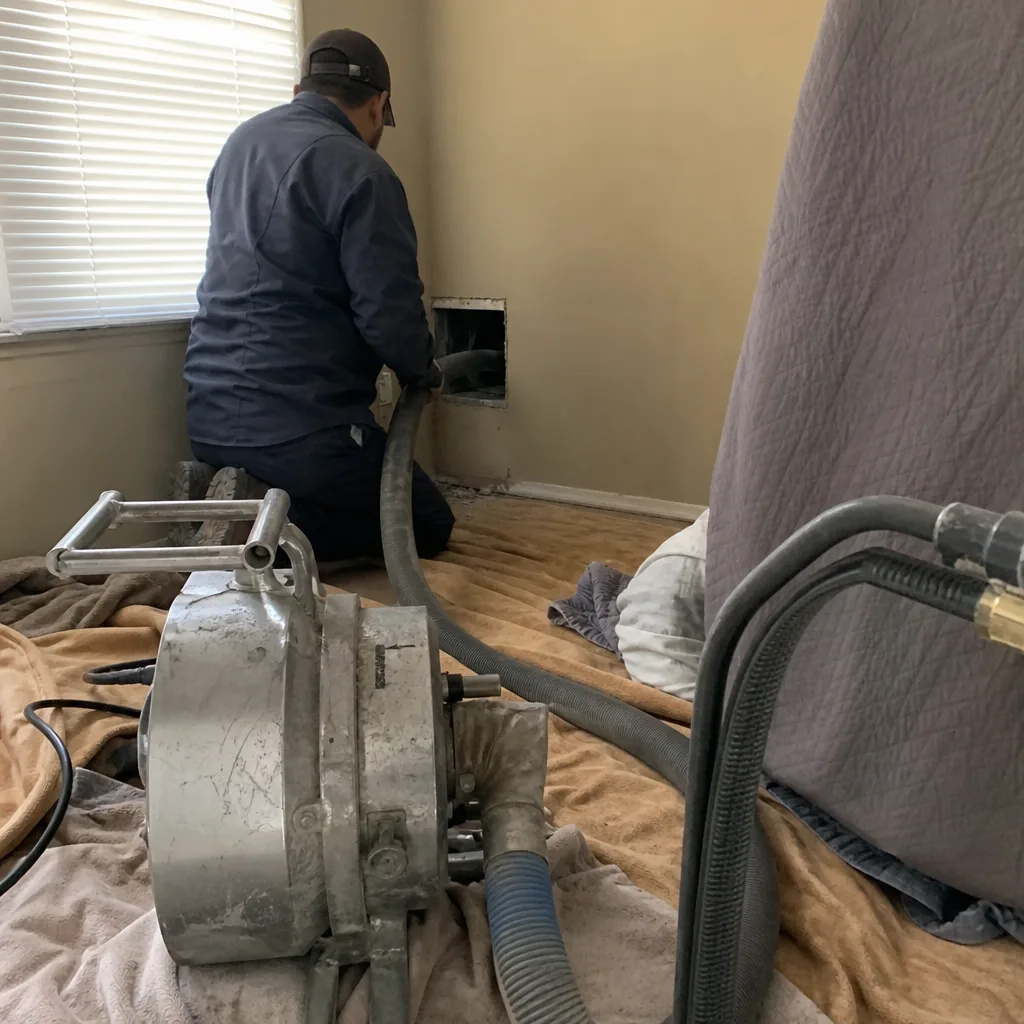
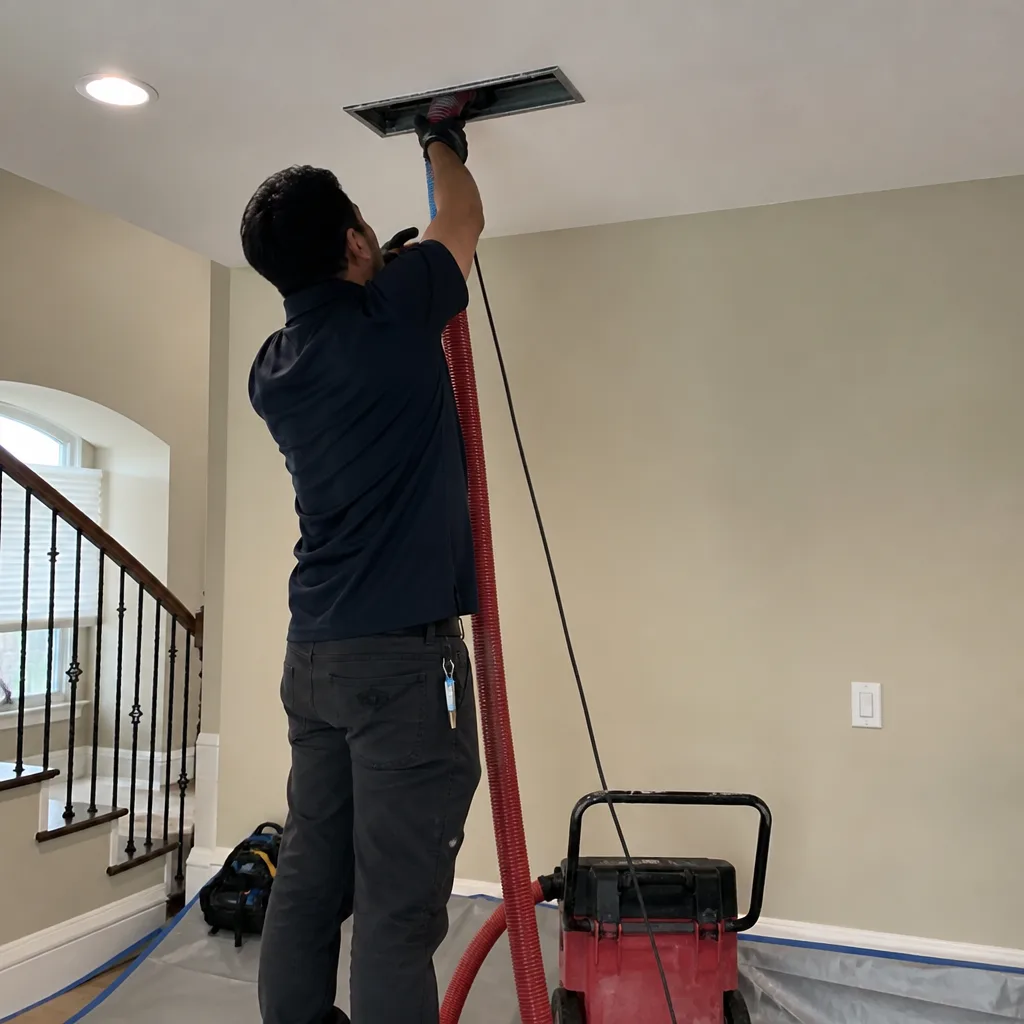
Professional cleaning, by contrast, is performed by a crew that runs this process weekly. They arrive with dual platforms, typically Rotobrush rotary brush equipment for mechanical agitation paired with Nikro HEPA-filtered extraction for airflow and containment, and they’ve already solved the connection problems, the containment problems, and the cleanup challenges. The price differential, when you factor in your time at even $25 an hour, narrows to the point that the professional route is often the cheaper option on a real cost basis.
The break-even point for most Dublin homeowners sits around the moment they need to rent equipment rather than buy a $60 kit, as our How to Hire an Air Duct Cleaning Contractor in Dublin: A Step-by-Step Guide explains. If the job requires anything beyond registers and a short dryer vent, the rational calculation favors calling a professional and spending your weekend doing something else.
How to Inspect and Document Ductwork Before and After Cleaning
The single most useful thing a Dublin homeowner can do, whether they proceed DIY or hire a professional, is document the system’s condition before and after the work. This protects you either way: it verifies a professional job was actually performed, or it proves your DIY effort accomplished something measurable.
Here’s a documentation process that takes 30 minutes and creates an objective record:
- Photograph every register opening before work begins. Remove each register cover and take a photo of the boot showing the visible duct surface. Use the flash. These photos are your baseline.
- Photograph the return plenum. This is usually the dirtiest point in the system. Remove the filter and document what the return side of the coil looks like. If the coil fins are matted with debris, the system needs more than duct cleaning; it needs coil cleaning during the same service.
- Check and photograph flex duct installation. In the attic or crawlspace, look for visible kinks, disconnected sections, or collapsed liner. These are separate from cleaning needs and indicate repair work.
- Mark one heavily-affected register. Note which register has the most visible dust accumulation at the boot. After cleaning, this same register should show dramatic improvement.
- Re-photograph the identical locations after service. Compare before and after images. A legitimate professional cleaning should show visible removal of debris at the marked register and a cleaner coil face at the return.
Documentation protects you from the industry pattern that gives Duct Cleaning Dublin home services a mixed reputation: operators who charge full price and either do superficial work or invent problems that don’t exist. A homeowner with before-and-after photos knows exactly what changed. And when the work is done properly, those same photos become the evidence that the money was well-spent.
Dublin, CA Specific Factors: Climate, Duct Age, and What Contractors See Here
Dublin’s climate creates a specific set of conditions that affect duct systems differently than other Bay Area cities. We’re far enough inland that summer temperatures regularly reach the high 80s and low 90s, which means AC runs hard between May and October. In contrast to coastal cities like San Francisco or Pacifica, Dublin homes cycle cooling equipment for months at a time. That sustained operation means more air volume moving through ducts, more static pressure, and more dust deposition on interior duct surfaces.
The suburban expansion era matters too. Large portions of Dublin’s housing stock were built between 1985 and 2005, which puts many duct systems at 20 to 40 years old. Ductwork from that era was typically installed to code minimums at the time, with materials chosen for cost efficiency rather than longevity. We’ve worked in neighborhoods throughout Dublin, from the older subdivisions near Dublin Boulevard to newer construction on the eastern edges of the city, and the pattern holds: systems in original condition from that era almost always have significant debris accumulation, failed mastic seals, and flex duct that’s overdue for replacement or repair.
Dublin’s geography adds another layer. The Tri-Valley sits in a bowl that traps particulate from the 580/680 corridors, and the dry summer conditions mean dust is fine, powdery, and easily suspended in air. That fine particulate makes its way through filter media and into return ducts regardless of filter quality. Once inside, it coats duct surfaces and reappears as the gray film homeowners see on register covers within a week of cleaning them.
What contractors see in Dublin attics specifically: rodent intrusion into duct systems in older neighborhoods during fall, when field mice press into warm attics looking for nesting sites. They prefer the insulation wrapped around flex duct and can penetrate outer jackets and liners. The result is contaminated duct interiors that require disinfection work beyond standard cleaning. A homeowner looking at a $60 brush kit is not going to resolve a rodent-contaminated duct run, and the brush will simply push contaminated dust through the system.
What Contractor-Grade Equipment Actually Does Differently
The equipment gap between a consumer setup and professional equipment is the entire story. Not incremental improvement, but a categorical difference. Here’s what a Dublin homeowner gets when a professional arrives with real systems rather than a drill attachment and a shop vac.
Rotary brush systems, specifically Rotobrush equipment, use a powered brush head that spins at high RPM while attached to flexible shafting. The brush agitates the entire internal circumference of the duct simultaneously, loosening debris mechanically from the duct wall. Consumer brushes, by contrast, scrub only the area they physically contact, and with no controlled rotational force the contact is inconsistent. Rotobrush agitation works because the debris dislodged from the walls is entrained in the established airflow path, not just pushed forward as a pile.
Nikro HEPA-filtered extraction units supply the airflow and filtration side of the equation. Operating at 2,000 CFM or greater, Nikro units create the negative pressure field required to pull loosened particulate toward a collection point rather than letting it drift. The HEPA filtration means particulate captured doesn’t get exhausted back into the home during the process. This combination, rotary agitation plus HEPA-filtered negative pressure, is what separates professional duct cleaning from a visual surface dusting.
Abatement Technologies negative-air and filtration equipment represents the containment layer. Systems like these, which are the standard in remediation and restoration work, are designed to maintain negative pressure inside the duct system throughout the cleaning process. In practice, that means the duct system pulls air inward at every opening rather than leaking air outward into the living space. For homes in Dublin with allergy or asthma concerns, containment is the difference between cleaning ducts and redistributing dust through the home.
Homeowners with whole-house air quality systems, particularly Honeywell or Aprilaire filtration or humidification setups, have an additional reason to keep the cleaning professional. Those systems are integrated into the duct path. A professional who works regularly alongside Aprilaire and Honeywell components understands how the duct cleaning process interacts with filtration media, bypass dampers, and humidifier pads. A homeowner with a brush kit doesn’t even necessarily know those components are installed in the duct path until the brush tears a bypass damper blade.
Common Mistakes to Avoid
- Using a leaf blower to clean ducts. This circulates air in the wrong direction, pressurizes the system, and fills the home with dislodged dust. We’ve seen the aftermath of this attempt more than once in Dublin homes. It does not work and creates an extensive cleanup job.
- Inserting any rigid tool into flex duct. Flex liner tears happen within seconds of rigid brush contact. Once the liner is torn, repair costs start at several hundred dollars and go up from there, particularly if the damage is in a hard-to-reach attic run.
- Removing duct tape from joints and re-taping. Consumer duct tape fails within a year in Dublin’s attic heat, and you’ve destroyed the original mastic seal in the process. The result is a leaky joint that now requires professional repair work.
- Forgetting to seal off supply registers during agitation. If you do attempt any mechanical cleaning, every register that stays open becomes an exhaust point for dust. Rooms fill with stirred-up particulate and the only containment is absent.
- Snaking a drill brush into a run you haven’t identified. Duct systems carry return air, supply air, and sometimes stale air from bath fans or range hoods in close proximity. A homeowner running a brush into a bath fan duct can damage the damper assembly or disconnect the run at the roof cap.
- Assuming visual inspection from the register boot tells you anything about the full run. You can see perhaps 18 inches into most boots with a flashlight. The remaining 25 feet of that trunk is invisible from any single access point, and its condition is unknown until properly accessed.
- Cleaning ducts without documenting coil condition first. If the evaporator coil is caked with debris, duct cleaning alone won’t resolve the airflow or air quality problems. The coil sits downstream of the filter in most systems. A full assessment identifies coil condition before deciding what work is necessary.
When to Call a Professional
The situations that genuinely require professional equipment are easily identifiable. If your home has flex duct runs longer than 10 feet, if your supply trunk has multiple branches and any 90-degree turns, if you can’t access the full duct path from an attic or crawlspace, if you see rodent activity or pest debris around registers, if anyone in the home has persistent allergy symptoms or respiratory issues, or if your system hasn’t been cleaned in 5 or more years, the DIY route has run out of runway.
If you’ve never had a professional assessment and want to know what you’re working with, Duct Cleaning Dublin offers free estimates in Dublin and the surrounding Tri-Valley. We won’t tell you the job is bigger than it is, and we’ll be specific about what’s there. Call (855) 356-4417 and we’ll take a look.
Frequently Asked Questions
Professional air duct cleaning for a typical Dublin home runs $350 to $650 depending on system size, number of registers, and accessibility. Homes with multiple systems, long attic runs, or rodent contamination requiring disinfection fall toward the upper end of that range or beyond. The critical distinction is that a professional quote should be per system, not per vent. Per-vent pricing creates incentive to inflate the count and is a warning sign you’re dealing with a coupon operator. Call (855) 356-4417 for a specific quote on your home’s system.
Because they’re quoting a different service. Cheap duct cleaning quotes typically cover a visual inspection, register removal and wiping, and blowing air through the register openings with a small vacuum in place. They don’t include the full-system mechanical agitation and negative-pressure extraction that defines a legitimate professional cleaning. In Dublin, you’ll see coupon offers for $49 or $79 whole-house cleaning. The service makes no financial sense at that price; the profit comes from finding “problems” to upsell once the van is parked in your driveway. A legitimate professional will quote you a real number for the actual job.
Demand before-and-after photos of your specific system. A legitimate operator photographs the return plenum, a representative sample of boots, and the interior of straight runs before and after cleaning. These photos should be date-stamped and specific to your home, not stock images. The documentation process outlined above gives you a homeowner-side record to compare. If the photographs show visibly cleaner surfaces, the work was done. If the tech cannot produce photos of the interiors, assume the service was superficial.
For most Dublin homes, every 3 to 5 years is a reasonable interval, assuming the HVAC system is running properly and filters are changed regularly. Homes with pets may need it more frequently, as may homes where renovation work has introduced drywall dust or construction debris into the system. Homes with documented rodent activity need it immediately along with exclusion and repair work. The only way to know your specific system’s condition is a visual inspection by someone with the equipment to see inside the full run, not just the register boot.
Duct cleaning removes accumulated particulate that cycles through your ventilation system every time the blower runs, which can reduce allergen load in the home. However, duct cleaning doesn’t address allergen sources outside the system, such as carpeting, upholstery, or humidity-controlled dust mite populations. The most accurate statement is this: if your ducts are a significant particulate reservoir, and many Dublin systems from the 1990s and early 2000s are, cleaning them removes a genuine contributor. That’s especially relevant for homes with Honeywell or Aprilaire filtration systems, where the filter itself is doing ongoing work but the duct surfaces upstream and downstream still retain accumulated debris.
A professional cleaning using appropriate equipment and techniques won’t damage a properly-installed duct system. The risk factors for damage are using rotor brush equipment in flex duct with known liner compromises, forcing rigid tools through already-deteriorated duct board, or applying excessive mechanical force to mastic-sealed joints that have already failed. A professional assessment includes identifying those conditions before cleaning begins. We flag vulnerable sections and address them through the appropriate repair pathway rather than brushing through and hoping for the best. The Air Duct Repair in Dublin service exists specifically for these situations.
The Bottom Line
The DIY duct cleaning decision comes down to physics, not ambition. Consumer equipment cannot produce the air volume required to remove compacted debris from a residential duct system. That isn’t a reflection on the homeowner; it’s a limitation of the tools. The legitimate DIY tasks, register cleaning, short dryer vent clearing, and filter replacement with inspection, are worth doing and worth doing well; see our more guides & resources for deeper home maintenance help. Everything beyond that requires negative-pressure extraction equipment paired with mechanical agitation. Dublin homeowners who understand this distinction save money, avoid damaging their systems, and end up with real results instead of a weekend of dust and frustration.
Written by the team at Duct Cleaning Dublin, serving Dublin since 2017.
See the difference
 Before
 After
 Before
 After
 Before
 After