
Last updated November 2, 2026
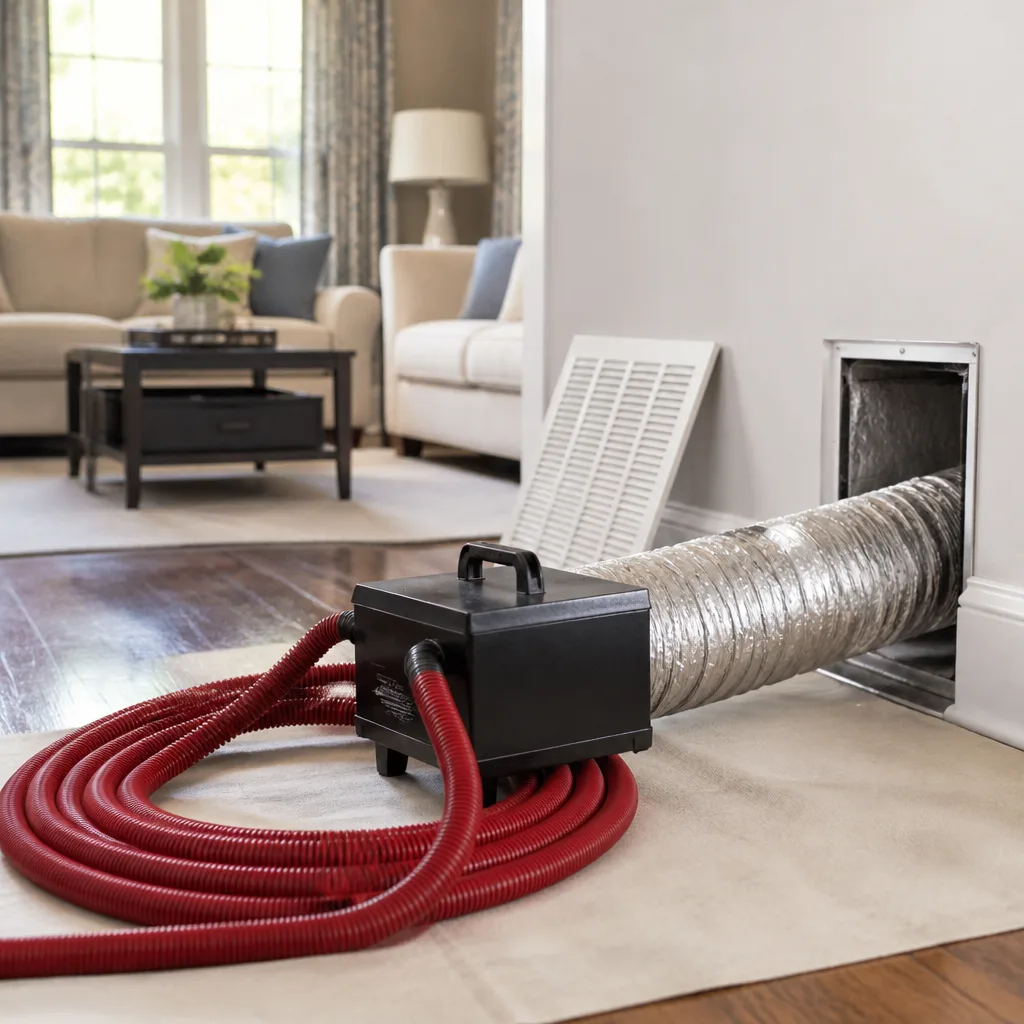 Whole-home duct cleaning
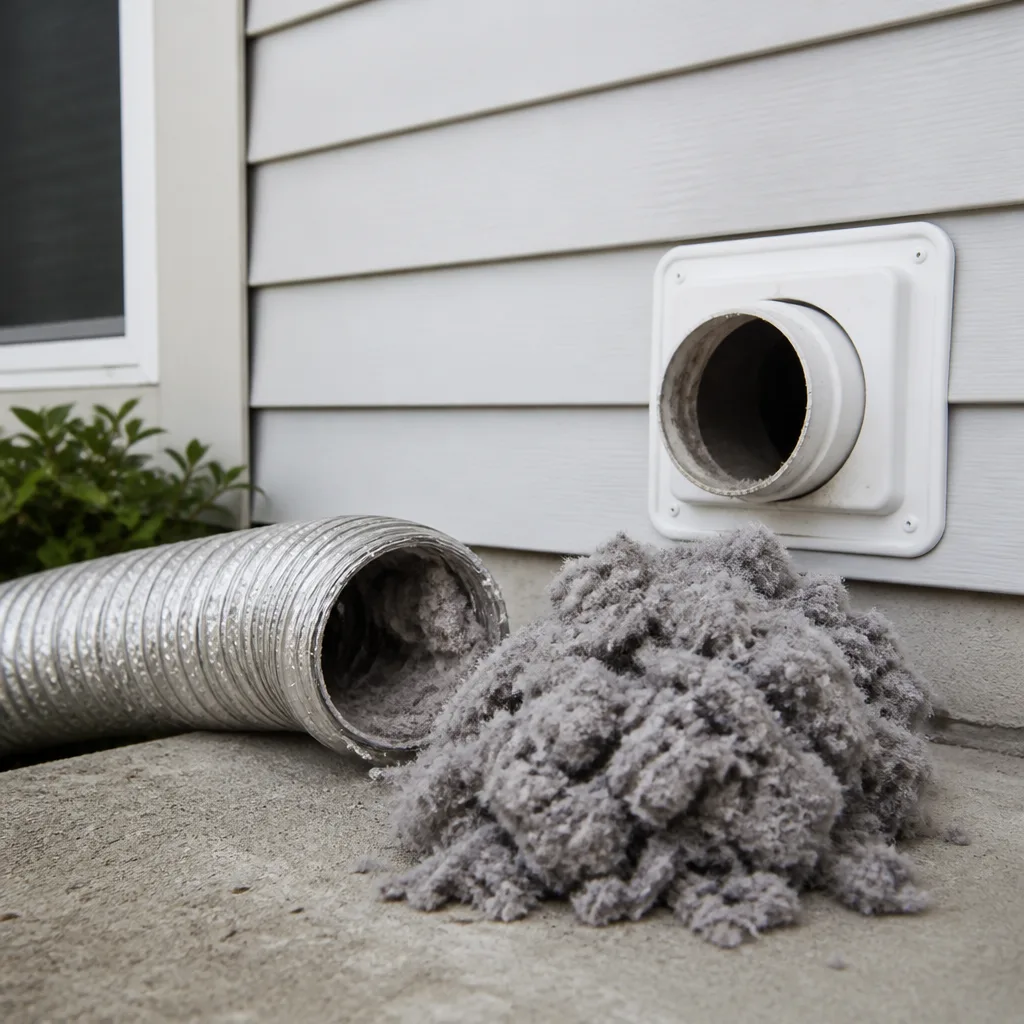 Dryer vent cleaning
 Camera inspection
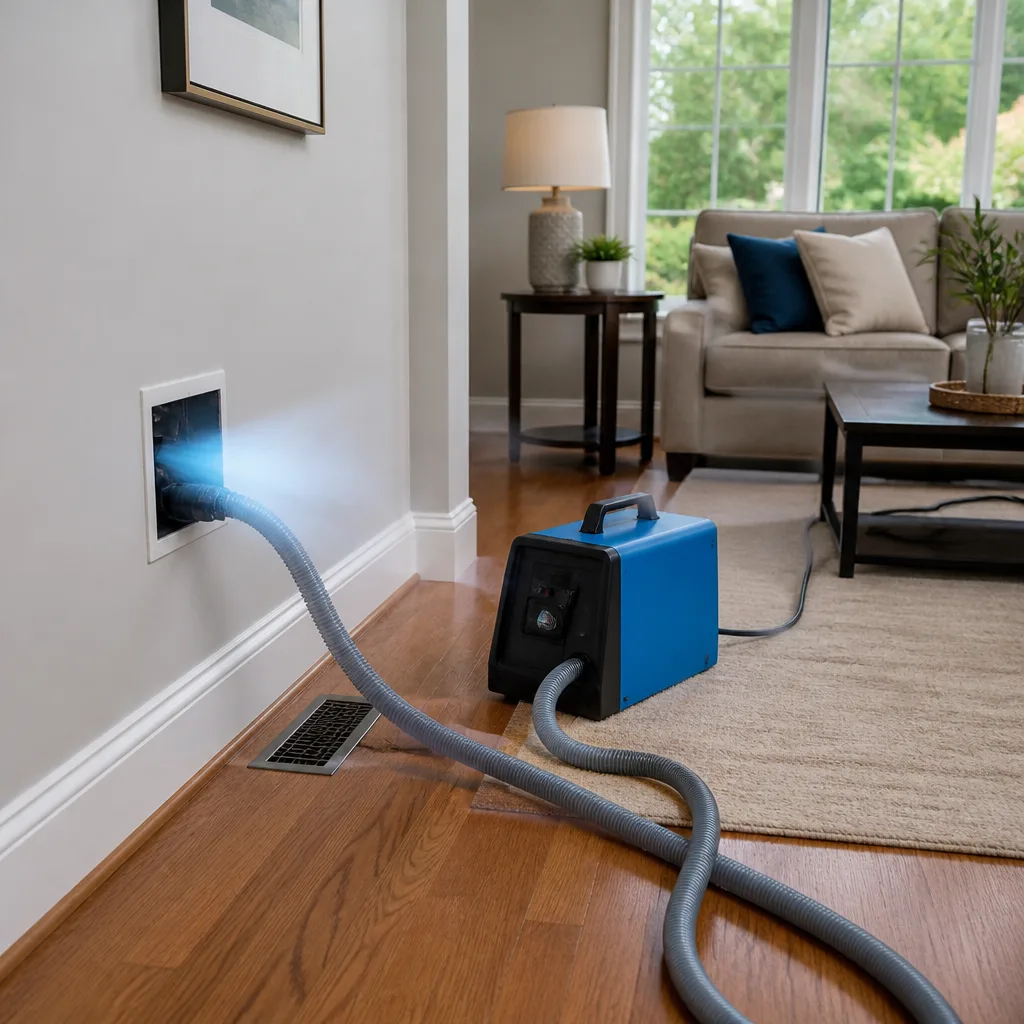 Sanitizing & deodorizing
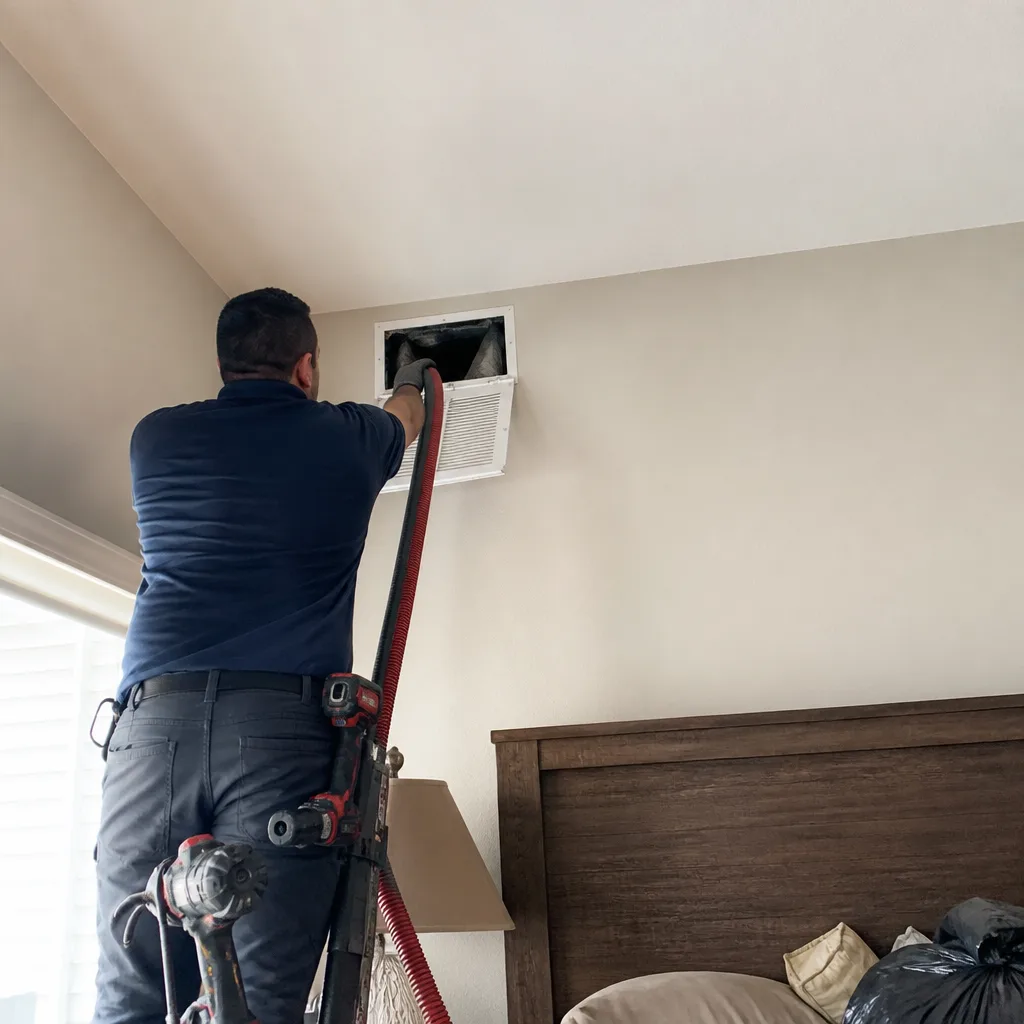
Whole-system duct and dryer vent check with before-and-after photos - you see exactly what came out of your vents
That "$99 whole-house special" is a bait ad - the real number appears once they are in your hallway, or the "clean" is a shop-vac at the register. We photograph the inside of your ducts before and after instead.
Seasonal Air Duct Cleaning Care for Dublin: Year-Round Homeowner’s Guide
Wildfire smoke events in August don’t just affect air quality while the smoke is visible. The ultrafine particulate that bypasses standard filters settles into flex duct lining and re-suspends for weeks afterward, long after AQI returns to green. If you’re a Dublin homeowner, you’ve smelled it: that faint campfire odor coming through the registers on a cool October morning, months after the last smoke plumes cleared. This guide breaks down what’s actually happening inside your ductwork across all four Tri-Valley seasons, and gives you a practical, month-by-month playbook for staying ahead of it. For related reading, see our Air Duct Cleaning Emergency Preparedness Guide for Dublin Homes. You’ll learn which seasonal risks matter in Dublin specifically, what to inspect yourself, and when the problem calls for professional-grade equipment rather than another visual check.
Styles & brands we work with
- Whole-home duct cleaning
- Dryer vent cleaning
- Camera inspection
- Sanitizing & deodorizing
Quick Answer
Seasonal air duct cleaning care in Dublin, CA means scheduling specific maintenance tasks around the Tri-Valley’s four distinct stress periods: post-rain moisture inspection in spring, pre-smoke-season filter upgrades in early summer, post-smoke particulate assessment in fall, and heating-startup debris management in winter. Most Dublin homes benefit from a professional Air Duct Cleaning assessment twice a year, with a full cleaning every 3 to 5 years depending on occupancy, pets, and proximity to wildfire corridors.
Table of Contents
- Spring (March – May): Post-Rain Moisture and Crawlspace Duct Inspection
- Summer (June – September): Wildfire Smoke Preparation and Filter Protocol
- Fall (October – November): Post-Smoke-Season System Assessment
- Winter (December – February): Heating Startup and Debris Release Management
- How to Layer Duct Assessment Against Your Dublin HVAC Service Schedule
- What Professional Equipment Actually Does That a Shop Vac Can’t
- Common Mistakes to Avoid
- When to Call a Professional
- Frequently Asked Questions
- The Bottom Line
Spring (March – May): Post-Rain Moisture and Crawlspace Duct Inspection
Dublin’s wet season runs November through March, and by the time April rolls around, the damage is often already done. The Tri-Valley’s clay-heavy soil holds moisture against foundation walls and crawlspace floors longer than most homeowners realize. That moisture wicks upward into the crawlspace air, where it meets cold metal supply ducts carrying air-conditioned air from the first warm days of spring. The result is condensation, and condensation is where the real problems begin.
When condensation forms on the exterior of metal duct runs, it drips onto insulation and into flex duct connections. Flex duct, the accordion-style tubing used extensively in Dublin homes built since the 1980s, is particularly vulnerable. Its inner liner absorbs moisture, and once damp, it sags between support straps. A sagging flex duct run isn’t just an efficiency problem; the low points collect standing water, which breeds mold and creates a perfect environment for dust mites. By May, that moisture has had weeks to work into the system.
Our post-rain inspection routine for Dublin homes follows this sequence:
- Check the crawlspace access point for musty odor. A strong earthy smell at the crawlspace hatch is the earliest indicator of moisture problems affecting ductwork.
- Inspect visible flex duct for sagging between supports. Any low point that creates a U-shape is a water trap. Even if it’s dry at inspection time, the sag means condensation has been pooling there.
- Look for water staining on the crawlspace vapor barrier. Standing water or dark stains directly beneath duct runs suggest the ducts have been dripping.
- Check registers in rooms above the crawlspace for visible moisture rings or rust on the register screws. Rust on interior registers is a telltale sign of elevated humidity inside the duct run.
- Run the system for 15 minutes and note any increase in allergy symptoms among household members. Spring pollen season in Dublin masks duct-related symptoms, but if symptoms spike specifically when the system runs, the ducts are likely the source of re-suspended allergens.
Dublin’s spring pollen load is significant, with oak, grass, and olive pollen peaking between March and May. That pollen enters the duct system through the return air intake every time doors open and close. By late spring, the average Dublin home’s ducts have accumulated a fresh layer of pollen on top of whatever winter deposits remain. This is why spring is the most common time our team at Air Duct Cleaning in Dublin gets calls from homeowners who’ve noticed their allergy symptoms worsening indoors, not just outside.
The key insight for spring: moisture inspection must happen before the first heat wave. Once Dublin’s summer heat arrives, crawlspaces dry out quickly, and the visual evidence of moisture problems fades. Schedule your crawlspace duct inspection for March or early April, not June.
Summer (June – September): Wildfire Smoke Preparation and Filter Protocol
Dublin sits in a wind corridor that funnels smoke from Northern California wildfires directly into the Tri-Valley basin. The Camp Fire smoke in 2018, the LNU Lightning Complex in 2020, and the Dixie Fire in 2021 all produced multiple consecutive weeks of AQI readings above 150 in Dublin. What most homeowners don’t understand is that those smoke events permanently changed the baseline condition of their ductwork.
Standard 1-inch MERV 8 filters, which are installed in the majority of Dublin homes, capture particles down to about 3 microns. Wildfire smoke’s most dangerous components are 0.3 to 1 micron. Those ultrafine particles pass through standard filtration and enter the duct system, where they deposit onto the interior surfaces of supply runs and register boots. The deposit builds up over multiple smoke events, and it doesn’t leave on its own. Every subsequent system cycle re-suspends a portion of it into living space air.
The window between June 1 and the first significant smoke event is the time to act. Here’s the pre-smoke-season protocol we recommend for Dublin homeowners:
- Schedule a professional duct cleaning before July. The goal is to start the smoke season with clean duct surfaces. Removing existing deposits means there’s less accumulated particulate to re-suspend when smoke arrives.
- Upgrade to a MERV 11 or MERV 13 filter during smoke season. These capture a meaningful percentage of wildfire particulate. Check your system’s static pressure tolerance before upsizing; a filter that’s too restrictive will starve the blower and cause it to overheat.
- Run the fan continuously during active smoke events. Thermostats with a fan setting marked “On” or “Circulate” keep air moving through the filtration system even when the system isn’t heating or cooling. This is the single most effective thing most Dublin homeowners can do during smoke events.
- Replace or clean filters every 2 – 4 weeks during heavy smoke. Wildfire particulate loads filters much faster than standard dust. A filter that looks black after two weeks is doing its job, but it needs to be changed to keep doing it.
- After each smoke event passes and AQI returns below 50, run the system for 2 – 3 hours with windows open. This purges volatile organic compounds that filtering alone can’t remove.
Homes with Aprilaire whole-house filtration systems have a significant advantage during Dublin’s smoke season. These systems use media filters with greater surface area and lower pressure drop than 1-inch filters, allowing higher MERV ratings without starving the blower. If your home already has an Aprilaire cabinet installed, use the highest MERV media that fits; if not, a 4-inch media cabinet retrofit is worth considering before your next duct cleaning.
A point that’s often missed: during a smoke event, the return air intake becomes the critical entry point. Seal the gap around the return grill with a high-quality filter, not just duct tape, and make sure the return duct itself isn’t drawing air from an unconditioned space like an attic or garage. Leaky return ducts pull smoke-laden outdoor air directly into the system, bypassing whatever filter is installed. We see this frequently in Dublin homes where the return plenum has separated slightly at the connection point. The air handler runs constantly during smoke season, and each cycle pulls unfiltered outdoor air through the gap.
Fall (October – November): Post-Smoke-Season System Assessment
By October, Dublin’s smoke season is usually winding down, and the damage has been done. The question isn’t whether particulate entered the duct system; it’s how much, where it settled, and what condition the mechanical components are in after months of elevated particulate loading.
This is the season for a detailed visual assessment, and it’s the one time of year we recommend getting into the system with a scope camera or removing registers for a closer look. Here’s what to check, and what each finding means:
- The filter. If the filter came out black during smoke season, that’s normal and expected. If it’s black now, weeks after AQI returned to green, that’s a red flag. It means the system is cycling particulate from inside the ductwork back through the filter, which indicates significant interior duct deposits. The ducts themselves have become the source.
- The blower wheel. Blower wheels accumulate smoke particulate on the forward-curved surfaces of each blade. A visible gray or brown coating on the wheel means the blower is moving less air per revolution than it should. You’ll notice weaker airflow at registers and possibly a slight vibration or hum change. This requires the blower to work harder to maintain the same airflow, which shortens motor life.
- The evaporator coil area. If your system ran in cooling mode during smoke events, the evaporator coil was wet from condensation. Wet coil surfaces capture particulate like a filter, and that particulate bakes onto the coil surface as the coil dries. A coated evaporator coil reduces cooling efficiency significantly. The telltale sign is a system that runs longer to reach setpoint with no other obvious cause.
- Register interiors. Pull a register or two in rooms you use daily. A thin gray film on the interior surfaces of the register boot is normal after a smoke season. A thick, woolly-looking deposit is not, and it’s evidence that the duct interior carries a significant particulate load that keeps re-suspending.
Fall is also the right time to assess whether Air Duct Repair in Dublin work is needed before winter heating season. The same smoke events that deposit particulate also reveal weaknesses in the duct system. Any gap, separation, or disconnected run that allowed air to leak during smoke season allowed unfiltered smoke-laden air to enter during that entire period. Those leaks didn’t fix themselves, and they’ll cost you more in winter when heated air escapes into unconditioned spaces. Post-smoke season is the ideal time to address this because the leak evidence is freshest, and the heating season hasn’t started yet to drive up the cost of inefficient ducts.
In our experience, Dublin homes that completed a full duct cleaning in the previous 24 months absorb a smoke season much better than those that entered it with five-plus years of accumulated deposits. The clean duct interior simply has less material to re-suspend, and the post-season assessment tends to find manageable rather than dramatic contamination levels.
Winter (December – February): Heating Startup and Debris Release Management
The first heating cycle of the year is the highest-risk moment for releasing accumulated debris into Dublin living spaces. Here’s why: during the summer and fall, your system ran in cooling mode, which kept moisture in the duct system low. Debris that accumulated during smoke season sat dormant, held in place by static and the natural adhesion of particulate to duct surfaces. When the furnace fires for the first time, everything changes.
Heat does two things to duct interiors. First, it lowers relative humidity inside the duct, which weakens the electrostatic bonds holding dust and particulate to duct surfaces. Second, it causes thermal expansion of the duct material itself. Metal ductwork expands at a different rate than the debris sitting on it, and that differential movement breaks the adhesion. The result: the first several heating cycles of the season dislodge a meaningful portion of the season’s accumulated debris, sending it through the registers and into living spaces.
Dublin homeowners often report a burning smell the first time the furnace runs, and they’re told it’s normal. That’s true for the furnace itself. What’s less recognized is the visible dust that appears on furniture and horizontal surfaces in the days following heating startup. That dust came from inside the ducts, and it’s the accumulated particulate from summer and fall being released in a concentrated burst.
Here’s the winter startup protocol that minimizes debris release:
- Before the first heating cycle, replace the filter. This ensures maximum capture of whatever gets dislodged when the system starts.
- Set the thermostat to a moderate temperature differential for the first few cycles. Instead of jumping from 60 to 72 degrees, stage the warm-up over two or three cycles. Thermal shock is what breaks debris loose; a gentler ramp reduces the burst.
- Run the fan continuously for the first 48 hours of heating season. Continuous circulation catches dislodged debris in the filter rather than allowing it to settle in living spaces.
- Vacuum around supply registers daily for the first week. Whatever doesn’t reach the filter settles near the register, and removing it promptly prevents re-entry into the system.
- After two weeks of heating, note whether dust accumulation persists. If so, the duct interior likely carries a significant load, and a professional cleaning before the deepest part of winter is the practical answer.
Dublin’s winter heating season is relatively short compared to other parts of the country, but it’s intense. The temperature swings between cold mornings and warm afternoons mean the system cycles on and off more frequently than in a consistently cold climate. Each startup cycle repeats the thermal expansion process. More cycles mean more debris release events, which means the problem compounds throughout the season rather than happening once and being done.
How to Layer Duct Assessment Against Your Dublin HVAC Service Schedule
Most Dublin homeowners have an HVAC tune-up scheduled once a year, typically in spring or fall. The question we hear most often is whether the duct assessment should happen before or after the system tune-up. The answer is consistent: duct cleaning should happen after the HVAC tune-up, not before.
An HVAC tune-up addresses the mechanical system: blower motor, electrical connections, refrigerant charge, burners, and combustion safety. That work can dislodge debris from the mechanical components, which then enters the duct system and settles. If you clean ducts first and then tune the system, the tune-up work introduces fresh debris into freshly cleaned ducts. The correct order is:
- HVAC tune-up first. The technician works on the mechanical system, dislodging whatever debris is in the blower compartment, evaporator coil area, and heat exchanger vicinity. That debris enters the ducts.
- Duct cleaning second. The duct cleaning removes the tune-up debris along with whatever else has accumulated in the duct interior. The system is then clean end to end.
- Filter replacement last. A fresh filter goes in after the duct cleaning, ensuring the newly cleaned system starts with maximum filtration capacity.
For Dublin homes in wildfire smoke corridors, the ideal annual schedule looks like this:
- April: Post-rain crawlspace duct inspection. Address any moisture issues found.
- May – June: HVAC tune-up, followed by duct cleaning if the system needs it. This positions the home for smoke season with clean duct surfaces.
- July – September: Elevated filtration during smoke season. Replace filters on a 2 – 4 week cycle during active smoke.
- October: Post-smoke assessment. Check filter condition, blower wheel coating, and evaporator coil buildup. Address any duct repair needs.
- November – December: Before heating startup, replace filters and follow the winter startup protocol.
This cadence means the duct system gets professional attention at the two moments when it’s under the most stress: just before smoke season and just after it. Homeowners who follow this schedule rarely face significant duct-related air quality problems, because the system never accumulates enough debris between professional cleanings to cause issues.
One point worth making clearly: the seasonal assessment and the professional cleaning are not the same thing. A homeowner can and should do visual checks themselves each season. That’s the layered approach. But visual checks can’t remove accumulated particulate, can’t address moisture inside duct interiors, and can’t repair separated or damaged runs. The visual check is how you know when to escalate; the professional cleaning is the escalation.
What Professional Equipment Actually Does That a Shop Vac Can’t
The difference between a professional duct cleaning and a DIY attempt isn’t a matter of effort. It’s a matter of what happens inside the duct when the work is being done. Most homeowners understand that a shop vac can’t reach 30 feet into a duct run. What they don’t understand is that even if it could, the shop vac’s lack of containment would make the job actively harmful.
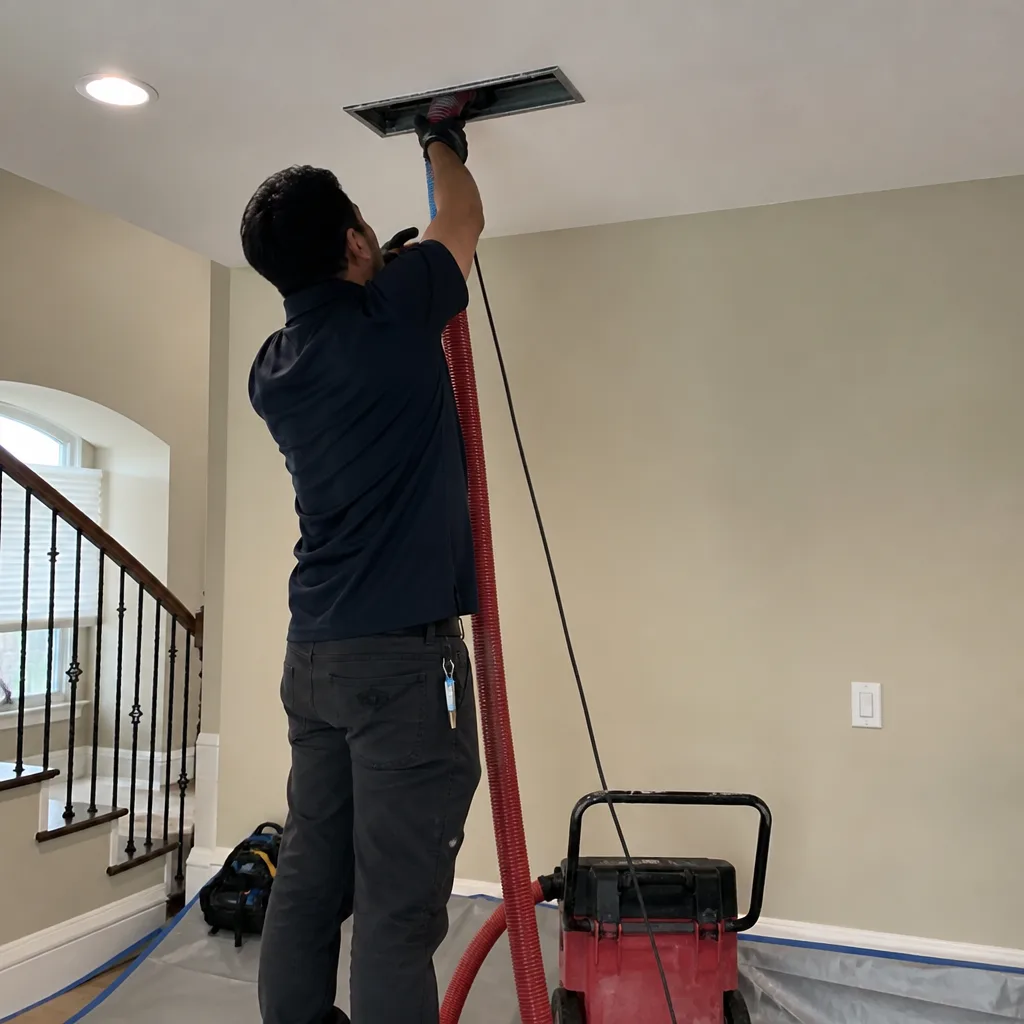
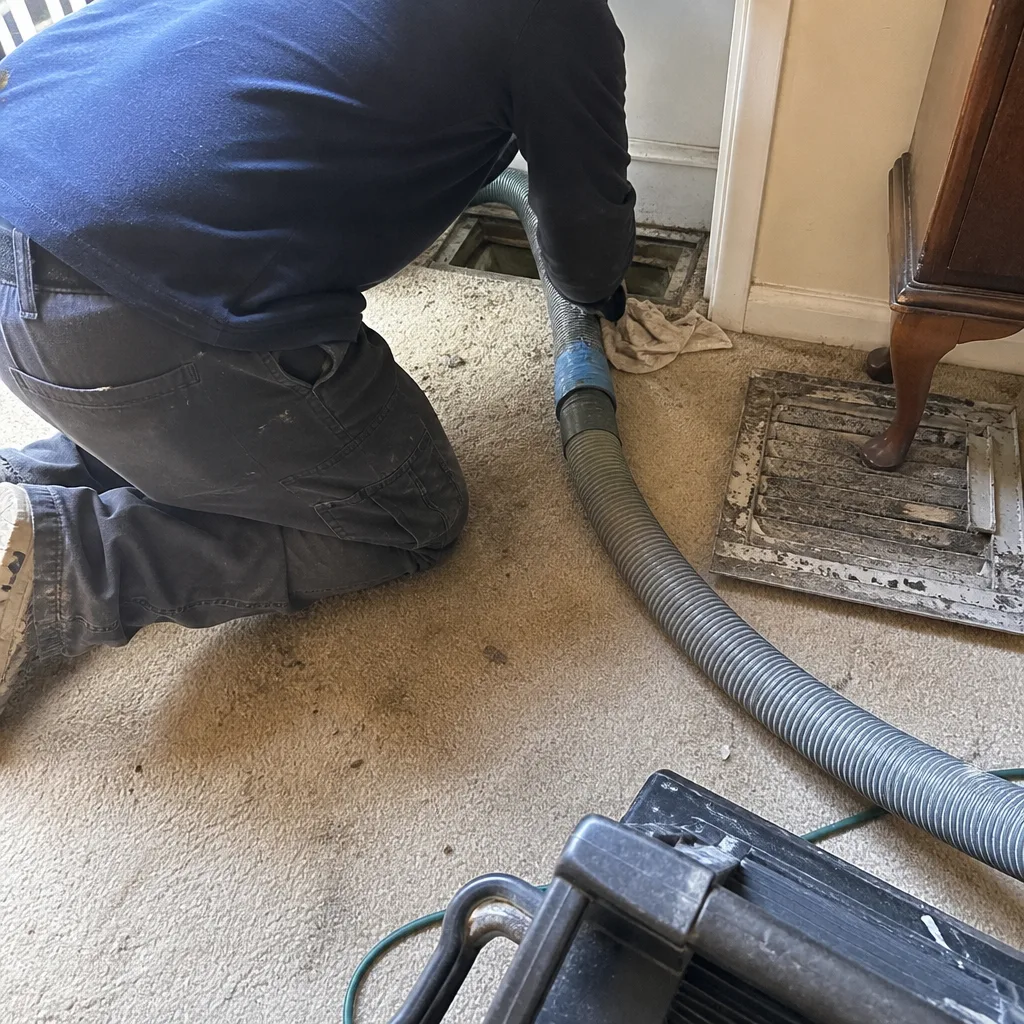
Professional duct cleaning in Dublin relies on two distinct capabilities: agitation and extraction, done simultaneously. Agitation means physically breaking the bond between debris and duct surface. Extraction means capturing that debris in a contained system so it can’t re-settle or escape into the home. Without both capabilities working together, you’re either not removing the debris or you’re just moving it around.
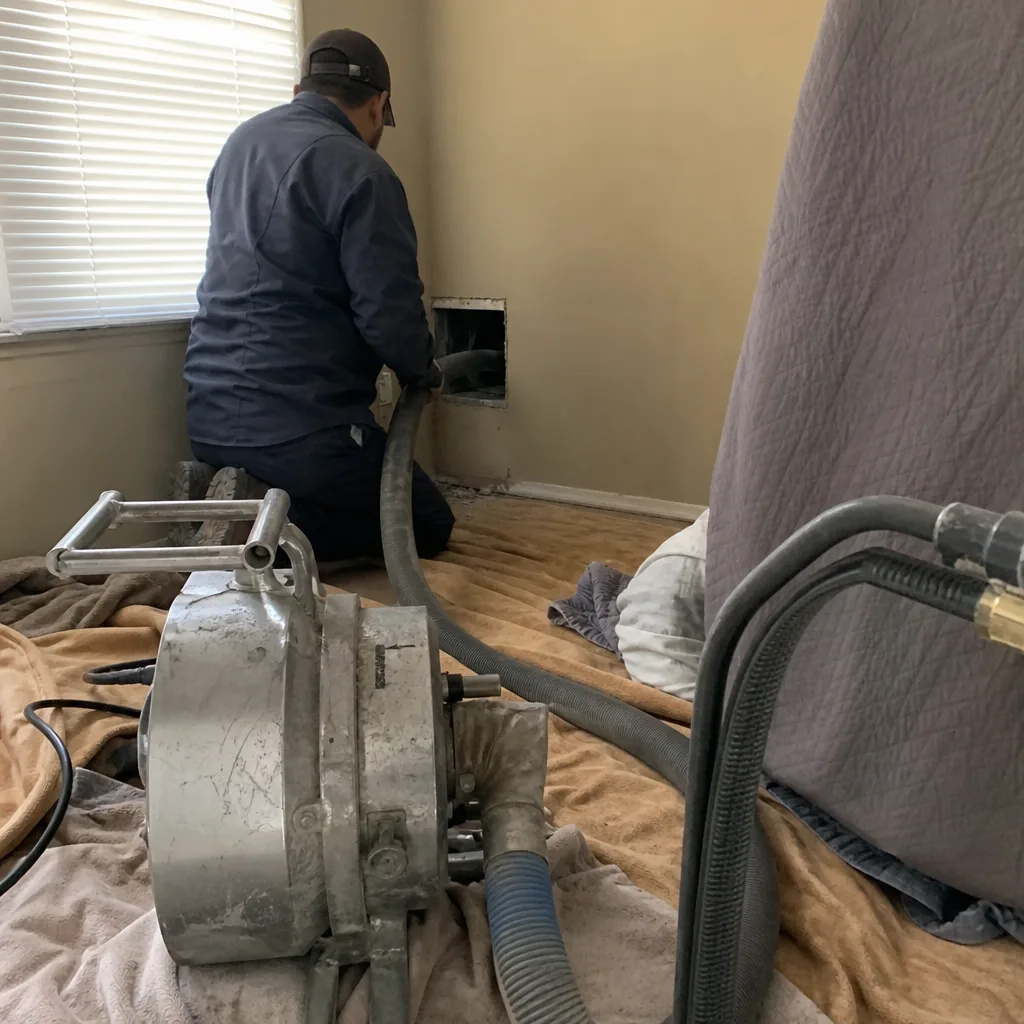
Rotobrush rotary brush systems work by running a motorized brush through the duct interior while the system’s vacuum pulls removed debris back into a contained collection system. The brush agitates, the vacuum extracts, and the two happen in the same pass. Nikro HEPA-equipped equipment adds an additional layer of filtration: the extracted air passes through a HEPA filter before being returned to the space, which matters when you’re cleaning ducts in an occupied home where the cleaning process itself is generating airborne particulate in the immediate area.
Abatement Technologies negative-air and filtration equipment takes containment further. When we run a negative-air setup on a Dublin duct cleaning job, the work area is maintained under negative pressure relative to the rest of the home. Air flows toward the work area, not away from it. This is the same principle used in mold remediation and asbestos abatement, and it means the particulate being dislodged from the ducts can’t migrate to other rooms while the work is happening. For Dublin homes where a family member has significant allergy or respiratory conditions, this level of containment is the difference between a cleaning that improves air quality and one that temporarily makes it worse.
For homes with whole-house filtration from Aprilaire or Honeywell, we take a specific approach: the central filtration system runs during the duct cleaning process, and we check filter condition as part of the service. A Honeywell media cabinet running a MERV 11 filter during the cleaning captures any particulate that escapes containment, adding a final layer of protection. After the cleaning, we recommend the homeowner leave the system fan running for a few hours to allow the central filtration to polish the air.
Guardsman-grade protective treatments come into play after the cleaning, not during it. Once the duct interior is clean, a protective coating can be applied to inhibit microbial growth on the newly cleaned surfaces. It’s not a substitute for cleaning, and it’s not something we recommend without the cleaning first. Applied to a dirty duct surface, it seals the debris in place; applied to a clean surface, it helps keep the surface clean longer.
The blunt summary: a shop vac removes whatever loose debris it happens to reach. Professional equipment removes the adhered debris that’s actually causing the problem, and it does so without filling the rest of the home with the material it’s removing. For Dublin homeowners who’ve experienced a bad duct cleaning from a cut-rate outfit, the difference is immediately obvious.
Common Mistakes to Avoid
- Cleaning ducts in the wrong season, or not at all. Dublin’s smoke season is the dominant air quality factor. Cleaning before smoke season means entering the fire-prone months with clean ducts. Cleaning after means removing the smoke season’s deposits before winter heating re-suspends them. The wrong season to skip is the one you’re in when something feels off.
- Treating the HVAC tune-up as a duct cleaning. An HVAC technician tunes the mechanical system. They may vacuum the blower compartment, but they’re not addressing the 30 – 50 feet of duct runs connecting that system to your rooms. These are different jobs with different equipment, and one doesn’t substitute for the other.
- Using high-MERV filters as a substitute for cleaning. A MERV 13 filter captures more particulate entering the system, but it does nothing for particulate already inside the ducts. In fact, a restrictive filter on a dirty system often makes air quality worse by reducing airflow and allowing more time for particulate to settle in living spaces before reaching the filter.
- Ignoring the crawlspace during the wet season. Dublin’s clay soil holds moisture against crawlspace walls, and the damage to flex duct from condensation takes months to become visible. By the time a homeowner notices mold odor at a register, the moisture damage is well advanced.
- Running the highest-restriction filter during smoke season without checking static pressure. If the blower can’t handle a MERV 13 filter, it works harder, runs hotter, and eventually fails. Check the manufacturer’s maximum recommended filter restriction before upgrading. Homes with Aprilaire or Honeywell media cabinets generally handle higher MERV ratings without issue; homes with 1-inch filter slots often can’t.
- Assuming the burning smell at heating startup is “just the furnace.” The furnace burning smell is dust on the heat exchanger, and that’s normal. Persistent dust on furniture and horizontal surfaces for days after heating startup is not the furnace. That’s the duct interior shedding its accumulated load, and it means the ducts needed cleaning before heating season started.
- Deferring duct repair because the system “still works.” A separated duct run in a crawlspace still delivers air, just less efficiently, and it draws unconditioned crawlspace air into the system during smoke season. For Dublin homes, the biggest hidden cost of unrepaired duct leaks is wildfire smoke infiltration specifically because the smoke season is when the leak matters most.
When to Call a Professional
Call a professional when visual checks reveal problems that are beyond a homeowner’s scope. Visible mold on register interiors or crawlspace duct surfaces is an immediate call, no exceptions. A persistent musty odor that increases when the system runs suggests moisture inside the ducts, and it needs professional assessment with scope inspection. Visible dust accumulation on furniture that returns within days of cleaning the home points to the ducts as the source, and it typically means the duct interior carries a significant load that only extraction equipment can remove. Reduced airflow at individual registers despite a clean filter and running blower is often a duct repair issue: a separated run, crushed flex duct, or a disconnected boot. If you’re buying or selling a Dublin home, a professional duct inspection should be part of the transaction diligence, particularly for older homes where duct history is unknown. Our team at Duct Cleaning Dublin home works with homeowners and real estate professionals throughout the Tri-Valley on pre-sale duct assessments. Call (855) 356-4417 for a free estimate, and we’ll give you a straight answer about what your ducts actually need.
Frequently Asked Questions
Most Dublin homes benefit from a professional duct cleaning every 3 to 5 years, with the interval shortened to 2 to 3 years for homes with pets, smokers, recent renovation history, or in a wildfire smoke corridor. Homes with household members who have significant allergy or asthma conditions often justify more frequent cleaning. The seasonal stresses in Dublin mean that cleaning frequency depends more on what your system has been through than on a fixed calendar. Call (855) 356-4417 to talk through your home’s specific situation and get an honest recommendation.
A whole-home air duct cleaning in Dublin typically runs $400 – $700 for a home up to 2,500 square feet, depending on system complexity, number of returns, and whether additional services like dryer vent cleaning are bundled. See our Air Duct Cleaning Cost Breakdown: The Dublin Homeowner’s Reference for 2026 for detailed pricing factors. Larger homes or systems with significant contamination may run higher. We quote one flat price per system before work starts, not a per-vent price that can balloon during the job, and the estimate is free. Call (855) 356-4417 for exact pricing on your system size and layout.
Cheaper duct cleaning quotes almost always reflect lesser equipment and fewer steps in the process. A shop-vac-and-brush approach costs less because it takes less time and removes less material, but it can’t reach the full length of most Dublin duct runs and lacks the containment to prevent cross-contamination during the work. Professional-grade Rotobrush and Nikro systems with extraction and HEPA filtration cost more to operate, and the difference shows up in the results and the cleanliness of the home during service.
You should be able to see the before-and-after condition of your ductwork with scope camera documentation. A professional service takes interior photos or video of representative sections before and after cleaning, and those images should be available to you. You should also see the condition of the filter after cleaning, which will be visibly heavier with captured particulate. If a company can’t show you what they did, that’s a signal in itself.
Yes. Wildfire smoke particulate deposits on duct interior surfaces during smoke events, and that residue re-suspends into living spaces each time the HVAC system cycles. Professional duct cleaning removes the accumulated smoke residue, which is the only way to prevent continued re-suspension after the smoke clears. The combined effect of clean ducts plus upgraded filtration during future smoke seasons is the strongest defense Dublin homeowners have against indoor smoke contamination.
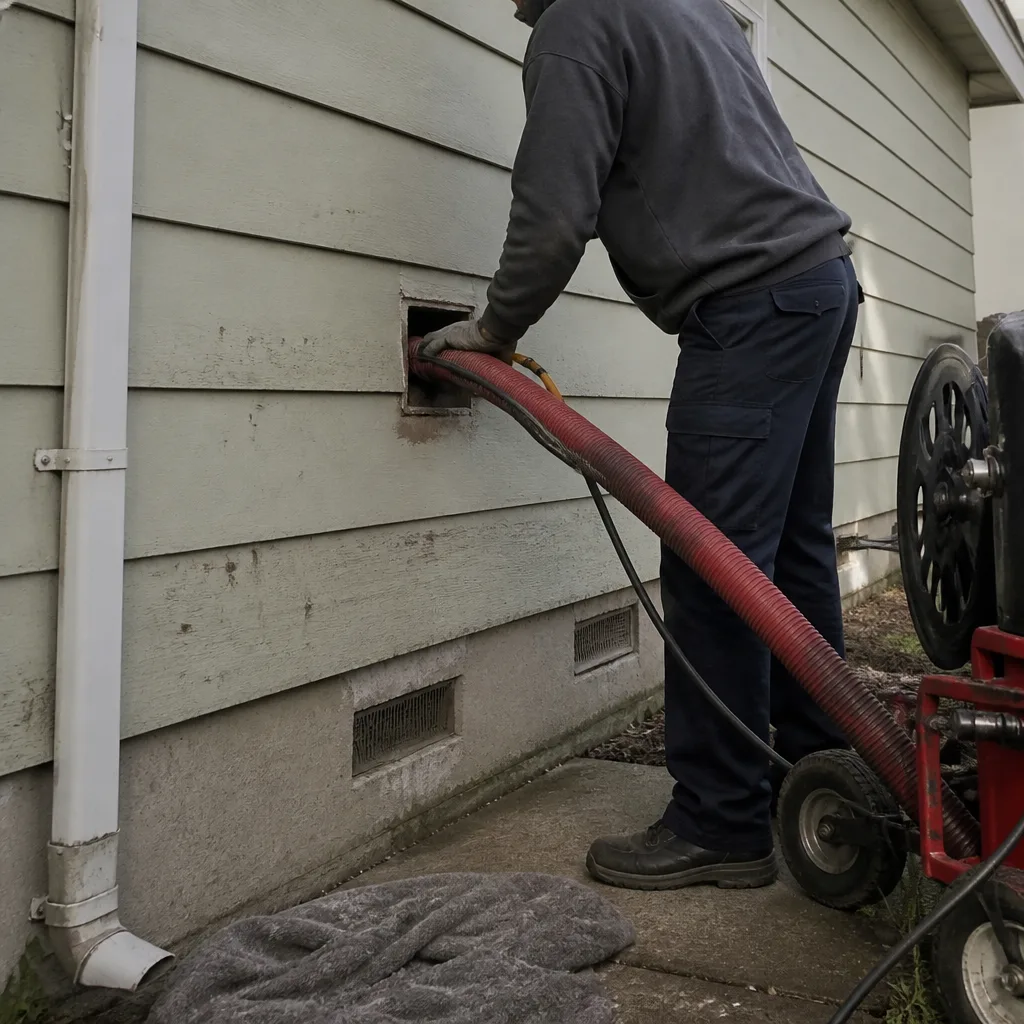
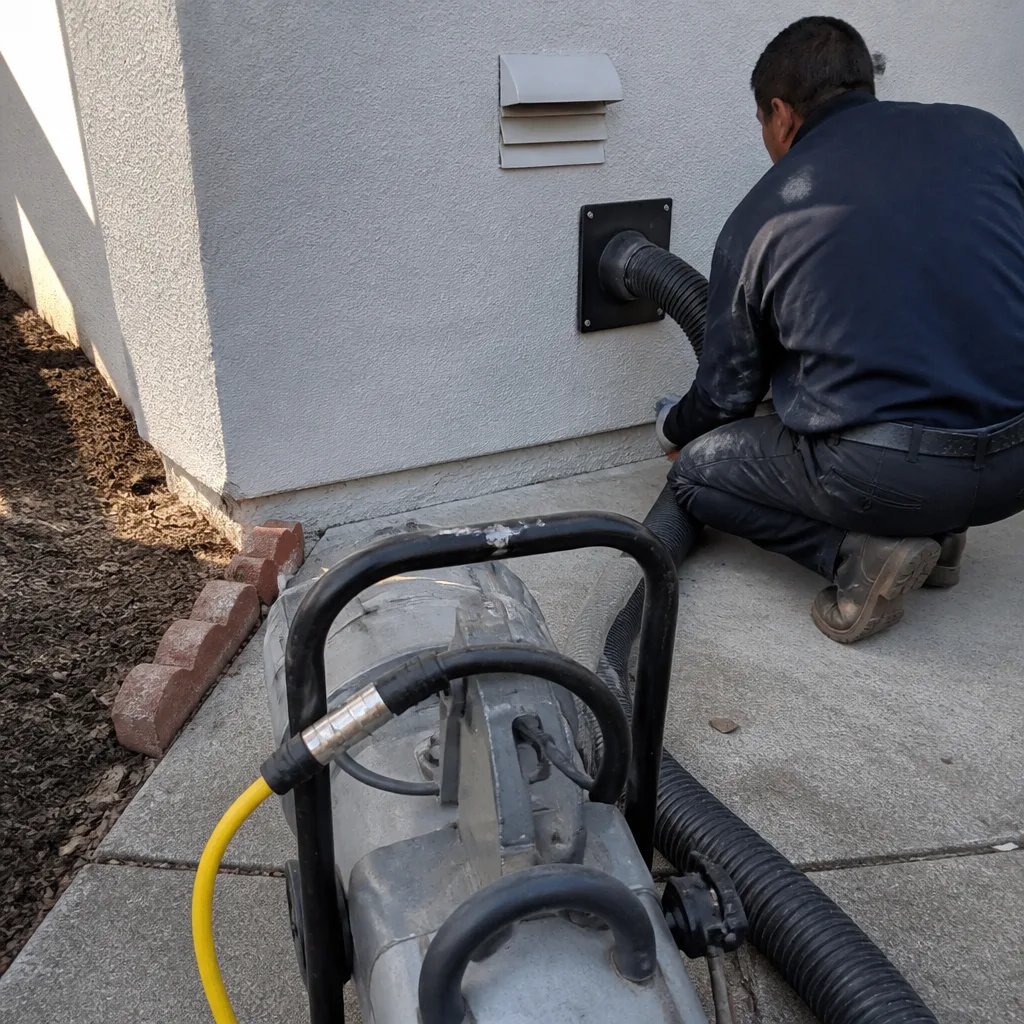
They’re separate systems and can be scheduled separately, but many Dublin homeowners bundle them because the combined service is more convenient and slightly less expensive than booking both independently. The dryer vent carries different risks: lint accumulation is a fire hazard, and a clogged dryer vent forces the dryer to work harder and run longer. We treat Dryer Vent Cleaning in Dublin as a fire-prevention service, not an add-on, and recommend it annually for most households.
The Bottom Line
Dublin’s four seasons create four distinct stress profiles for residential ductwork. Spring brings post-rain moisture risk in crawlspaces. Summer brings wildfire particulate that penetrates deep into duct interiors and doesn’t leave on its own. Fall is the assessment window, when the smoke season’s damage becomes visible and repairable. Winter is when accumulated debris gets released into living spaces through thermal cycling. Homeowners who treat duct care as a once-a-year event are always reacting to problems; those who align duct maintenance with these seasonal stress cycles stay ahead of them. If you can only do one thing, make it this: schedule a professional duct assessment for this season, whatever season you’re reading this in, and let a specialist tell you honestly what your system needs. Explore our more guides & resources for year-round duct maintenance tips. Call (855) 356-4417 for a free estimate in Dublin and the surrounding Tri-Valley.
Written by the team at Duct Cleaning Dublin, serving Dublin since 2017.
See the difference
 Before
 After
 Before
 After
 Before
 After