
Last updated November 2, 2026
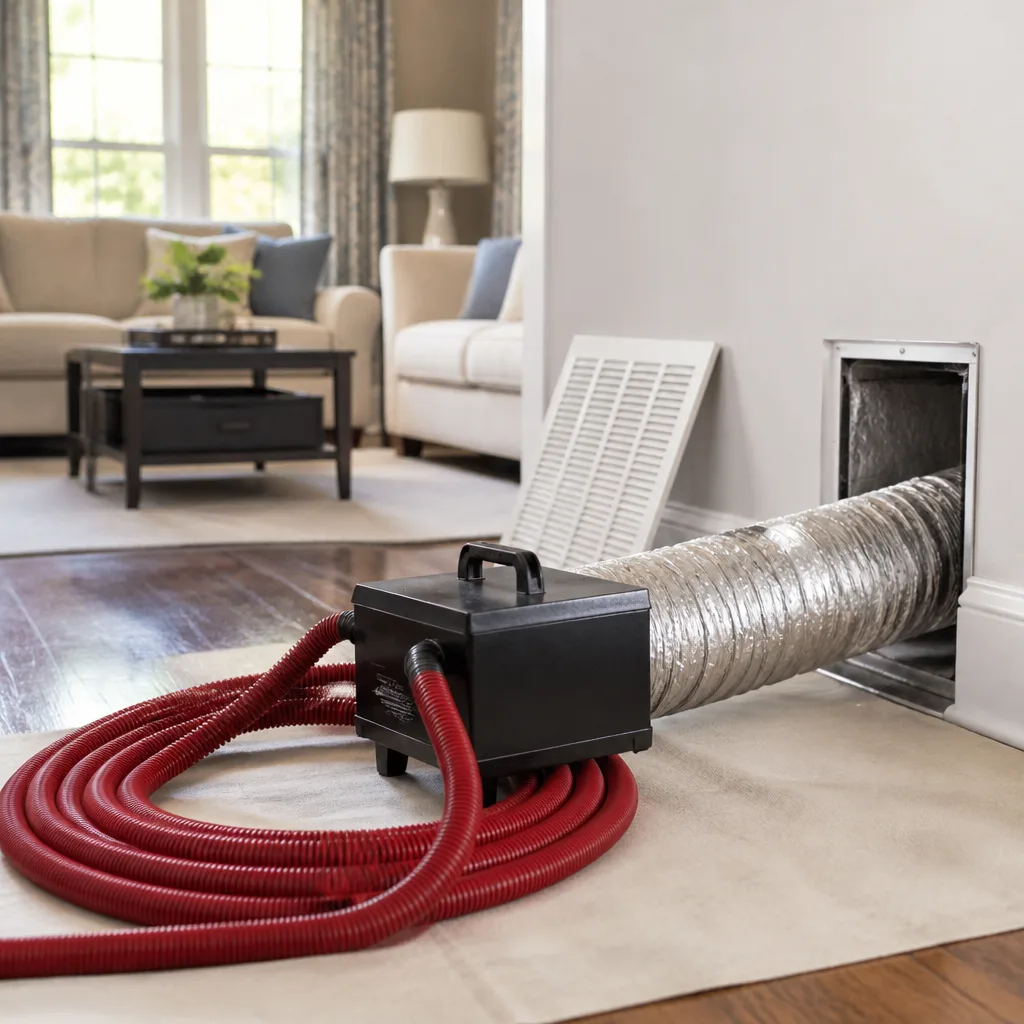 Whole-home duct cleaning
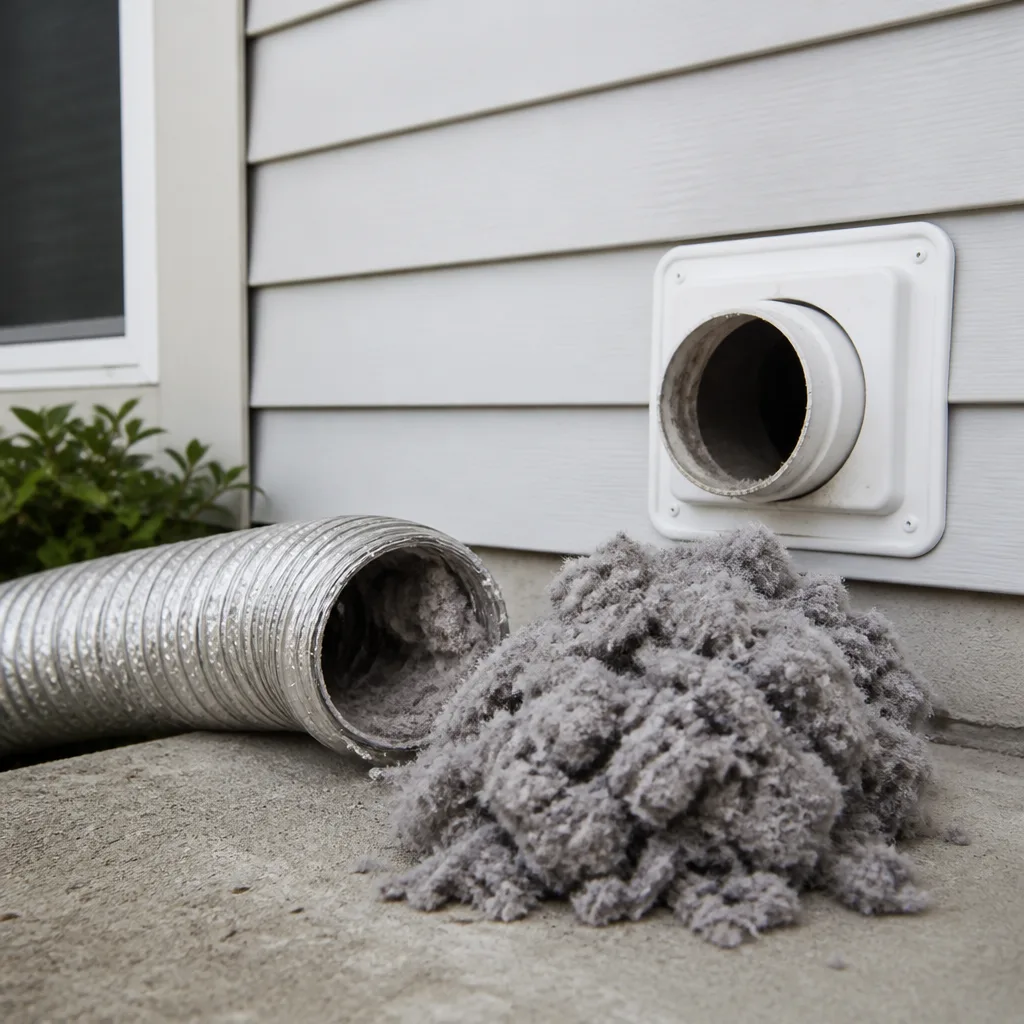 Dryer vent cleaning
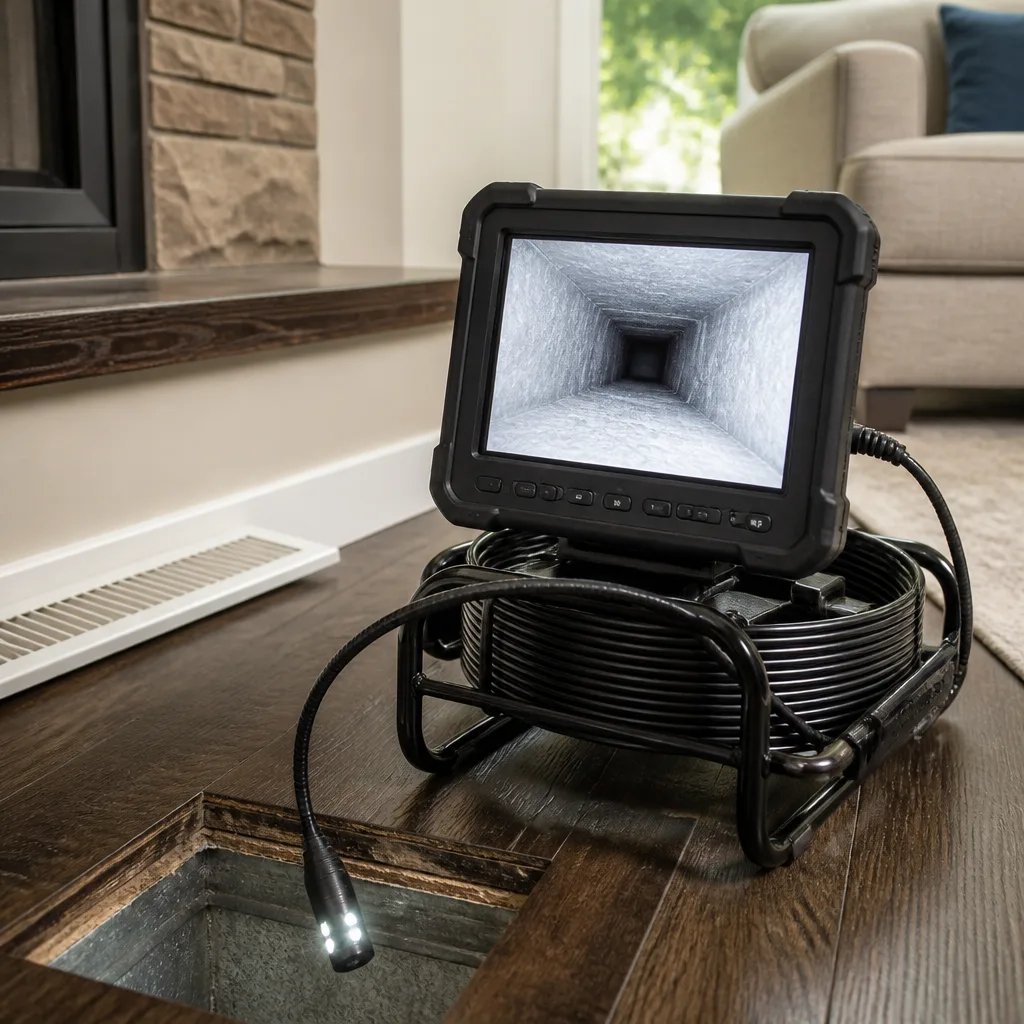 Camera inspection
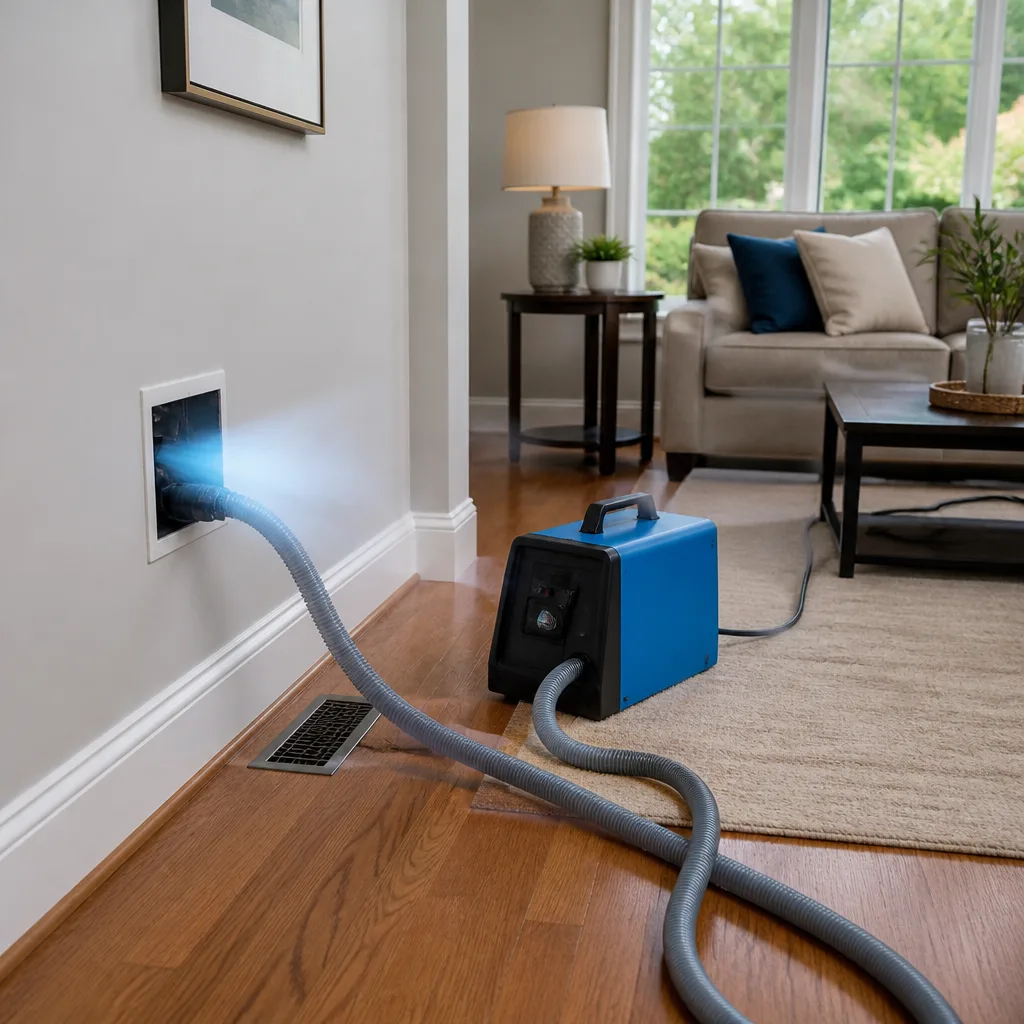 Sanitizing & deodorizing
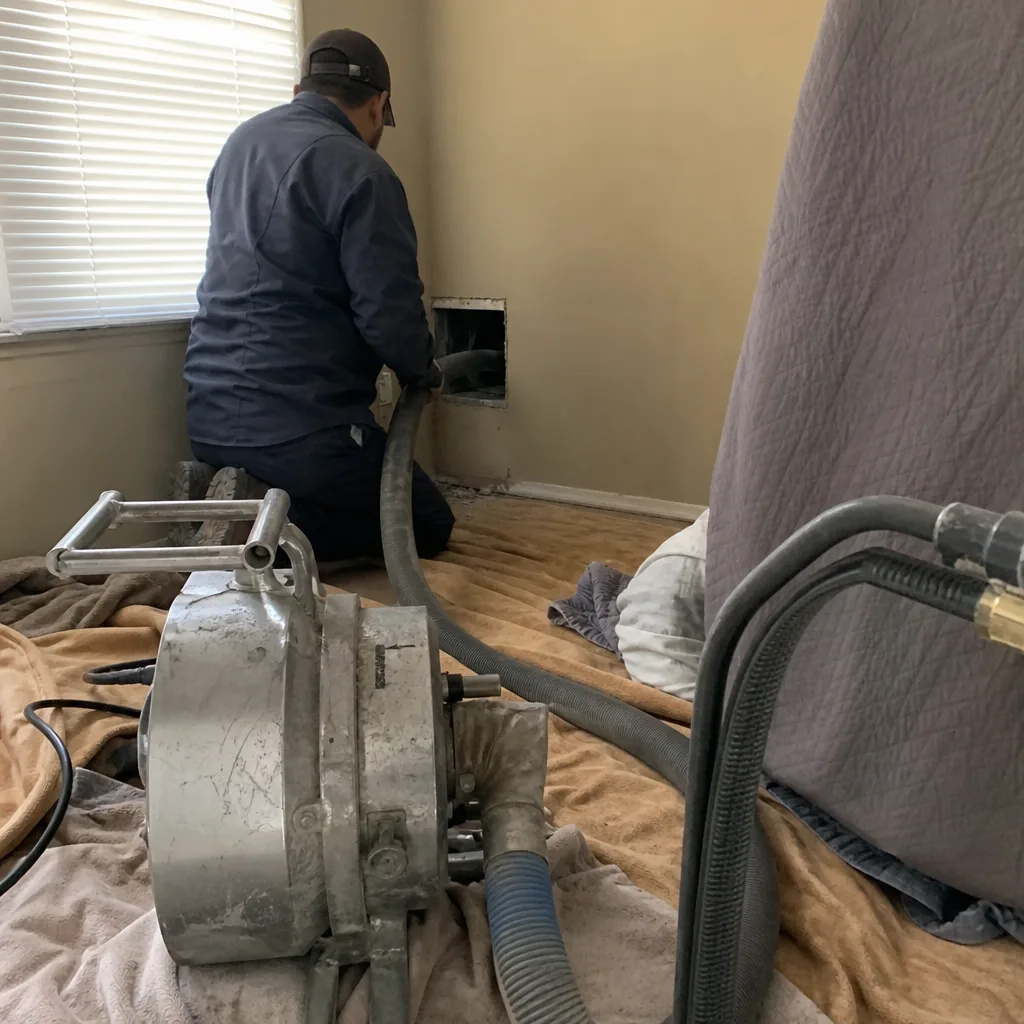
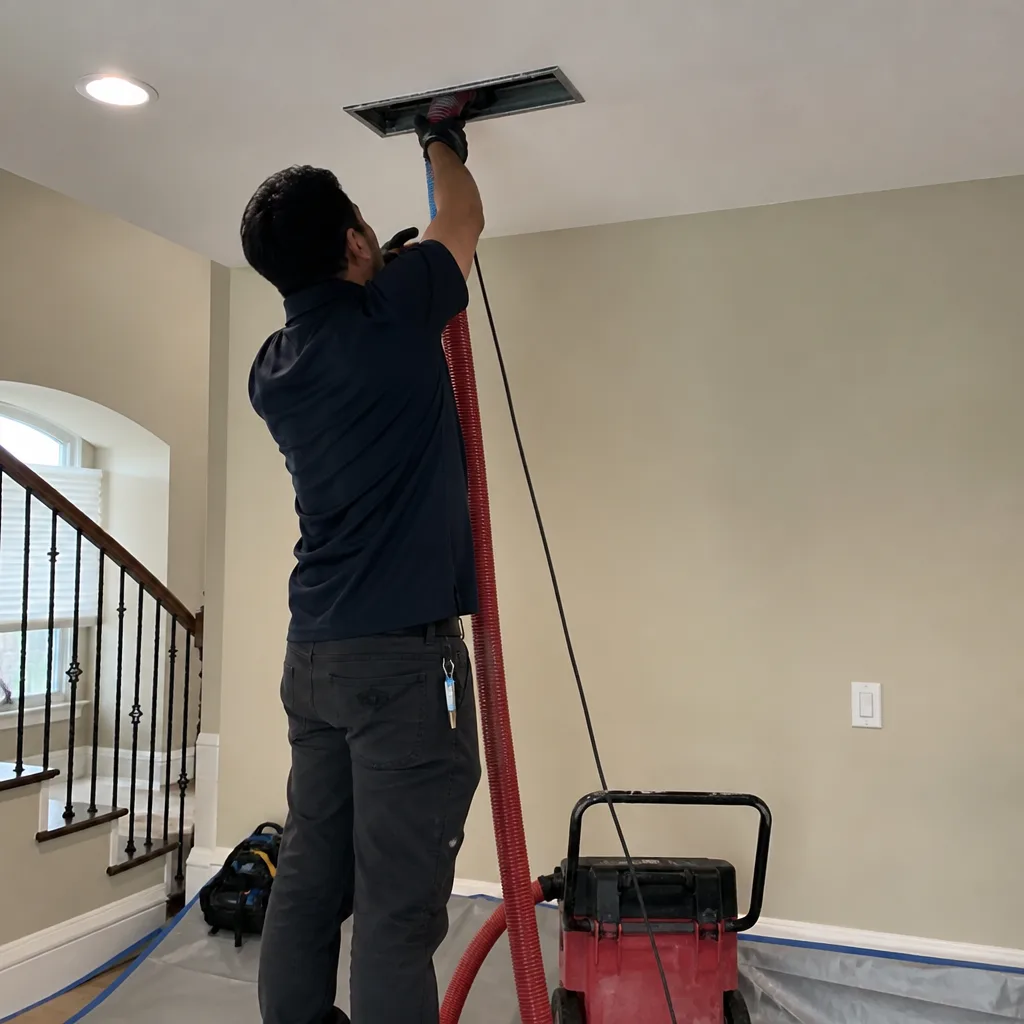
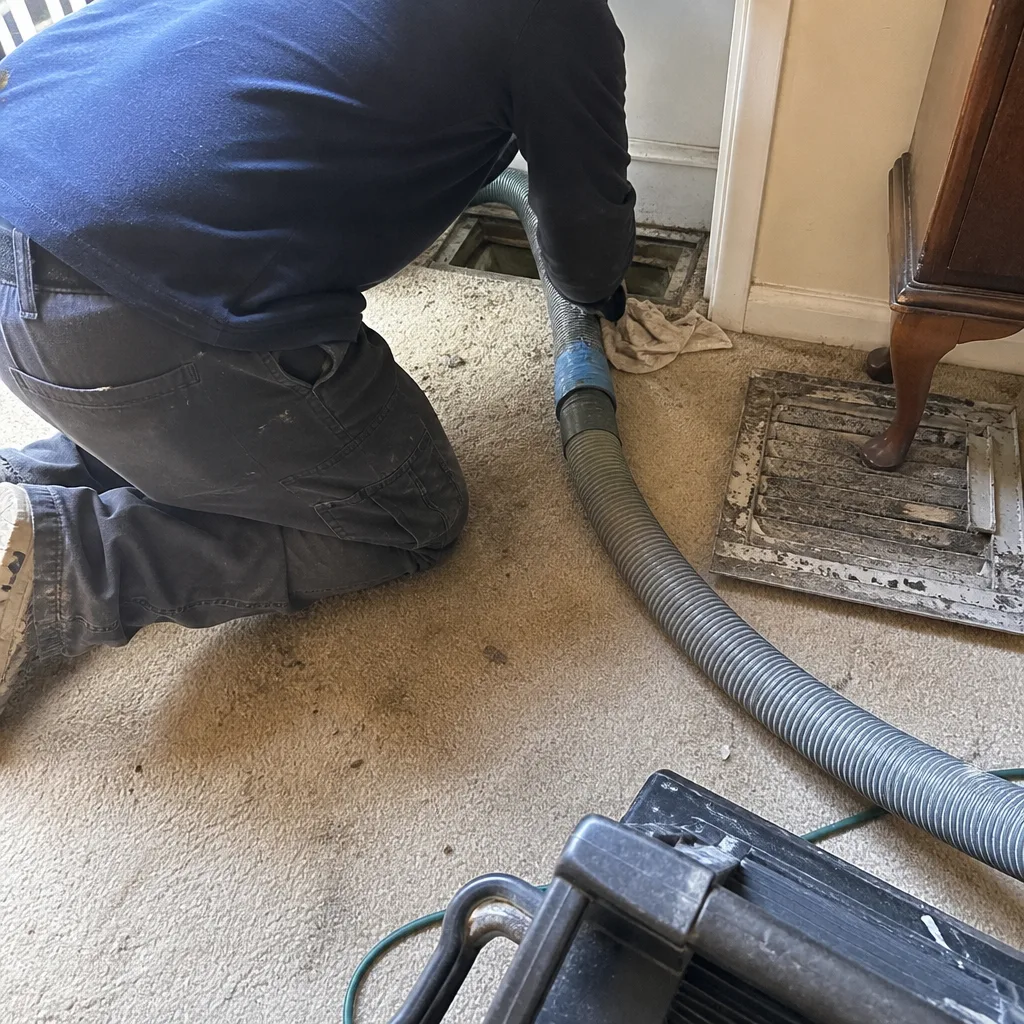
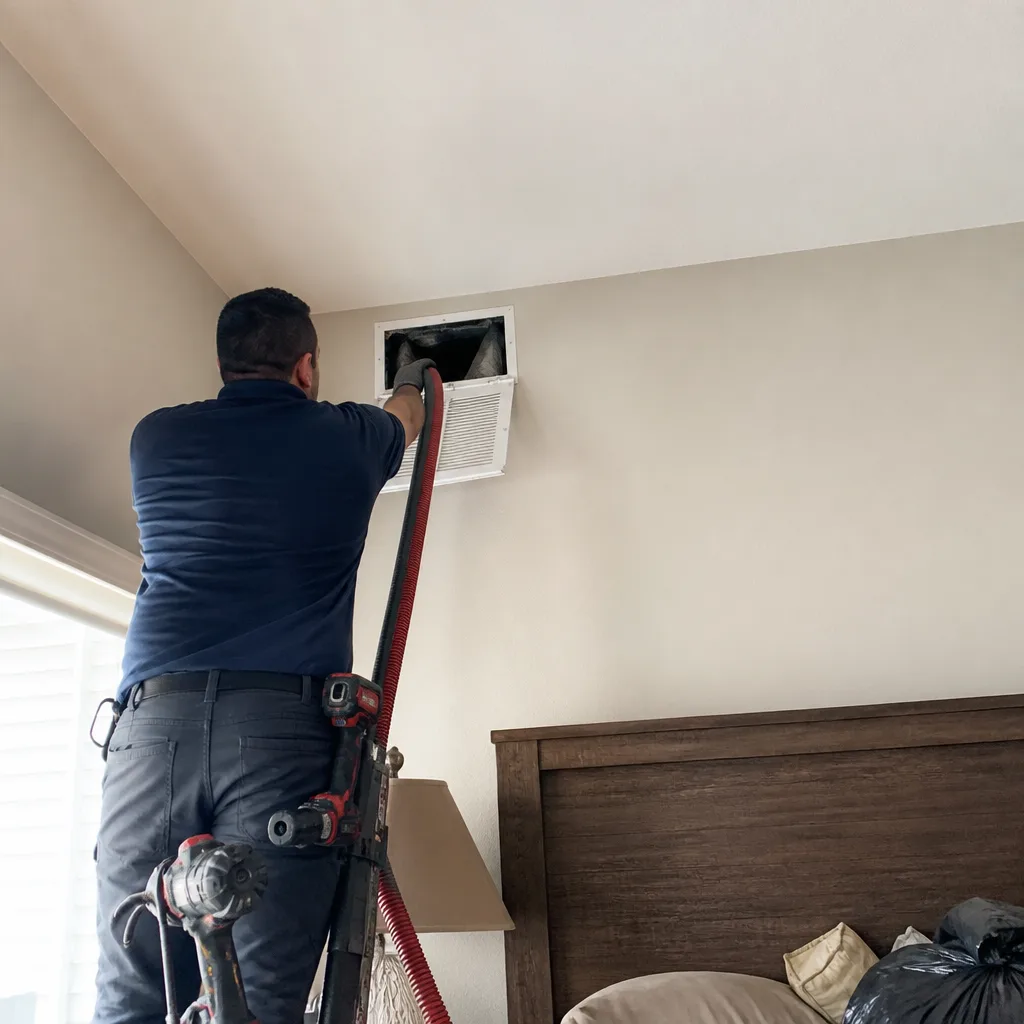
Whole-system duct and dryer vent check with before-and-after photos - you see exactly what came out of your vents
That "$99 whole-house special" is a bait ad - the real number appears once they are in your hallway, or the "clean" is a shop-vac at the register. We photograph the inside of your ducts before and after instead.
Air Duct Cleaning Maintenance Checklist for Dublin Homeowners
Most homeowners in Dublin change their filter and call it duct maintenance. That’s not maintenance – that’s the final step of a system that’s already been stressed. A filter that’s overdue by even 30 days has already forced debris past the media and into the supply plenum, and no amount of fresh filter swapping will pull that back out. What actually keeps Dublin ductwork clean is a dated schedule: specific checks tied to filter life, wildfire season, HVAC startup, and what’s happening inside the home. This guide lays out that schedule, month by month, so you know exactly what to inspect, when to inspect it, and when to call in real equipment.
Styles & brands we work with
- Whole-home duct cleaning
- Dryer vent cleaning
- Camera inspection
- Sanitizing & deodorizing
Quick Answer
Air duct cleaning maintenance in Dublin is best organized as a layered, dated schedule: replace filters on a 30-90 day cycle (tighter during wildfire months of July through October), visually inspect supply registers and return grilles monthly, inspect the air handler cabinet and blower compartment every six months, do a full duct inspection at the start of cooling season (May) and after wildfire season ends (November), and schedule a professional cleaning every 3-5 years, or sooner if the home has pets, recent renovation dust, or an occupant with asthma. Homes with whole-house filtration from Aprilaire or Honeywell should coordinate duct inspections with filter media replacement.
Table of Contents
- Why Dublin Ducts Need a Schedule, Not a Single Annual Chore
- The Month-by-Month Dublin Maintenance Calendar
- Filter Changes and MERV Ratings: What Actually Works in Dublin Air
- Five DIY Visual Checks You Can Do This Weekend
- Occupancy Triggers That Change the Whole Schedule
- How to Document Duct Condition Before Hiring Any Contractor
- Dryer Vent Maintenance: The Fire-Prevention Item Most Checklists Miss
- Common Mistakes to Avoid
- When to Call a Professional
- Frequently Asked Questions
- The Bottom Line
Why Dublin Ducts Need a Schedule, Not a Single Annual Chore
Dublin sits in a climate that punishes ductwork in three distinct ways. The summer heat forces the AC to run hard from late May through September, pulling in whatever particulate is airborne. Wildfire smoke from July through October introduces fine particulate that standard fiberglass filters are not designed to catch – and that particulate settles into the return plenum and blower cabinet where it gets baked by motor heat. Then the rainy season from November through March raises indoor humidity, which turns accumulated dust in ducts into a damp, compacted layer that’s harder to remove and easier for microbial growth to establish in.
A single “clean it this year or don’t” approach ignores that all three of these stress periods happen in the same calendar year in Dublin. The ducts that looked fine in January can be carrying wildfire ash by September and then holding moisture against that ash by December. The maintenance checklist for a Dublin home has to be a dated, layered schedule because the threats are dated and layered too.
We work with Dublin homeowners on air duct cleaning in Dublin regularly, and the pattern we see is consistent: the homes that maintain a simple dated checklist have ducts that clean quickly and stay clean longer. The homes that treat duct maintenance as a vague “sometime this decade” item end up needing more aggressive cleaning and sometimes air duct repair in Dublin for problems that could have been caught at the inspection stage.
The Month-by-Month Dublin Maintenance Calendar
Before we get to the calendar, a ground rule: these are inspection and filter dates, not cleaning dates. The interior surfaces of the duct system only need professional cleaning every 3 to 5 years in a typical Dublin home. Between cleanings, your job is to monitor what’s moving through the system and catch problems before they require emergency work.
January – February: The Post-Rain Mold-Risk Window
This is when Dublin homes are most likely to show moisture inside the duct system. Warm air from the furnace meets cold duct surfaces in unconditioned spaces like attics and crawlspaces, and condensation forms. This condensation mixes with whatever dust accumulated during the previous summer and wildfire season, creating a paste that adheres to duct walls. What to do:
- Open every supply register and look for dampness, dark staining, or a musty smell. Don’t just glance – reach in with a flashlight and look at the boot, the metal fitting under the register.
- Check the air handler cabinet for any standing water or rust streaks near the condensate pan.
- Ensure the condensate drain line is clear. A clogged drain backs water into the cabinet, and the blower then pushes that moisture through the system.
- If you have a whole-home humidifier from Aprilaire, confirm it’s not over-humidifying. A setting above 45% during January in Dublin can push moisture into duct runs that pass through unheated zones.
March – April: The Pre-Season Baseline Check
Before the cooling season starts, you want a documented baseline of duct condition. Take smartphone photos of the interior of several supply boots and the inside of the air handler cabinet (more on this process in the documentation section below). What you’re looking for: loose duct connections, visible debris on duct walls, and any sections of flex duct that have sagged or been kinked since last year. This is also the right time to schedule any air duct repair in Dublin work – contractors have better availability before the summer rush begins.
May: HVAC Startup and Filter Reset
When the AC first kicks on in Dublin, it pushes a year’s worth of settled dust out of the supply plenum and through the registers. That first startup is when you’ll see the most debris at the register faces. What to do on the first hot day:
- Replace the filter before the system does any sustained cooling work. Don’t start a cooling season on a filter that’s been collecting winter dust for four months.
- Vacuum every supply register and return grille face with a brush attachment.
- After the system has run for a few hours, check the filter. If it’s already visibly loaded with dust, that tells you the return side of the system has debris that a filter change alone won’t address.
June – September: Wildfire Smoke Season Monitoring
This is the most neglected window in Dublin duct maintenance. Wildfire smoke from fires anywhere in Northern California reaches Dublin, and the fine particulate in that smoke behaves differently from ordinary household dust. It’s finer, it carries more deeply into the system, and it accumulates in the blower wheel and evaporator coil surfaces where it reduces airflow and efficiency. During smoke events:
- Check the filter weekly, not monthly. Smoke loading is not gradual – it can saturate a filter in 72 hours during a heavy smoke event.
- If the filter is dark after a week, replace it. Running a smoke-loaded filter for another three weeks forces the blower to work against unnecessary static pressure.
- After each significant smoke event ends, inspect the return grilles. Fine soot settles there first, and it’s an early indicator that the duct interior has taken on particulate.
- Leave the fan in “on” mode during smoke events if your thermostat has that option. This keeps air moving through the filter continuously instead of cycling particulate-laden air through the home on a timer.
October – November: Post-Smoke Full Assessment
Once the fire season winds down, do a complete visual and photographic assessment. Compare current photos against the March-April baseline. If you can see a visible layer of dark soot on the supply boots or blower housing that wasn’t there in spring, that’s your signal that the ducts need professional cleaning before the heating season starts. This is also the right window for scheduling air duct cleaning in Dublin – the weather is mild, the system isn’t running constantly, and the ducts are dry.
December: The Dryer Vent Check
The end of the year is when most Dublin homes are doing heavier laundry – holiday visitors, winter bedding, cold-weather layers. This is the highest-demand season for the dryer. A dryer vent that’s been accumulating lint all year now faces the most airflow demand at the same time it’s most restricted. Do a full vent line inspection (procedure in the dryer vent section below) and schedule dryer vent cleaning in Dublin if the vent hasn’t been professionally cleaned in the last 12 months.
Filter Changes and MERV Ratings: What Actually Works in Dublin Air
The standard advice – “change your filter every 90 days” – is not calibrated for Dublin. Our air quality in wildfire season demands more frequent changes, and the type of filter you run changes the calculus for how often duct cleaning is needed.
Here’s the part most homeowners don’t hear: a higher MERV rating is not automatically better for Dublin homes. MERV 13 filters capture more fine particulate – which is genuinely useful during smoke events – but they also create more static pressure. If your system wasn’t designed for a MERV 13 filter, running one full-time can reduce airflow at the registers, force the blower motor to work harder, and accelerate dust accumulation in the duct system as lower airflow means more particulate settling out of the airstream. We see this constantly in Dublin homes: well-meaning homeowners upgrade to a MERV 13 filter permanently, and six months later the blower cabinet is carrying debris that a MERV 8 filter would have moved through to the return grille.
What actually works for most Dublin homes is a seasonal approach:
- November through June: Run a MERV 8 filter. It handles ordinary household dust and pet dander without restricting airflow. Change every 90 days.
- July through October (smoke season): Upgrade to a MERV 11 or MERV 13 filter for the duration of active smoke events. Change every 30 days during smoke, even if the filter doesn’t look fully loaded. Fine smoke particulate clogs filter media internally, not just on the visible surface.
- After each smoke event ends: Drop back to MERV 8. Don’t keep the high-MERV filter in place once the air clears – you’re paying an airflow penalty for particulate that’s no longer present.
- Homes with whole-home filtration from Aprilaire or Honeywell: These systems have their own media replacement schedules, typically every 6 to 12 months. Duct inspection should be timed to media replacement – when the filter media is swapped, you have the access panel open and can inspect the cabinet interior at the same time.
The filter is the first line of defense, but it’s not the whole system. Even the right filter in the right season can’t undo the fact that anything that got past a clogged or improperly sealed filter is now sitting in the ducts. And in Dublin, where the summer air is loaded with wildfire particulate and the winter air carries moisture, what sits in the ducts doesn’t just sit – it accumulates, compacts, and sometimes gets damp enough to bond to duct surfaces.
Five DIY Visual Checks You Can Do This Weekend
You don’t need contractor equipment to catch most duct problems early. You need a flashlight, a smartphone camera, and ten minutes at each access point. These are the five checks we’d ask any Dublin homeowner to do before they even think about calling us for Duct Cleaning Dublin home service – because if these checks come out clean, the conversation is different than if they show something.
1. Supply Register Boot Inspection
Remove a supply register (the one that blows air out) in a room you use daily. The metal fitting underneath is called the boot. Shine a flashlight down into it. What you’re looking for: dust that’s caked onto the metal surface (not just light loose dust – that’s normal), dark staining that could indicate moisture, or a visible gap between the boot and the drywall where conditioned air is leaking into the wall cavity. Do this on at least three registers: one upstairs, one downstairs, one in the room farthest from the air handler. The farthest register shows the most accumulation because air velocity is lowest at the end of the run.
2. Return Grille Face and Cavity
The return side of the system sees all the air before it’s filtered. Remove a return grille and look at the back side of the grille face. If it’s furry with dust, the filter is either missing, poorly sealed, or undersized for the opening – which means unfiltered air has been bypassing the filter and entering the system. This is one of the most common findings on Dublin homes built in the 1980s and 1990s, where filter slots were often retrofit into existing return cavities with gaps around the frame.
3. Air Handler Cabinet Interior
This requires basic care but no special training: turn off the system at the thermostat and the breaker, then open the cabinet access panel on the air handler (the indoor unit). Look at the blower wheel – the squirrel-cage fan. If the blades are coated with dust, that’s dust that has traveled past the filter and gotten baked onto the motor assembly. A clean blower wheel means the filter is doing its job. A coated one means the filter has been bridged or bypassed at some point, and the debris is now circulating.
4. Flex Duct Condition in Attic or Crawlspace
If your Dublin home has flex duct (the insulated, wire-reinforced flexible tubing used in most residential duct systems), take a look at the runs you can access. Sagging between supports is a sign the inner liner has separated from the insulation jacket, which kills airflow and lets conditioned air leak into the attic or crawlspace. Kinks or sharp bends do the same thing. Flex duct should be supported every 4 to 5 feet, and the inner liner should be taut, not wrinkled.
5. Dryer Vent Termination Cap
Go outside and find where the dryer vent exits the house. Remove the cap (it’s usually a plastic louver or a flap-style damper) and look inside. If you can see lint built up around the opening, that’s the visible end of a clog that extends backward into the pipe. Run the dryer and stand at the termination point – if you can’t feel strong airflow at the outside vent while the dryer is running, the line is restricted. Lint that’s escaping the cap means the line is over-pressurized, which is exactly the condition that leads to dryer fires.
Occupancy Triggers That Change the Whole Schedule
The 3-to-5-year cleaning interval is a starting point, not a rule. Certain changes in a Dublin home’s occupancy compress that timeline dramatically. Here are the triggers we tell homeowners to factor in:
- A new pet, especially a cat or a long-haired dog: Pet dander is fine enough to pass through MERV 8 filters and sticky enough to adhere to duct surfaces. A home that recently added a shedding pet should move the cleaning interval from 3-5 years down to about 2-3 years, or at minimum schedule an inspection within 6 months of the pet’s arrival.
- Renovation dust, especially drywall sanding: Drywall dust is sharp, fine, and pervasive. It gets pulled into the return side of the system during construction and settles into every horizontal surface in the ducts. Even a small bathroom remodel in a Dublin home can load enough gypsum dust into the duct system to justify a professional cleaning once construction is complete, regardless of when the last cleaning happened.
- An occupant with diagnosed asthma or severe allergies: This isn’t a cleanliness preference, it’s a respiratory load question. Duct systems concentrate and redistribute whatever particulate they hold, and someone with airway sensitivity is going to feel the effects of a duct system that a non-sensitive person would never notice. Homes with asthmatic occupants should shift to a 2-year cleaning cadence and inspect the system at the start and end of every wildfire season.
- A newly installed whole-home humidifier from Aprilaire or similar systems: Humidification changes the moisture profile of the supply side of the system, which changes how dust behaves inside the ducts. Dust that would blow through a dry system will bond to duct surfaces when humidity is added. If you’ve installed a humidifier, inspect the supply ducts within 3 months of installation to see if there’s visible accumulation at the boots.
- A previous resident who smoked indoors: Tobacco smoke residue coats every surface in a duct system, and it doesn’t dissipate on its own. If you’ve purchased a Dublin home where the previous occupant smoked, factor a professional cleaning into the move-in process, not the “someday” list. The nicotine and tar residue also acts as a magnet for subsequent dust, accelerating re-soiling.
How to Document Duct Condition Before Hiring Any Contractor
The single most useful thing you can do before hiring any duct cleaning or repair contractor is establish a photographic baseline. This serves two purposes: it tells you whether the work you’re shown afterward matches the work that needed doing, and it gives you an objective record of duct condition over time. A smartphone is all you need.
Here’s the process we suggest to Dublin homeowners:
- Turn off the system at the thermostat and the breaker. You’re opening access panels and reaching into register boots – you don’t want the system cycling while your hand is near the blower.
- Open and photograph six access points: three supply register boots (one upstairs, one downstairs, one farthest room), one return grille face and cavity, the air handler cabinet interior including the blower wheel and the filter slot, and the inside of one accessible flex duct run in the attic or crawlspace.
- Use flash, not ambient light: Duct interiors are dark spaces, and flash photography reveals debris and staining that ambient light hides. Hold the phone still against the register frame for sharp photos.
- Date-stamp every photo: Most smartphone cameras do this automatically in metadata, but add a visible timestamp or write the date in a notes file. You want a chronological record.
- Save these photos to a folder labeled “Duct Baseline – [Month Year]” and add to it every six months. When you do eventually bring in a contractor, show them the photos. A contractor who runs Rotobrush or Nikro cleaning equipment and Abatement Technologies filtration systems will know exactly what you’re showing them, and the conversation will be more productive than if you’re describing problems from memory.
The baseline matters because duct systems are invisibly degrading in most Dublin homes. The difference between a home that gets a full cleaning every 5 years and a home that needs it every 10 is almost never visible from the living room – it’s visible in the boot interiors, the blower cabinet, and the return cavity, which is exactly where the photos live.
Dryer Vent Maintenance: The Fire-Prevention Item Most Checklists Miss
Most duct maintenance checklists ignore the dryer vent entirely, as if it’s a different category of house system. It’s not. Your dryer vent is a duct that moves heated air and particulate out of your home, and in Dublin it’s carrying lint – one of the most flammable household materials – through a pipe that’s often clogged with months or years of accumulation. The National Fire Protection Association identifies dryer vent fires as one of the leading causes of residential structure fires, and the leading cause of those fires is failure to clean the vent line.
Your dryer vent is a fire hazard waiting to be ignored – we take it seriously, and so should any Dublin homeowner. The maintenance schedule for a dryer vent runs on a different clock than the HVAC ducts:
- Monthly: Remove the lint screen and wash it with soap and water. Lint traps build up an invisible film from dryer sheets and fabric softener that restricts airflow even when the screen looks clean. Wash it monthly, not annually.
- Every 3 months: Run the dryer and go outside to the termination cap. Feel the airflow. Strong, warm airflow means the line is reasonably clear. Weak or absent airflow means the line is restricted and needs attention now, not later.
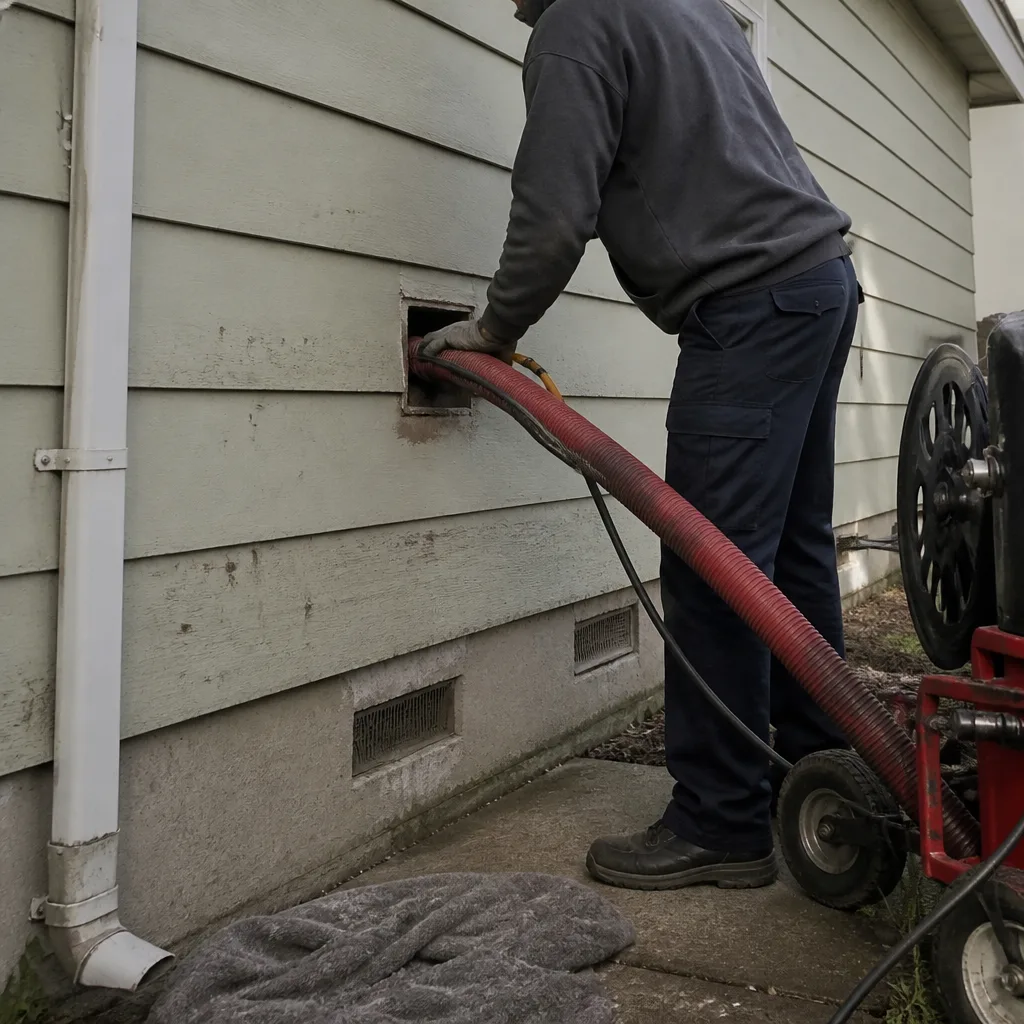
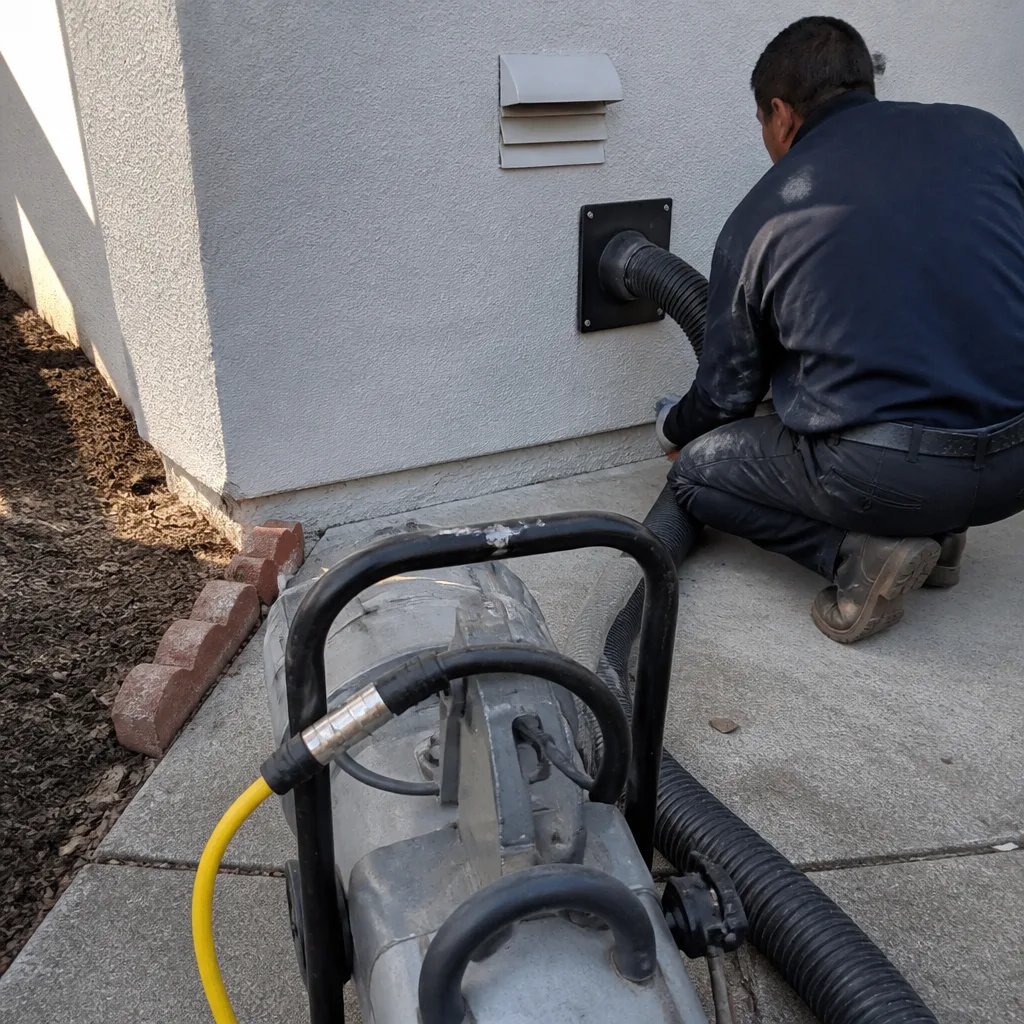
- Every 12 months: Schedule dryer vent cleaning in Dublin. A professional cleaning uses a rotary brush system to pull compacted lint from the full length of the vent run, not just the visible opening. This is especially important for Dublin homes with longer vent runs – anything over 10 feet from dryer to exterior, or any run with more than two elbows, accumulates lint faster and compacts it harder.
- Immediately if: The dryer takes longer than 45 minutes to dry a normal load, the exterior of the dryer gets hot during normal operation, or the laundry room smells musty or burning during a cycle. All three are signs the vent line is significantly restricted.
If you’re already having the HVAC ducts cleaned, ask the technician to inspect the dryer vent line at the same time. We use contractor-grade rotary brush systems for dryer vent cleaning – the same class of equipment used on HVAC ducts – because a basic vacuum and a long wand won’t break up the compacted lint that’s been baking in a warm pipe for a year. Guardsman-grade protective treatments are available for the dryer vent line as well, which reduce the rate at which lint adheres to the pipe walls between cleanings.
Common Mistakes to Avoid
- Treating the filter change as the entire maintenance plan. A filter only captures what’s in the air at the point of the filter. Everything that accumulated before the filter was replaced, or moved past a gap around the filter frame, is still in the system. Dublin summers with wildfire smoke make this worse – a filter that’s saturated mid-season doesn’t stop particulate from entering, it just forces the blower to work harder while the particulate bypasses around the media.
- Running MERV 13 year-round on a system not designed for it. High-MERV filters are for smoke season in Dublin, not a permanent upgrade. Running them continuously on a standard residential blower reduces airflow, increases energy use, and paradoxically accelerates dust accumulation in the ducts because lower air velocity means more particulate falls out of the airstream.
- Skipping the post-rain inspection in January and February. Dublin’s rainy season creates condensation conditions inside ducts that don’t exist the rest of the year. A January inspection that finds damp staining at a supply boot is catching a problem in its first month; ignoring it means the same moisture is still there in March, with more dust bonded on top.
- Hiring a cleaning company based on price per vent. The per-vent pricing model incentivizes rushing through the job. What actually matters is whether the contractor agitates the debris with rotary brush equipment (Rotobrush or Nikro systems) and contains it with negative-air filtration (equipment from Abatement Technologies), not how many square feet of vent face they touch. Professional-grade equipment, not a shop vac and a coupon – that’s the difference between cleaning and theater.
- Ignoring the dryer vent because “the dryer still works.” A dryer will keep running with a restricted vent, and that’s exactly the problem. The heat builds, the lint compacts, and the fire risk increases – all while the dryer appears to function normally. “It still dries” is not a maintenance assessment.
- Waiting until a problem is visible at the register to schedule cleaning. By the time you see dust blowing out of a supply register, the duct system has been carrying that debris for months. Visible register dust is a late-stage signal, not an early warning. The dated inspection schedule exists precisely because duct problems are invisible until they’re already past the point of simple prevention.
- Documenting nothing and comparing nothing. Without baseline photos, every duct inspection is a fresh first impression. Homeowners who track duct condition over time catch problems earlier and make better decisions about when to clean, repair, or replace.
When to Call a Professional
Some duct issues are visible and diagnosable by a homeowner. Others require equipment and access that a homeowner doesn’t have. Call a professional when you see any of these: damp staining on supply boots or the air handler cabinet that persists after 48 hours, a blower wheel visibly coated with dust or debris, mold growth on any accessible duct surface, a return grille cavity that’s furry with accumulated dust indicating filter bypass, sagging or kinked flex duct runs in the attic or crawlspace, or a dryer vent that produces weak airflow at the exterior termination point. These are not DIY items – they need contractor-grade inspection tools and proper containment during any cleaning, so debris isn’t blown through the house. Duct Cleaning Dublin offers free estimates in Dublin – call (855) 356-4417.
Frequently Asked Questions
In Dublin, air ducts should be professionally cleaned every 3 to 5 years for a typical home, but that interval shortens to every 2 to 3 years for homes with pets, asthma-sensitive occupants, or recent renovation dust – and homes that experience heavy wildfire smoke exposure each summer may benefit from an inspection and cleaning during the October-November post-smoke window even if they’re within the normal interval. Call (855) 356-4417 for an exact assessment based on your home’s specific situation.
Air duct cleaning in Dublin typically runs between $350 and $700 for a whole-home cleaning of a standard 1,500 to 2,500 square foot house, depending on the number of systems, the length of duct runs, and the level of contamination – homes with heavy smoke exposure from wildfire season or years of neglected filters will fall toward the higher end. Call (855) 356-4417 for a free estimate based on your home’s actual duct configuration.
Yes – wildfire smoke deposits fine particulate inside duct systems that standard filters don’t fully capture, and repeated smoke seasons in Dublin accumulate this soot in the blower cabinet and supply boots faster than normal household dust alone. If you can see dark soot at the supply registers or return grilles after smoke season ends, schedule a professional cleaning rather than waiting for the standard 3-5 year interval.
No – a shop vac lacks the rotary agitation to break loose debris that’s bonded to duct surfaces and the negative-air containment to prevent that debris from being blown through the house during the cleaning process. Professional-grade equipment like Rotobrush rotary brush systems paired with Abatement Technologies negative-air filtration both agitates and extracts – which is the difference between removing contaminants and simply circulating them more aggressively.
If the dryer takes longer than 45 minutes to dry a load, the exterior of the dryer feels hot during operation, or the airflow at the exterior vent termination is weak when the dryer is running, the vent line is restricted and needs professional cleaning – washing the lint screen won’t address a clog inside the pipe. For Dublin homes with vent runs over 10 feet, annual professional dryer vent cleaning in Dublin is the minimum safety standard.
Duct cleaning removes accumulated debris from the interior surfaces of the duct system; duct repair addresses physical damage like disconnected joints, sagging flex duct, crushed runs, or leaking seams that allow conditioned air to escape into unconditioned spaces. These are different problems with different solutions, and a home often needs both – which is why our service handles air duct repair in Dublin alongside cleaning, rather than treating every duct issue as a simple “clean it and walk away” job.
The Bottom Line
Dublin duct maintenance is a calendar discipline, not a one-time decision. The filters get changed on a schedule; the registers get inspected on a schedule; the air handler gets opened on a schedule; and the dryer vent gets its own separate, fire-safety-driven cadence. The homes that stay ahead of duct problems in Dublin are the ones where these dates are written down and followed – and where the homeowner knows what clean ducts look like because they’ve photographed them. Set the schedule, follow it, and when the inspection photos show accumulation that a filter change won’t fix, call in professional-grade equipment that will.
Written by the team at Duct Cleaning Dublin, serving Dublin since 2017.
See the difference
 Before
 After
 Before
 After
 Before
 After