
Last updated November 2, 2026
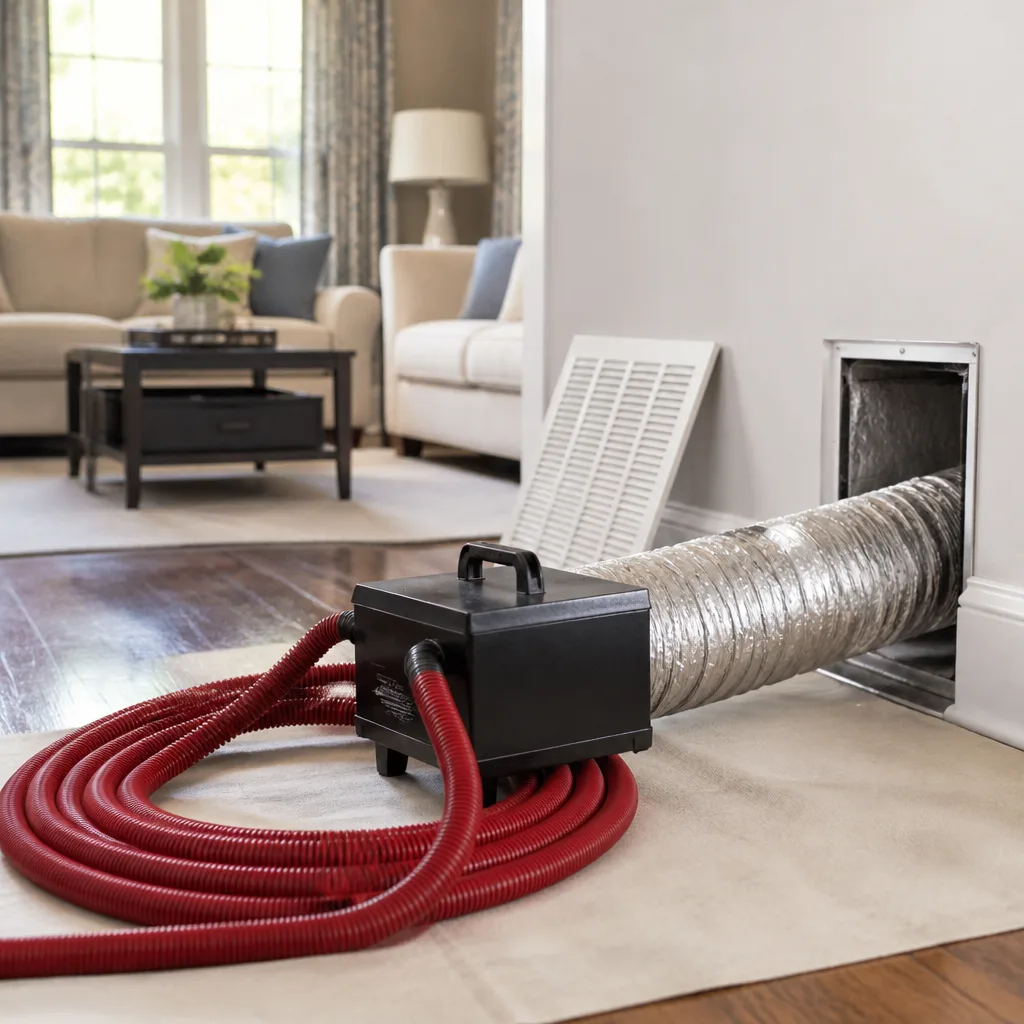 Whole-home duct cleaning
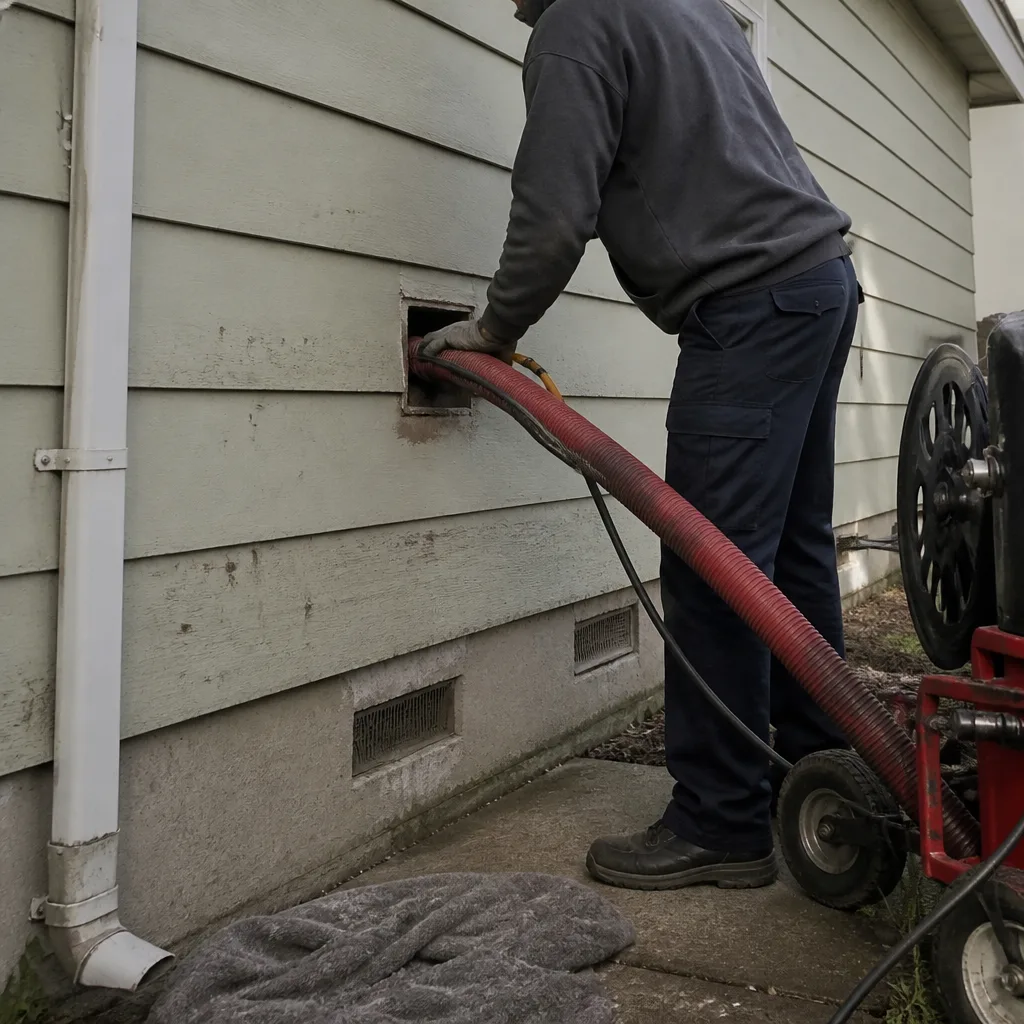
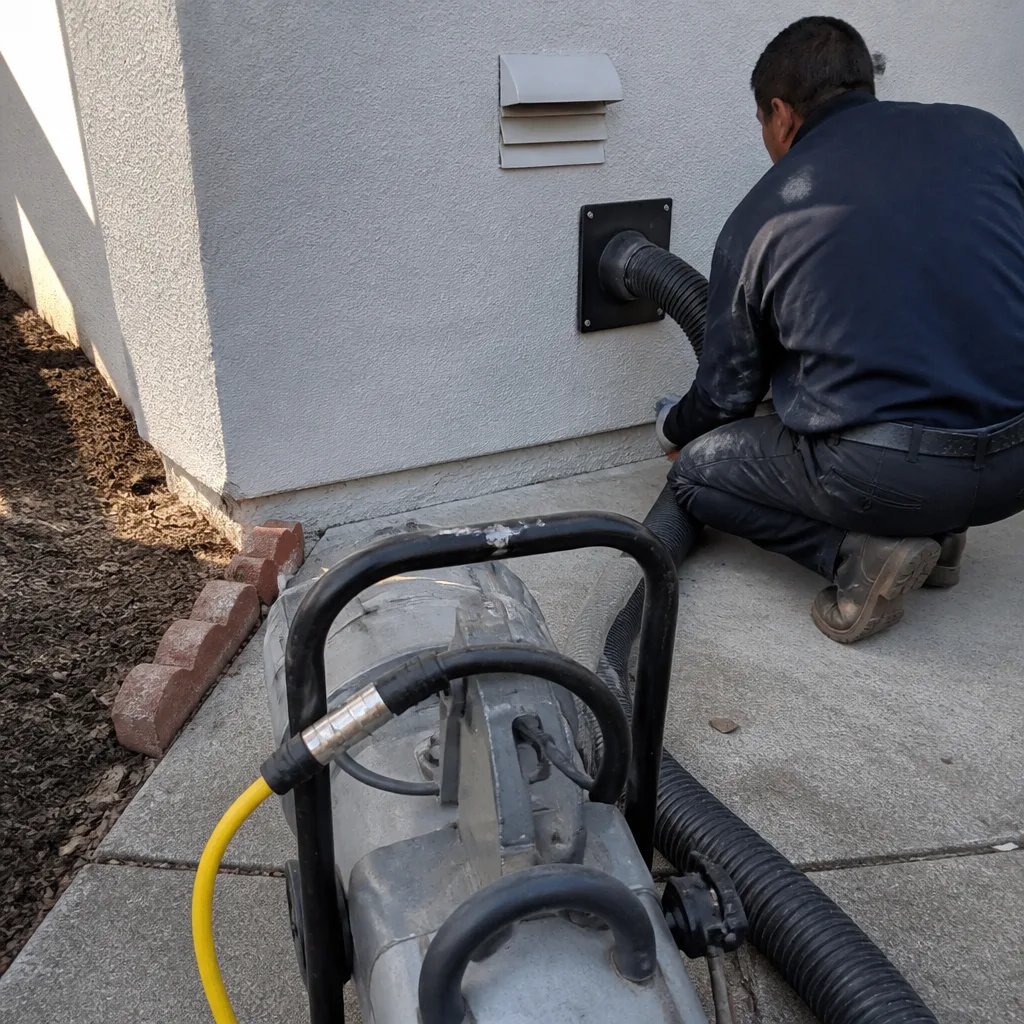
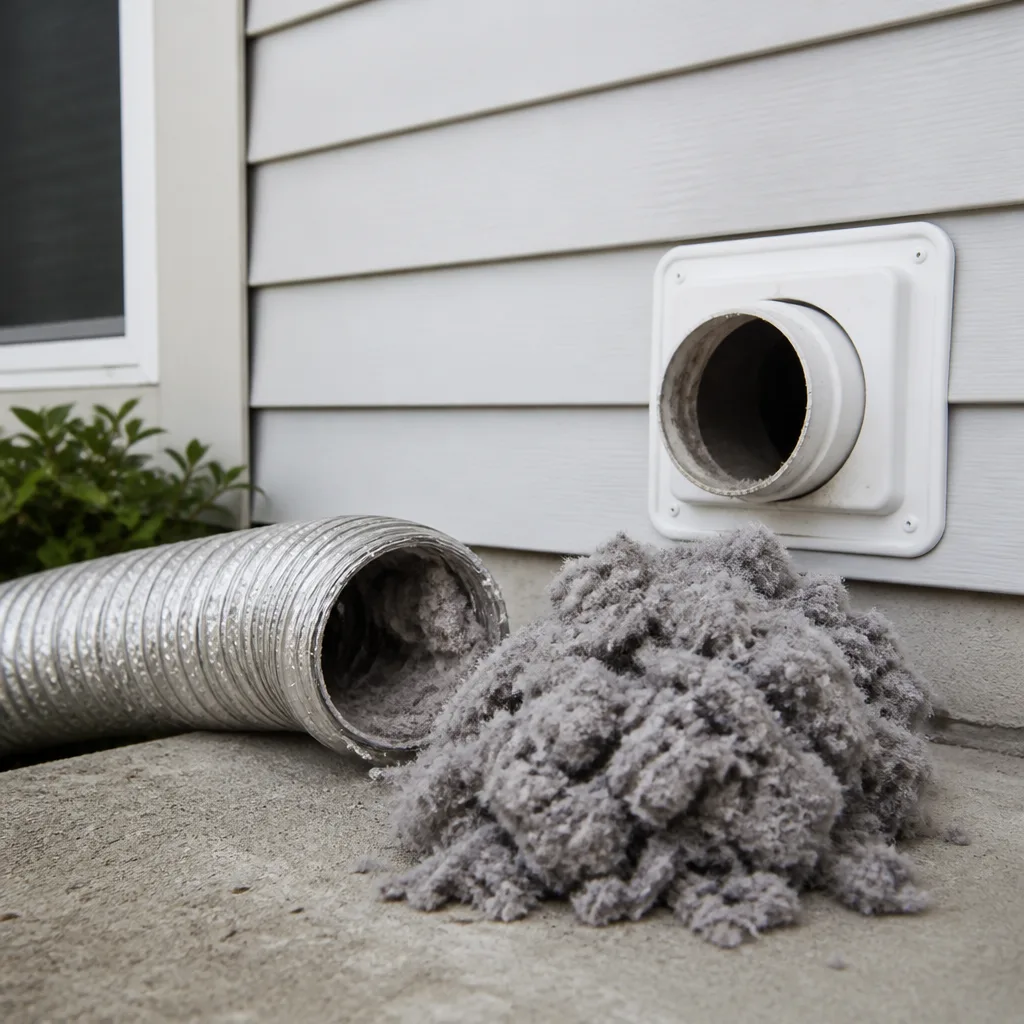 Dryer vent cleaning
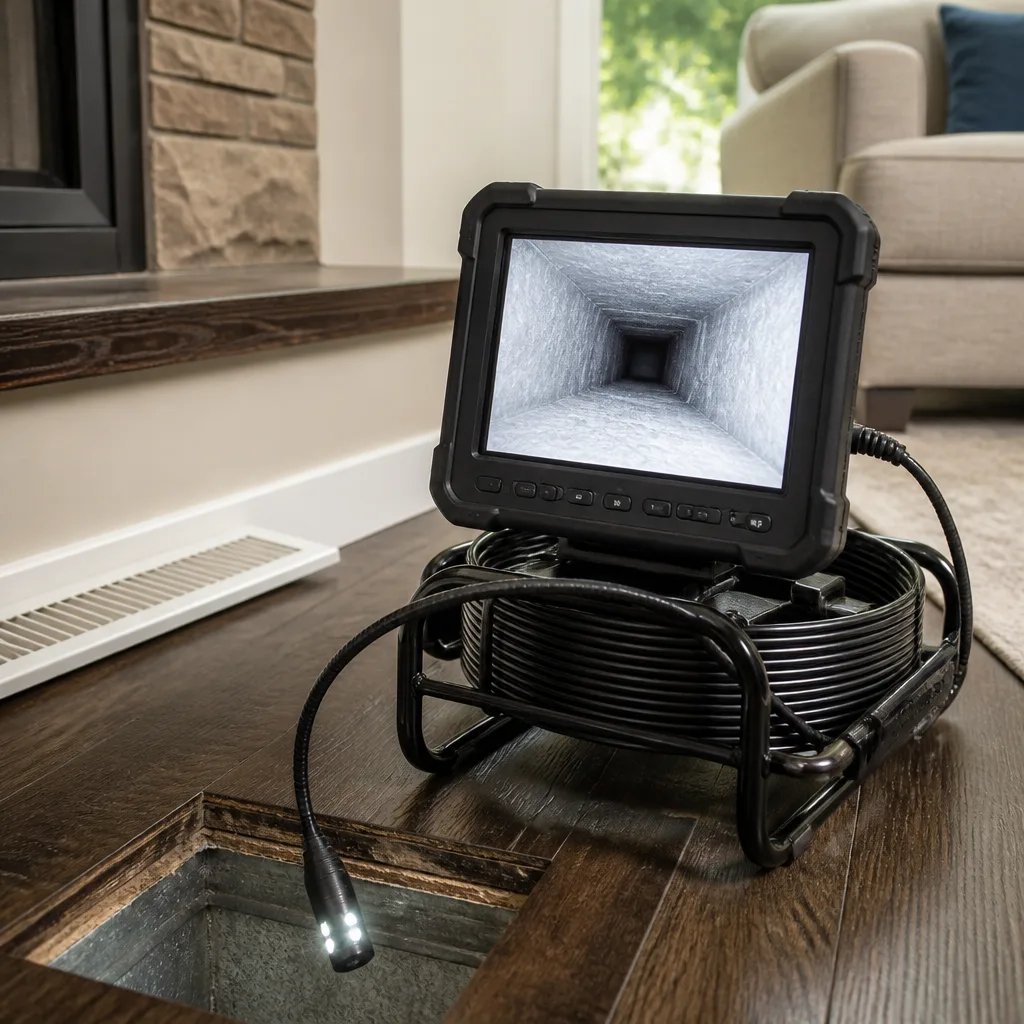 Camera inspection
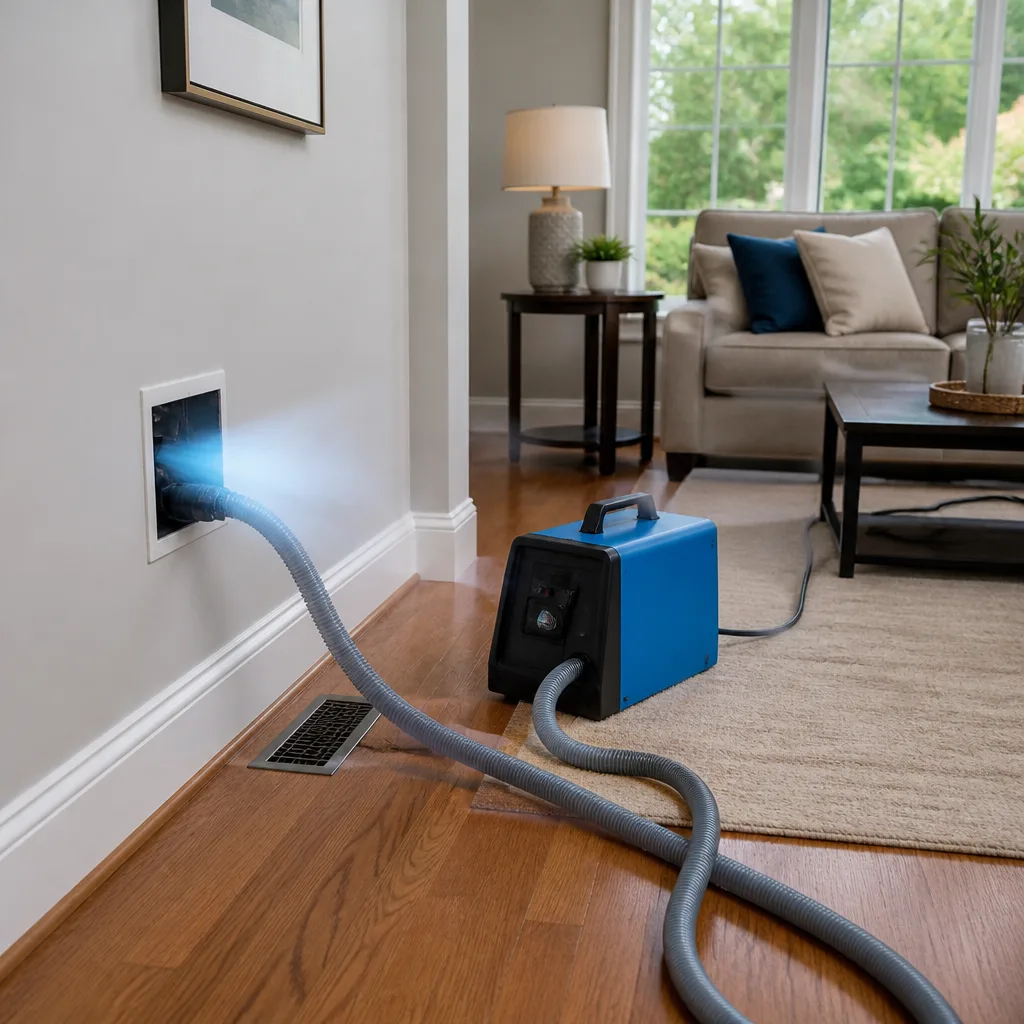 Sanitizing & deodorizing
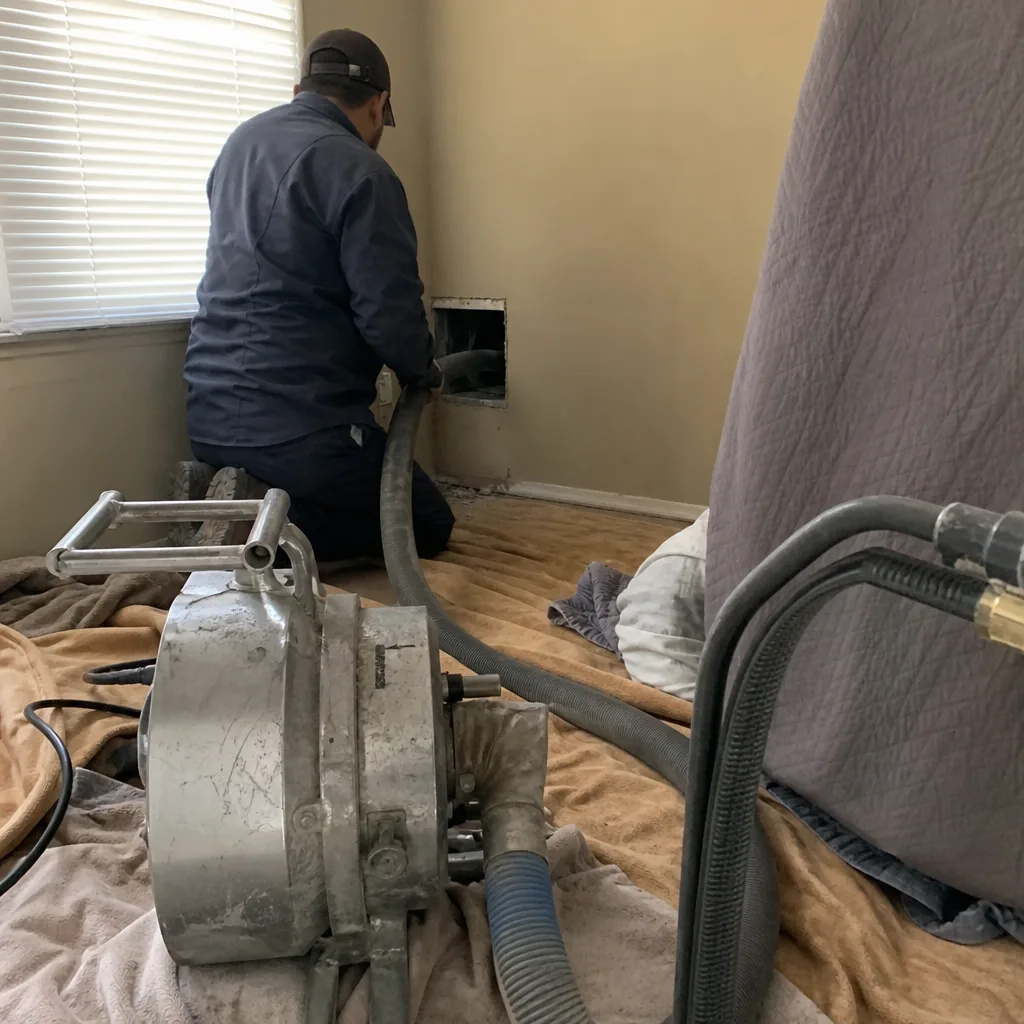
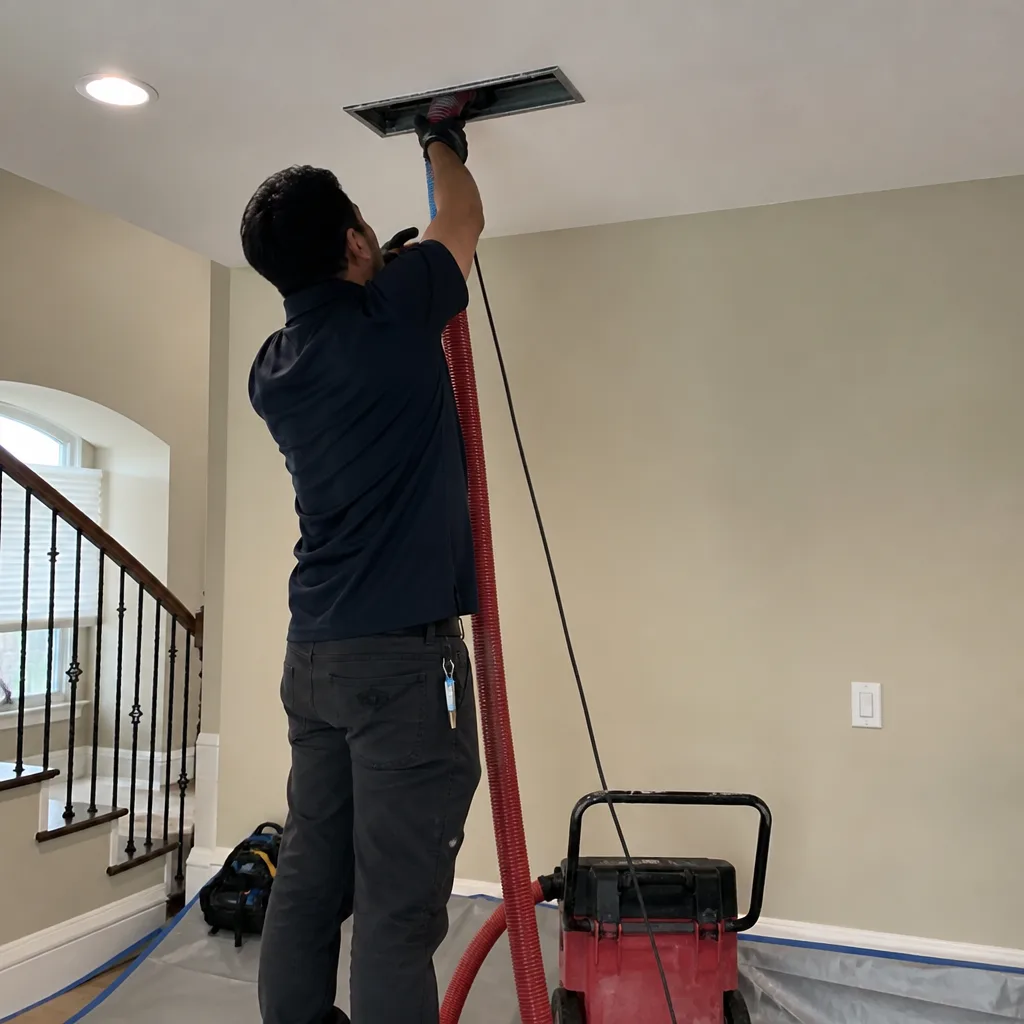
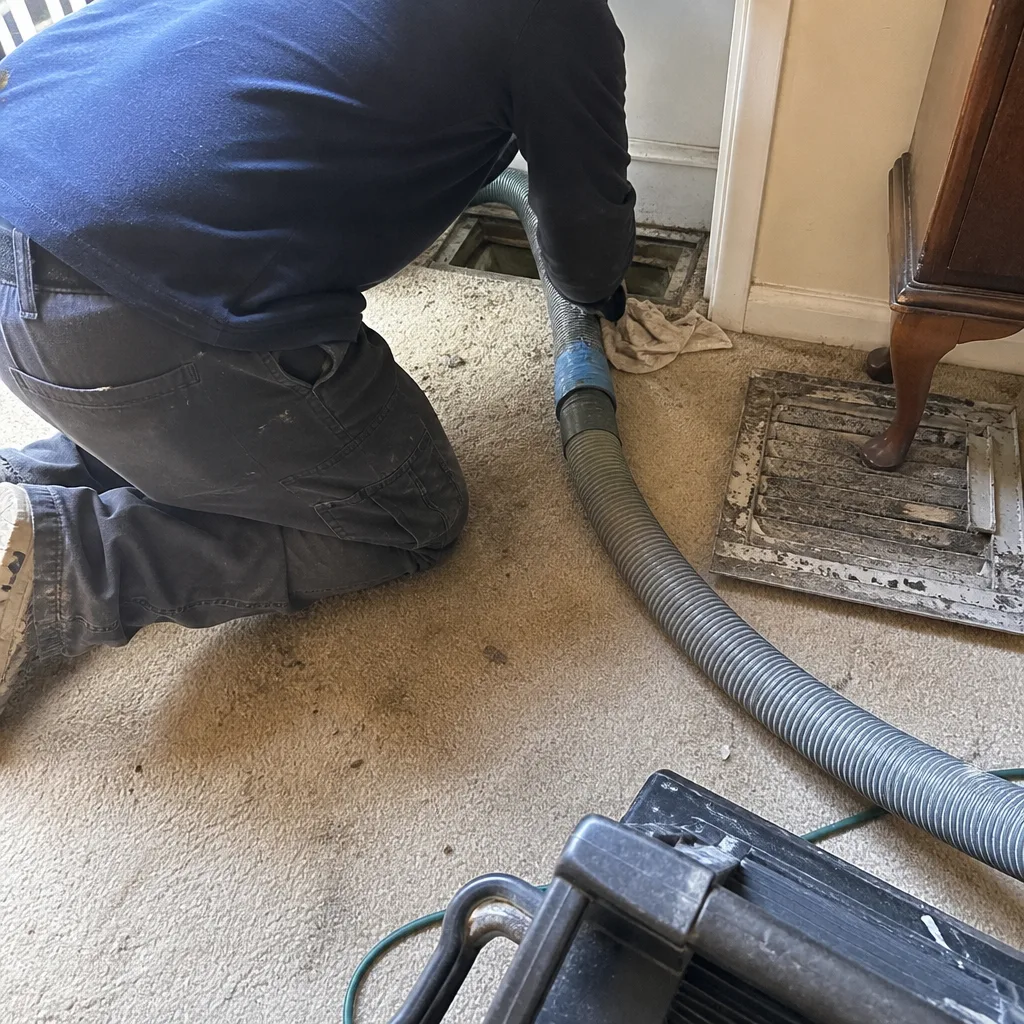
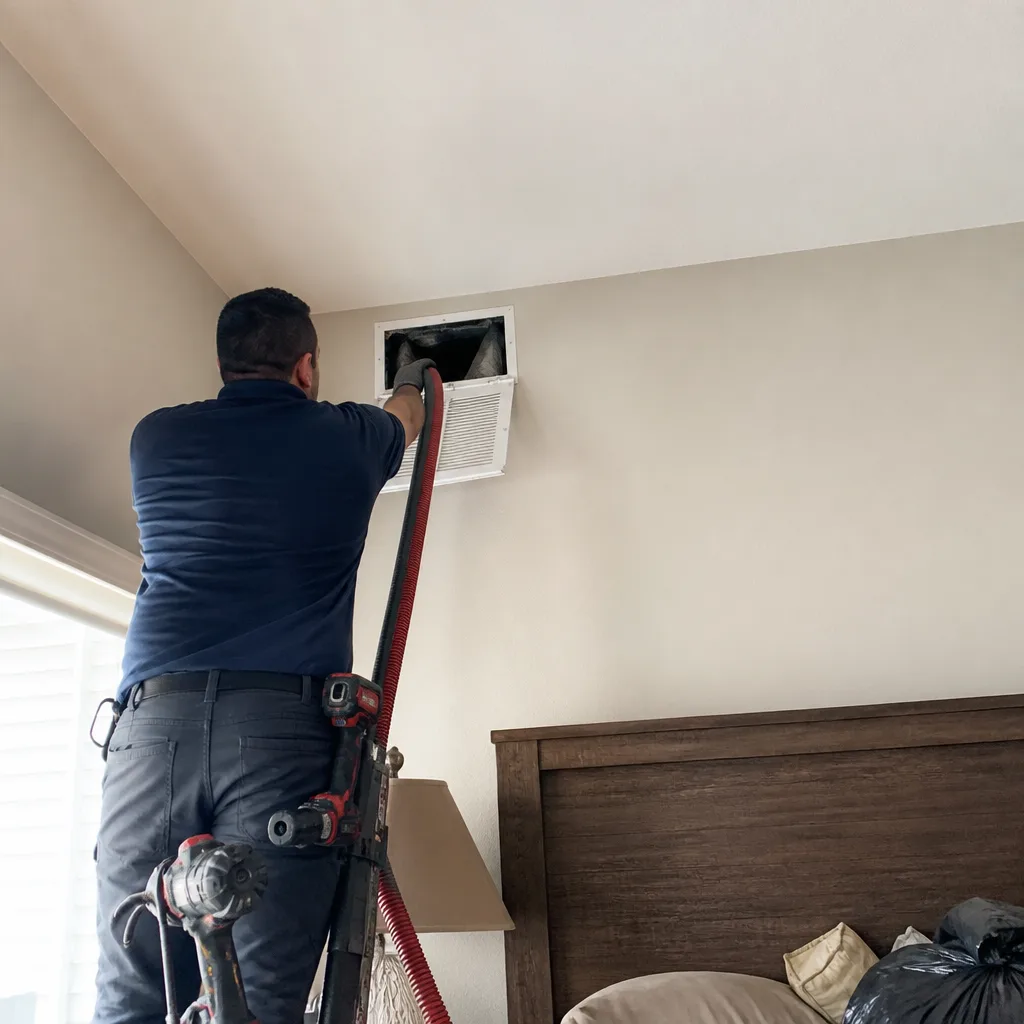
Whole-system duct and dryer vent check with before-and-after photos - you see exactly what came out of your vents
That "$99 whole-house special" is a bait ad - the real number appears once they are in your hallway, or the "clean" is a shop-vac at the register. We photograph the inside of your ducts before and after instead.
Air Duct Cleaning Permits, Codes & Inspections in CA: What You Need to Know
A duct cleaning company that cuts an access panel into your sheet metal trunk line and patches it with mastic and foil tape has performed mechanical work, and in California, depending on the scope, that work may require a licensed C-20 contractor, not just anyone with a van. Most Dublin homeowners never think about this line until something goes wrong. This guide maps the regulatory boundary between routine Air Duct Cleaning services and regulated mechanical work so you know what requires a permit, what doesn’t, and how to protect yourself when someone works on your duct system. You’ll learn the exact triggers under California Mechanical Code Title 24 Part 4, what the C-20 license actually covers, and how Dublin and Contra Costa County handle inspections for duct modifications and dryer vent reroutes.
Styles & brands we work with
- Whole-home duct cleaning
- Dryer vent cleaning
- Camera inspection
- Sanitizing & deodorizing
Quick Answer
Air duct cleaning itself does not require a permit anywhere in California, including Dublin. The moment a technician cuts into ductwork, replaces a section, modifies a dryer vent termination, or repairs a damaged run, that’s mechanical work that falls under the California Mechanical Code and typically requires a C-20 licensed contractor, and in some Dublin and Contra Costa County scenarios, a city permit. Cleaning is unregulated at the state level; repair, modification, and replacement are not.
Table of Contents
- The Legal Line: Cleaning vs. Repair vs. Modification
- What a C-20 License Actually Covers (and Why It Matters)
- When Does a Permit Get Pulled in Dublin and Contra Costa County?
- Dryer Vent Reroutes: The Most Overlooked Code Trigger
- SB 721, SB 326, and Shared Duct Systems in Dublin Condos
- What to Ask for in Writing When Ductwork Is Modified
- Duct Work and Home Sale Inspections: What Gets Flagged
- Common Mistakes to Avoid
- When to Call a Professional
- Frequently Asked Questions
- The Bottom Line
The Legal Line: Cleaning vs. Repair vs. Modification
California draws a bright line between cleaning and everything else. Air duct cleaning, which means agitating debris inside existing duct runs and extracting it with negative air pressure, requires no permit and no state license. The ducts aren’t altered, opened, or changed. What’s inside them gets removed. That’s it. You could hire anyone with the right equipment and a method that actually works, and the state of California has nothing to say about it.
The line gets crossed the moment metal is cut, a flex run is detached, a section of duct is replaced, or a boot is resealed with mastic. That’s mechanical work under Title 24 Part 4 of the California Mechanical Code. Here’s the breakdown:
- Cleaning (no permit, no C-20 required): Rotobrush agitation inside existing ducts, Nikro negative-air extraction, HEPA vacuuming of registers and returns, blower wheel and coil cleaning when accessible without cutting, dryer vent brushing with flexible rods. The system remains intact.
- Repair (C-20 contractor required, permit possibly required): Replacing a crushed or disconnected flex run, sealing a separated seam with mastic, patching a hole in a trunk line, replacing a damper, rehanging fallen duct supports. This is mechanical repair under the California Mechanical Code.
- Modification (C-20 required, Dublin permit usually required): Adding a new supply run, relocating a register, cutting an access panel that wasn’t there before, rerouting a dryer vent termination, changing duct diameter or configuration, tying a new bathroom fan into an existing trunk. This is mechanical alteration and Contra Costa County treats it as new work.
In Dublin, we’ve seen access panels installed by handyman-level cleaners that were never sealed to code. A panel cut into a rigid trunk line must be reinforced, sealed with approved mastic and foil tape, and labeled as an access opening. If it’s not, it becomes an air leak that drops system static pressure and pulls attic air into your living space. The cleaning itself was legal. The panel that was cut to perform it wasn’t.
What a C-20 License Actually Covers (and Why It Matters)
California’s Contractors State License Board (CSLB) issues the C-20 classification for warm-air heating, ventilating, and air conditioning contractors. A C-20 holder can design, install, modify, repair, and service duct systems, furnaces, heat pumps, air handlers, and associated components. They’ve passed a trade exam, carry a license bond, and are listed in the CSLB database. When ductwork gets repaired or modified, this is the credential the state expects.
An unlicensed duct cleaner in California is legally limited to cleaning. That’s the scope. The moment damage is found during a cleaning, whether a disconnected flex run in the crawlspace or a rusted-out boot, the unlicensed cleaner cannot legally repair it. Some do anyway, and that’s where Dublin homeowners get exposed. The work may look fine from the outside. But if it fails, separates, or leaks, the homeowner has no recourse through the CSLB because the person who did the work was never licensed to touch it. Your insurance company may also balk at covering damage caused by unlicensed mechanical work.
This is why the equipment distinction matters beyond performance. A shop-vac crew doesn’t carry the training or the license to handle what cleaning reveals. A company running Rotobrush agitation and Nikro HEPA extraction is equipped to clean properly, but when we find a crushed flex run, we don’t patch it under the table. We tell you it needs a licensed repair, and we make sure that repair happens with paperwork. Air Duct Cleaning in Dublin and air duct repair are different services with different legal obligations, and a straight-talking contractor won’t blur that line.
When Does a Permit Get Pulled in Dublin and Contra Costa County?
Dublin operates under Contra Costa County’s building permit framework, with the city’s own building division issuing mechanical, electrical, and plumbing permits for work within city limits. For ductwork, the permit trigger is any modification or replacement that changes the system, not routine maintenance or cleaning.
Here’s how it typically plays out in Dublin:
- Cleaning only: No permit, no inspection, no city involvement. This includes dryer vent cleaning when the existing vent path isn’t changed.
- Minor repair: Replacing a short flex run, sealing a seam, reattaching a boot. A C-20 contractor does the work. Whether Dublin requires a permit depends on whether the repair restores the system to its original condition (no permit, repair maintenance scope) or alters it (permit required). In practice, most straight repairs are treated as maintenance. We recommend getting it in writing either way.
- Modification: Adding a register, moving a vent, resizing a trunk, rerouting a dryer vent through a different wall, tying a new branch into an existing plenum. This requires a mechanical permit from the City of Dublin. The work gets inspected. The inspector wants to see proper fastening, mastic on all joints, correct flex run length and sag limits, and accessible cleanouts where required.
- Dryer vent reroute: Changing the termination point of a dryer vent, especially moving it from a roof termination to a side wall or vice versa, requires a permit in Dublin. The inspector will check total developed length, number of elbows, termination cap type, and whether the new path meets the 35-foot maximum (with each 90-degree elbow counting as 5 feet) under California Mechanical Code Section 504.
What homeowners often miss is that the permit requirement attaches to the work, not to who did it. If an unlicensed cleaner modifies your dryer vent and the city finds out, you’re the one with an unpermitted modification on your hands. You’re also the one who has to pay a licensed contractor to pull a permit retroactively and bring the work up to code.
Dryer Vent Reroutes: The Most Overlooked Code Trigger
Dryer vents are the sleeper code issue in Dublin. The vent itself seems trivial, a 4-inch metal tube that carries warm air and lint outside. But California Mechanical Code Section 504 is specific about how that tube is installed, and Contra Costa County inspectors enforce it. The moment a dryer vent is moved, shortened, lengthened, or re-terminated, it’s a mechanical modification that requires a permit.
The code provisions that matter for Dublin homes:
- Maximum length: 35 feet from the dryer to the termination, reduced by 5 feet for every 90-degree elbow. A dryer on the second floor with two elbows and a 30-foot vertical run to the roof is already over the limit. Many older Dublin homes were built this way.
- Material: Smooth rigid metal duct, not flexible foil or plastic. Semi-rigid aluminum is allowed only for the transition from the dryer to the wall connection, maximum 8 feet.
- Termination: Must exhaust to the outside through a backdraft damper and a cap with a screen. Roof terminations need a cap that prevents rain entry. Screens must be cleanable, because lint will eventually clog any screen.
- Accessibility: The entire run must be accessible for cleaning. If a reroute buries a section behind drywall with no cleanout access, that’s a code violation in Dublin.
We’ve seen Dublin laundry rooms where a previous owner rerouted a dryer vent through an attic and out a soffit to avoid a longer path. That’s an unpermitted modification, and the inspector who eventually looks at it during a condo resale will flag it. Dryer Vent Cleaning in Dublin is a maintenance service we perform with a fire-safety focus, but cleaning a vent that’s already code-compliant is one thing. Cleaning a vent that was installed wrong doesn’t fix the underlying problem.
SB 721, SB 326, and Shared Duct Systems in Dublin Condos
California Senate Bills 721 and 326, both signed into law after the Berkeley balcony collapse, require inspections of exterior elevated elements in multifamily housing. SB 721 applies to apartment buildings with three or more units. SB 326 applies to condominium associations. Neither bill specifically mandates duct inspections. But both laws forced Dublin HOAs and property managers to start looking at all shared building systems, including ductwork that runs through common walls, shared chases, and corridor ceilings.
Here’s the intersection that matters for Dublin condo and townhome owners:
- Shared ducts are common property: In many Dublin condo buildings, the main trunk line that serves multiple units runs through a common chase. Your HOA owns that duct. If it’s leaking, your unit gets less airflow, but you can’t legally repair it yourself. The HOA’s maintenance obligation, now under sharper scrutiny post-SB 326, includes keeping those shared systems functional.
- Inspections lead to repair demands: When an HOA does a building envelope inspection under SB 326, the inspector may flag duct penetrations, leaking seams, or unsealed chases as part of the building’s overall condition. The HOA then orders repairs, and those repairs require C-20 contractors and permits just like they would in a single-family home.
- Unit-owned ducts are your responsibility: In some Dublin townhome ownership structures, each unit’s duct run is separately owned even if it passes through a common area. Check your CC&Rs. If your duct run is yours, you’re responsible for its condition, and if a neighbor’s modification damaged it, that’s between you, your neighbor, and the HOA.
- Documentation matters more in HOAs: Any work done in a shared chase will eventually be inspected. If a duct cleaner modifies something in a common area without a permit, the HOA will find out, and the unit owner gets the bill to fix it properly.
Dublin has a significant stock of 1990s and early-2000s condo and townhome developments. Many of those buildings have duct runs that haven’t been touched since construction. When they finally get cleaned or repaired, the accumulated damage becomes visible, and the SB 326 inspection cycle is the mechanism that often surfaces it. If your HOA is scheduling building inspections, have your ducts looked at before the inspector does. Air Duct Repair in Dublin is the service that addresses damaged ducts before they become a board-level discussion.
What to Ask for in Writing When Ductwork Is Modified
This is the section most guides skip, and it’s the one that protects you during a home sale in Dublin. When any contractor modifies your ductwork, whether it’s a repair or a reroute, you need documentation. Not a verbal assurance. Paper.
Here’s the written record that protects the Dublin homeowner:
- Scope of work in writing: What was modified, where, and why. Before any work starts. A one-page description with photos of the affected area.
- License status: The contractor’s C-20 license number, verified against the CSLB database, date-stamped. If the person doing the work doesn’t have a C-20 and the work requires it, stop the job.
- Permit number: If the work requires a Dublin permit, the permit number and the inspection date. Don’t accept “we’ll pull it later.” The permit gets pulled before work starts.
- Inspection sign-off: The final inspection approval from the City of Dublin, kept in your records. This is the document a home sale inspector will ask for.
- Materials list: What was installed. Mastic type, flex run brand and R-value, termination cap type. Specifics matter.
- Warranty in writing: What’s covered, for how long, and who to call. A three-year warranty on a flex run replacement is standard. A verbal promise isn’t.
When we perform duct modifications in Dublin, we use Abatement Technologies negative-air equipment to keep the work area contained, and we document everything. Not because Dublin’s building division demands a novel, but because ten years from now, when you sell the house, the buyer’s inspector will ask what happened in the attic. Paper beats memory every time.
Duct Work and Home Sale Inspections: What Gets Flagged
Dublin’s real estate market moves fast, and home inspections still happen. When a buyer’s inspector climbs into the attic and looks at the ducts, here’s what gets flagged:
- Unsealed access panels: A panel cut for cleaning and left loose. The inspector notes it as an air leak and the HVAC section of the inspection report goes red.
- Disconnected flex runs: Common in older Dublin homes where the original flex was installed poorly or has degraded. A disconnected run means that room isn’t getting conditioned air.
- Unpermitted modifications: The buyer’s agent may pull permit history from the City of Dublin. If the seller modified ducts without permits, the buyers now know, and the deal renegotiates around it.
- Dryer vent terminated in the attic: This was acceptable decades ago and is now a clear code violation. Dublin inspectors flag it every time, and your buyer’s lender may require it fixed before funding.
- Improper mastic work: Duct sealing done with duct tape, which degrades and fails, instead of approved mastic and foil tape. Inspectors recognize duct tape on ducts as a red flag.
If you’re selling a Dublin home, a pre-sale duct inspection is cheap insurance. Clean the ducts, document the condition, fix what’s broken with permits where required. A clean inspection report with paperwork beats a price reduction at the negotiating table. When you’re ready, the team at Duct Cleaning Dublin home can assess the system and tell you what’s cleanable, what’s repairable, and what needs a licensed fix before the buyer’s inspector shows up.
Common Mistakes to Avoid
- Hiring an unlicensed cleaner who “also does repairs.” The license matters the moment damage is found. An unlicensed person who patches a duct has done illegal mechanical work, and you carry the liability.
- Ignoring a dryer vent reroute because “it works fine.” A vent that terminates in the attic or exceeds code length isn’t fine. It’s an unpermitted modification that will get flagged in a Dublin home sale.
- Assuming the HOA handles your condo’s ducts. Check your CC&Rs. In many Dublin townhomes, the duct run serving your unit is yours even if it passes through common space. If you don’t know, find out before you need a repair.
- Not getting a permit when a modification requires one. “We’ll keep it off the books to save you money” means the work won’t be inspected. When it fails, or when the city finds out, you’re the one holding the liability.
- Accepting a shop-vac cleaning as equivalent to professional equipment. A shop-vac attached to a duct doesn’t reach the full run and doesn’t create negative air. Nikro HEPA extraction pulls debris through the entire system. The difference isn’t cosmetic; it’s whether the cleaning actually happened. Rotobrush agitation releases debris that a shop-vac crew leaves behind.
- Skipping documentation and trusting memory. Five years after duct work, you won’t remember what was done. The buyer’s inspector won’t care what you remember. Paper is the only thing that stands up.
When to Call a Professional
If your ducts haven’t been cleaned in five or more years, if you’ve found debris around your registers, if your dryer takes two cycles to dry a load, or if you’ve just bought an older Dublin home with unknown duct history, get the system looked at. A proper inspection tells you whether you’re dealing with a cleaning, a repair, or both. If you’re selling, schedule the inspection before the buyer does. Duct Cleaning Dublin offers free estimates in Dublin, call (855) 356-4417, and we’ll tell you what you’re actually looking at.
Frequently Asked Questions
No permit is required for air duct cleaning itself anywhere in California, including Dublin. A permit enters the picture only when ductwork is modified, repaired, or rerouted, such as cutting an access panel, adding a supply run, or changing a dryer vent termination. Those modifications fall under the California Mechanical Code and typically require a C-20 licensed contractor and, in many Dublin cases, a city permit.
A C-20 contractor is specifically licensed by the State of California to install, modify, repair, and service HVAC systems, including ductwork. An unlicensed duct cleaner is legally limited to cleaning only, removing debris from existing ducts without altering them. When damage is found, only a C-20 contractor can legally perform the repair. Call (855) 356-4417 to have your system assessed, and we’ll tell you if the work you need is cleaning or licensed repair.
A dryer vent reroute requires a permit in Dublin whenever the termination point is changed, the duct path is altered, or the length or configuration changes. Straight cleaning of the existing vent path does not require a permit. The California Mechanical Code limits dryer vents to 35 feet with each 90-degree elbow counting as 5 feet, and Dublin inspectors enforce that standard.
SB 721 and SB 326 require exterior elevated element inspections in multifamily buildings, and while they don’t mandate duct inspections directly, they’ve pushed Dublin HOAs to scrutinize all shared building systems, including common duct chases and penetrations. If a shared duct run needs repair, the HOA must hire a C-20 contractor and pull permits just as in a single-family home. Check your CC&Rs to determine whether your unit’s ducts are separately owned or common property.
Get a written scope of work, the contractor’s C-20 license number verified against the CSLB database, the Dublin permit number if one is required, the final inspection sign-off, a materials list, and a written warranty. This paper trail protects you when you sell the home and the buyer’s inspector asks what happened in the attic.
Every 3 to 5 years for most Dublin homes, sooner if you have pets, recent construction, allergies, or a history of water intrusion. Dublin’s dry summer climate produces fine dust that settles in duct runs, and homes near the I-680 corridor accumulate more airborne particulates. A system that hasn’t been cleaned in a decade isn’t just dirty, it’s likely hiding damage that only a proper inspection with professional-grade equipment like Nikro and Rotobrush will reveal. Call (855) 356-4417 for a free estimate and we’ll assess what your system actually needs.
The Bottom Line
Air duct cleaning in Dublin requires no permit and no license. The moment the work involves cutting, replacing, repairing, or rerouting, California’s mechanical code and Dublin’s building division both get a say. Know where that line is, demand a C-20 license when the work crosses it, pull permits when modifications are made, and keep the paperwork. A properly cleaned and documented duct system isn’t just about air quality, it’s about not inheriting someone else’s unpermitted mess ten years from now when you sell the house. Check your dryer vent, check your access panels, and when in doubt, call (855) 356-4417. The Dryer Vent Cleaning in Dublin service we provide keeps your existing vent path clean and fire-safe, and our repair work is done properly, with licenses, permits, and paper to prove it.
Written by the team at Duct Cleaning Dublin, serving Dublin since 2017. Explore our more guides & resources.
See the difference
 Before
 After
 Before
 After
 Before
 After