
Last updated November 2, 2026
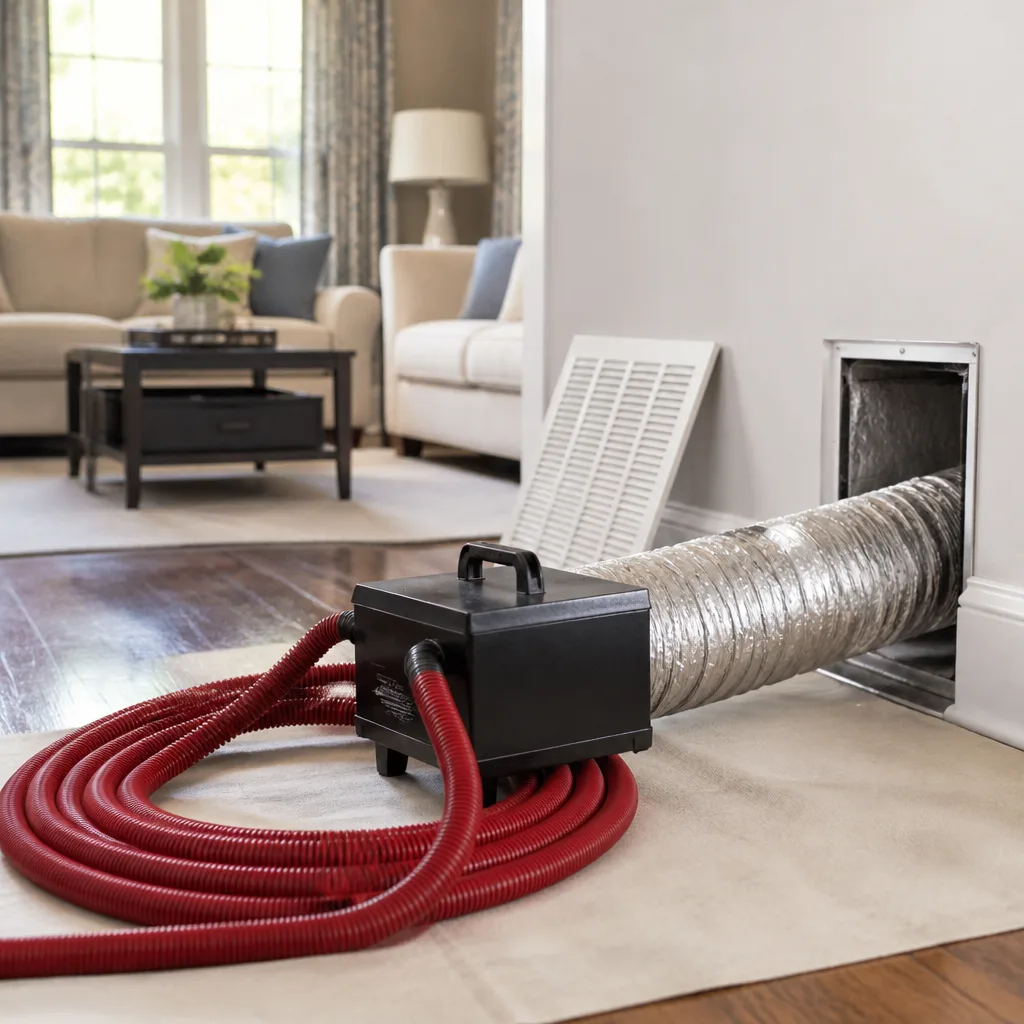 Whole-home duct cleaning
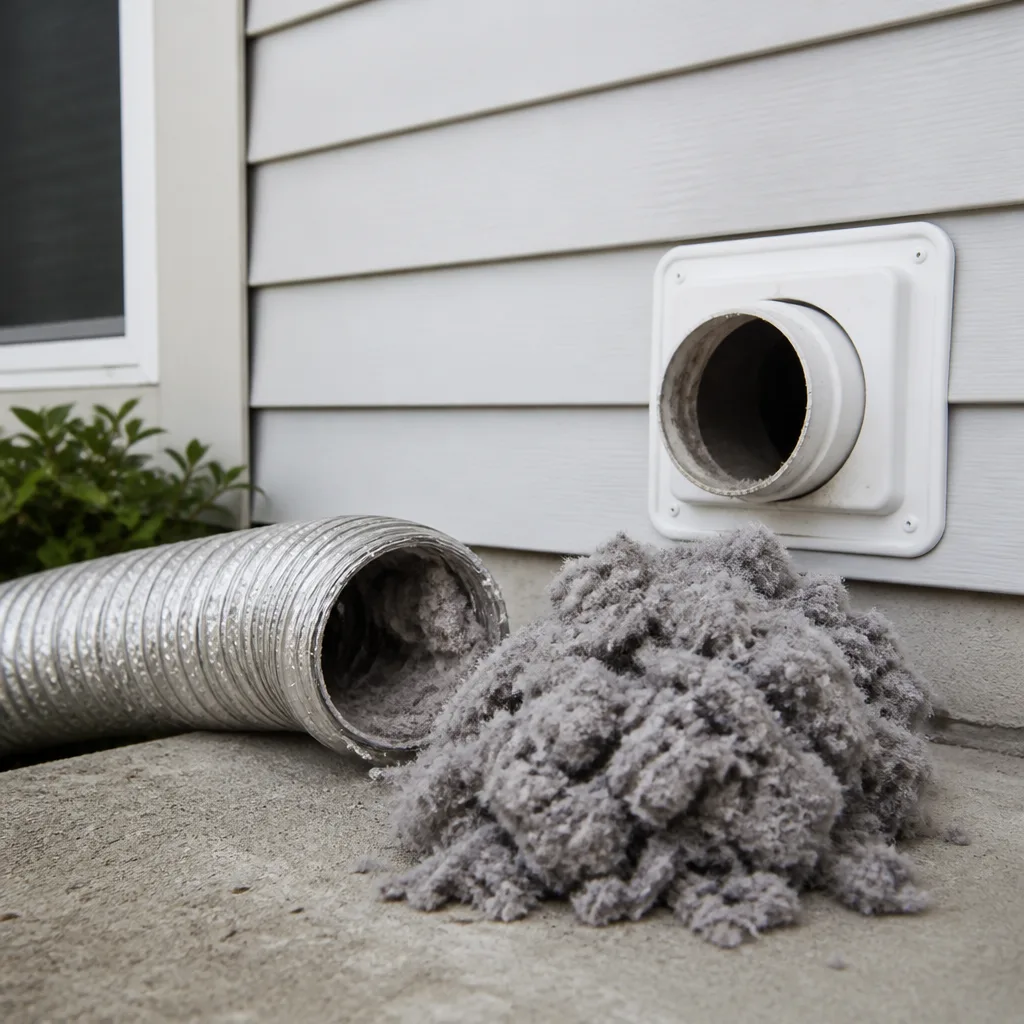 Dryer vent cleaning
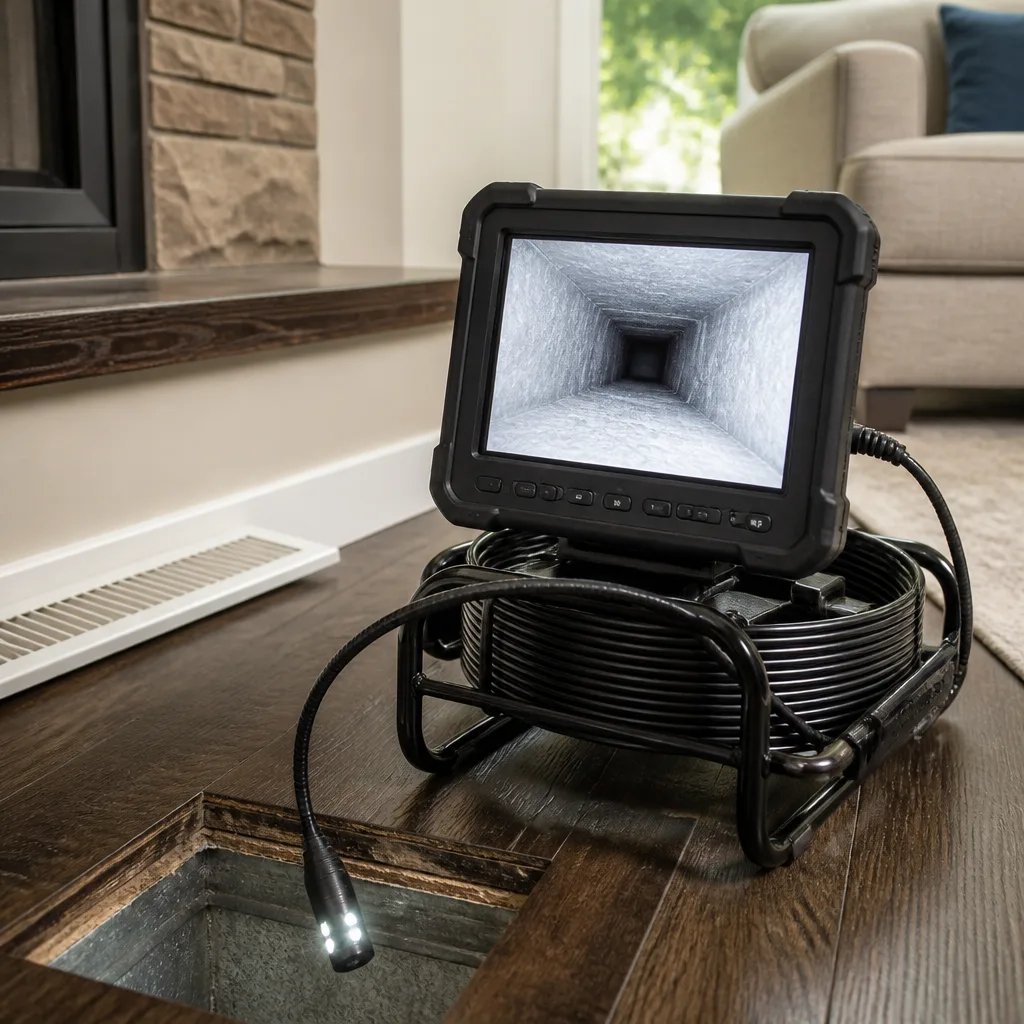 Camera inspection
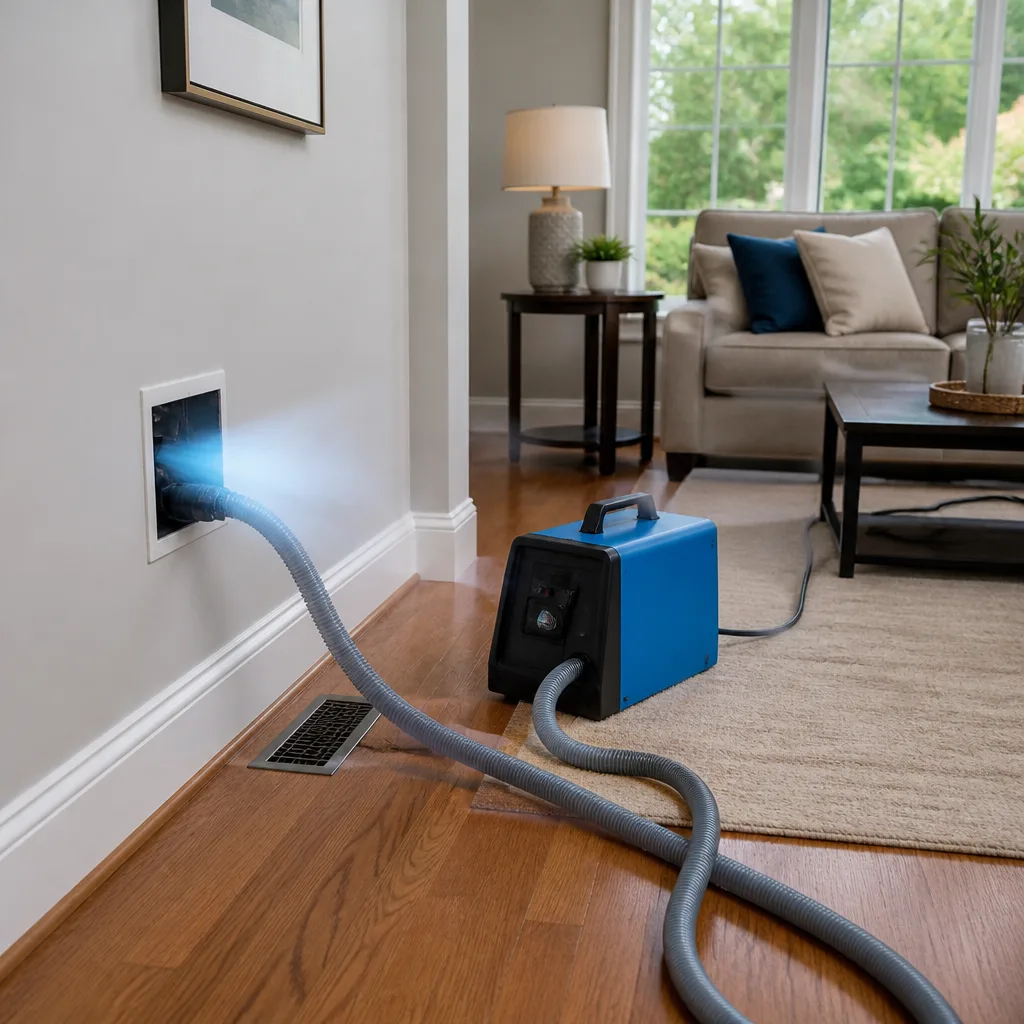 Sanitizing & deodorizing
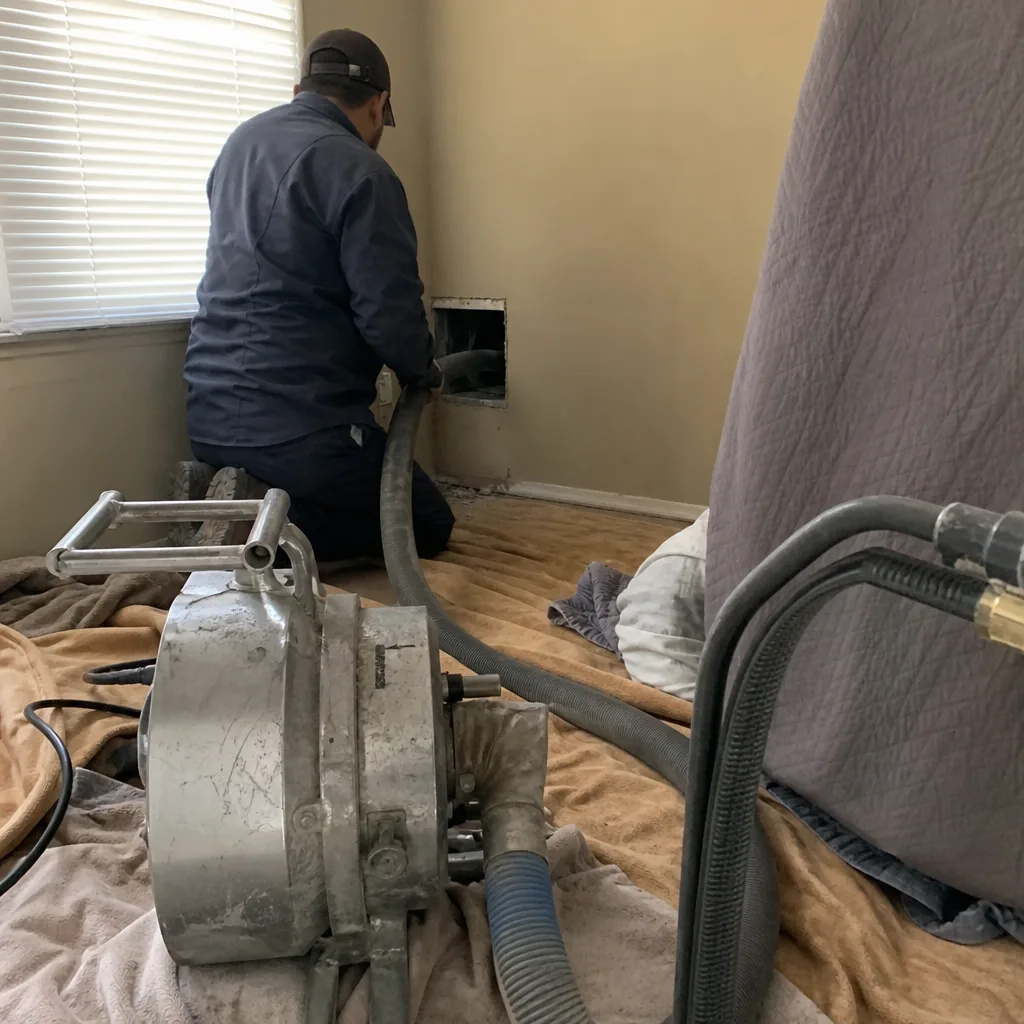
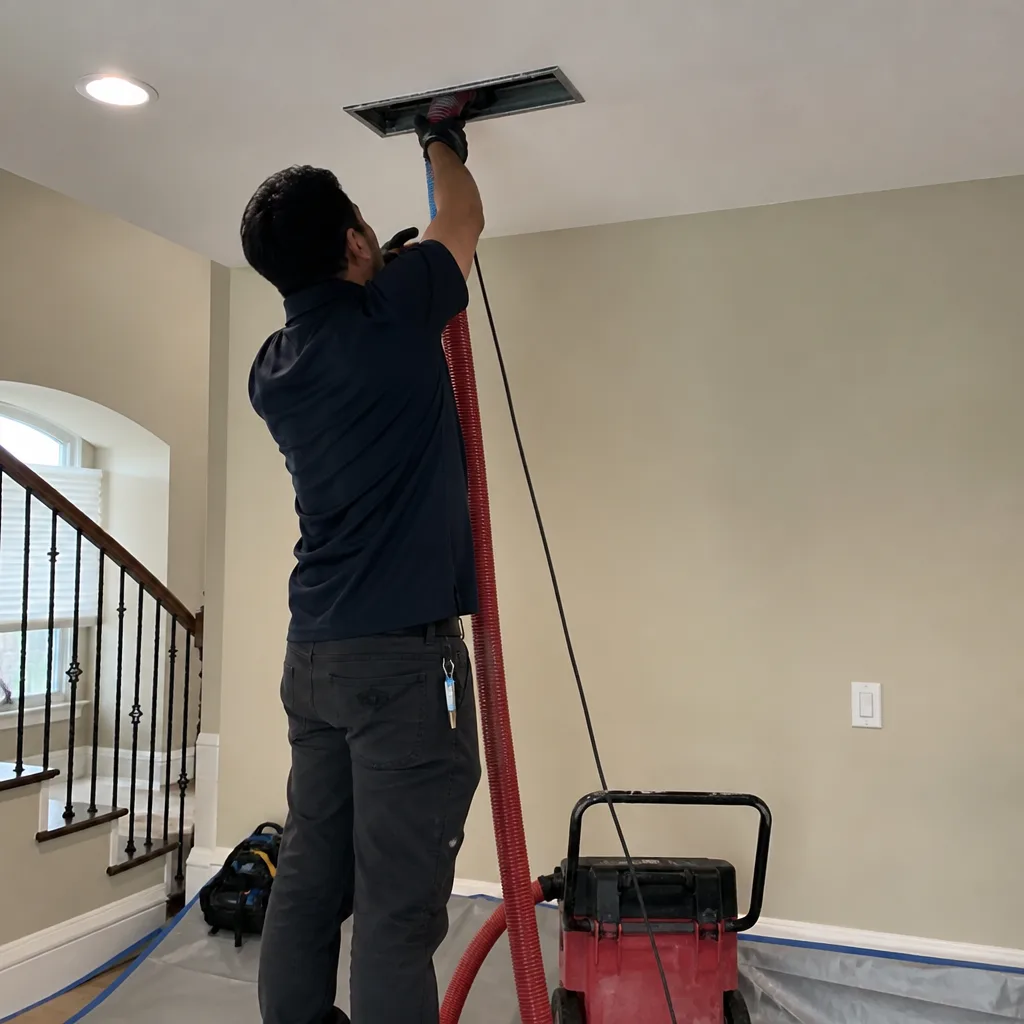
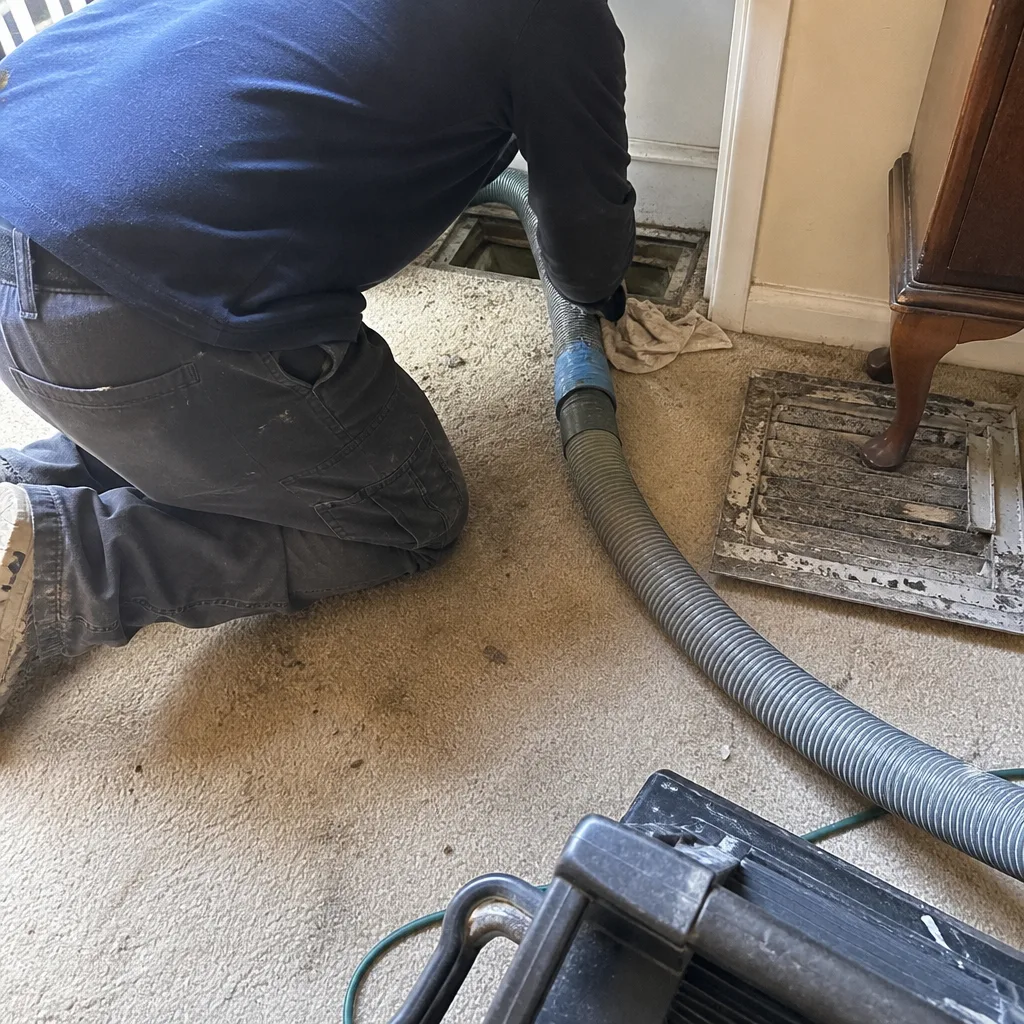
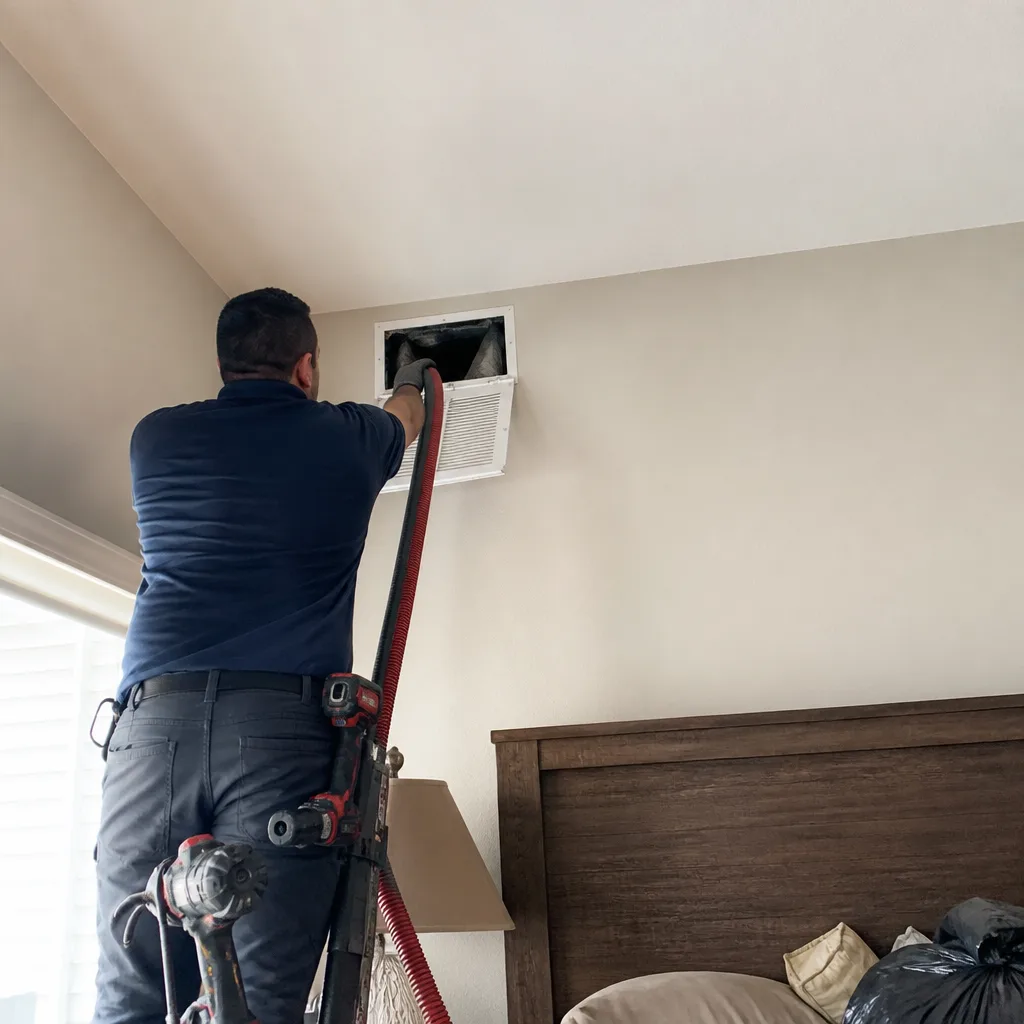
Whole-system duct and dryer vent check with before-and-after photos - you see exactly what came out of your vents
That "$99 whole-house special" is a bait ad - the real number appears once they are in your hallway, or the "clean" is a shop-vac at the register. We photograph the inside of your ducts before and after instead.
Air Duct Cleaning Emergency Preparedness Guide for Dublin Homes
During the 2020 wildfire smoke events, many Dublin homeowners ran their HVAC systems continuously to filter indoor air. That was the right instinct, but it came with a hidden cost: three years of normal filter loading compressed into three weeks. The result across the Tri-Valley was a wave of system shutdowns during a 105°F heat advisory, with blower motors starving for airflow and ductwork packed with fine particulate that standard filters simply were not designed to trap. This guide walks through the Air Duct Cleaning Maintenance Checklist for Dublin Homeowners and other duct-related emergencies that actually happen in Dublin, not the generic scenarios in national checklists. You’ll learn what to stage before smoke season, how to respond in the first 24 hours after water intrusion near your air handler, what dryer vent fire indicators actually look like, and how Dublin’s power grid stress during heat events intersects with your duct system’s condition.
Styles & brands we work with
- Whole-home duct cleaning
- Dryer vent cleaning
- Camera inspection
- Sanitizing & deodorizing
Quick Answer
Emergency preparedness for air ducts in Dublin homes means having the right MERV-rated filters staged before wildfire smoke season, knowing when to switch your system to recirculation mode, recognizing early warning signs of dryer vent restriction and duct damage, and having a plan for the first 24 hours after water intrusion near your HVAC system. The most common preparedness failure we see is not a missing contractor’s number, it’s a missing high-efficiency filter when AQI spikes and every hardware store in Dublin is sold out. A staged emergency duct kit and a basic understanding of what your system can and cannot handle will prevent most duct-related emergencies from escalating.
Table of Contents
- The Wildfire Smoke Protocol for Dublin Homes
- Dryer Vent Fire Indicators Every Dublin Homeowner Should Know
- Water Intrusion Near Your Air Handler: The First 24 Hours
- Building an Emergency Duct Kit Before Wildfire Season
- Dublin’s Power Grid, Heat Events, and Your Blower Motor
- Recognizing Duct Damage Before It Becomes an Emergency
- Common Mistakes to Avoid
- When to Call a Professional
- Frequently Asked Questions
- The Bottom Line
The Wildfire Smoke Protocol for Dublin Homes
Dublin sits in a position that catches wildfire smoke from multiple directions. The Diablo winds push particulates from the east, while fires in the North Bay and Santa Cruz mountains send smoke across the bay depending on pressure patterns. During the worst smoke events, AQI readings in Dublin have exceeded 250, which is firmly in the “very unhealthy” range. Your HVAC system becomes your primary line of defense, but only if you operate it correctly and have staged the right filtration before the smoke arrives.
The recirculation decision matters more than most homeowners realize. Your system pulls air either from outside or from inside the home. When smoke is present, you want zero outside air entering the duct system. Close the outdoor air intake damper if your home has one, typically found on homes with newer energy-recovery ventilators or whole-house fans. Set your thermostat to fan “On” rather than “Auto” to keep air moving through the filter continuously, even when the system is not actively heating or cooling.
Filter staging is where most homes fall short. The standard MERV 8 fiberglass filter that most Dublin households run year-round is not designed for wildfire smoke. Smoke particles are extremely fine, often under 2.5 microns, and they slip through lower-rated filters. You want a MERV 13 filter staged and ready before smoke season starts. MERV 13 captures particles in the 1.0 to 3.0 micron range, which covers smoke. Keep several on hand. When AQI in Dublin crosses 150, swap in the MERV 13. When it crosses 200, check it weekly. During sustained smoke events, filters that would normally last 90 days clog in 2 to 3 weeks.
After the AQI clears, do not immediately switch back to your standard filter. Run the MERV 13 for at least two more weeks. Smoke particulates linger in your duct system and in household fabrics, and the system keeps recirculating them. Once you do replace the filter, inspect what came out. If you see heavy gray or brown residue, fine powdery buildup that does not shake off easily, that particulate has also accumulated inside your ductwork, especially in the return side and around the blower compartment. This is when a professional Air Duct Cleaning in Dublin makes sense, not as a routine chore but as a smoke-recovery measure. A system that ran hard through a smoke event has pushed particulates into places a filter cannot reach, including the blower wheel, evaporator coil, and the first several feet of supply ducting.
One more point that gets overlooked: your Aprilaire or Honeywell whole-house filtration system, if you have one, has its own media to replace. These systems are excellent at handling smoke, but they create additional airflow resistance as they load up. If you run a MERV 13 filter at the return plus a whole-house media filter, you’re stacking resistance. During a smoke event that resistance can push an older blower motor past its thermal limit. Check the Aprilaire or Honeywell media monthly during smoke season, and be prepared to replace it twice as often as the normal schedule.
Dryer Vent Fire Indicators Every Dublin Homeowner Should Know
Dryer vent fires do not announce themselves with obvious warning lights. They develop over months through a slow accumulation of lint that restricts airflow. The indicators are subtle, but they are consistent, and once you know what to look for they are hard to miss. Lint is extraordinarily flammable, and a restricted vent is a firebox waiting for ignition.
The first and most reliable indicator is longer dry times. If a load that used to dry in 45 minutes now takes 70 or 80 minutes, the vent is restricted. This is not a minor inconvenience, it is your dryer telling you that hot, lint-laden air is not exiting the home at the rate it should. The lint you see in the lint trap each load is only a fraction of what passes through the system. A significant amount bypasses the trap entirely and accumulates in the duct run, especially at elbows and wherever the duct passes through a wall or floor cavity.
The second indicator is heat buildup in the laundry room. If the room feels noticeably warmer when the dryer runs, or if the dryer itself is hot to the touch on the exterior panels, the exhaust is not clearing properly. A properly vented dryer discharges hot air outside efficiently enough that the appliance itself should not feel unusually hot to the touch after a cycle. Heat buildup means the dryer is working harder, running longer, and pushing against a restriction.
The lint trap signal is the one most people miss. If you clean the lint trap and find the lint is damp, clumped, or unusually dense, the internal duct is already restricted. A properly functioning dryer produces lint that is dry and fluffy because the moisture is being exhausted efficiently. Damp, compacted lint means moisture is lingering in the system, which causes lint to stick to the duct walls rather than blow clear. Once lint starts adhering to the duct interior, buildup accelerates quickly.
Dublin’s housing stock adds a specific risk factor. Many homes in the older Dublin Ranch developments and the original 1960s and 1970s neighborhoods have dryer ducts that run long horizontal distances through attics or between floors before exiting. Every additional foot of duct and every bend creates more surface area for lint to accumulate. Some of these runs approach or exceed the 25-foot maximum that building codes recommend before a booster fan becomes necessary. If your laundry room is on an interior wall, your risk is higher than a home with a laundry room on an exterior wall with a short, straight vent run.
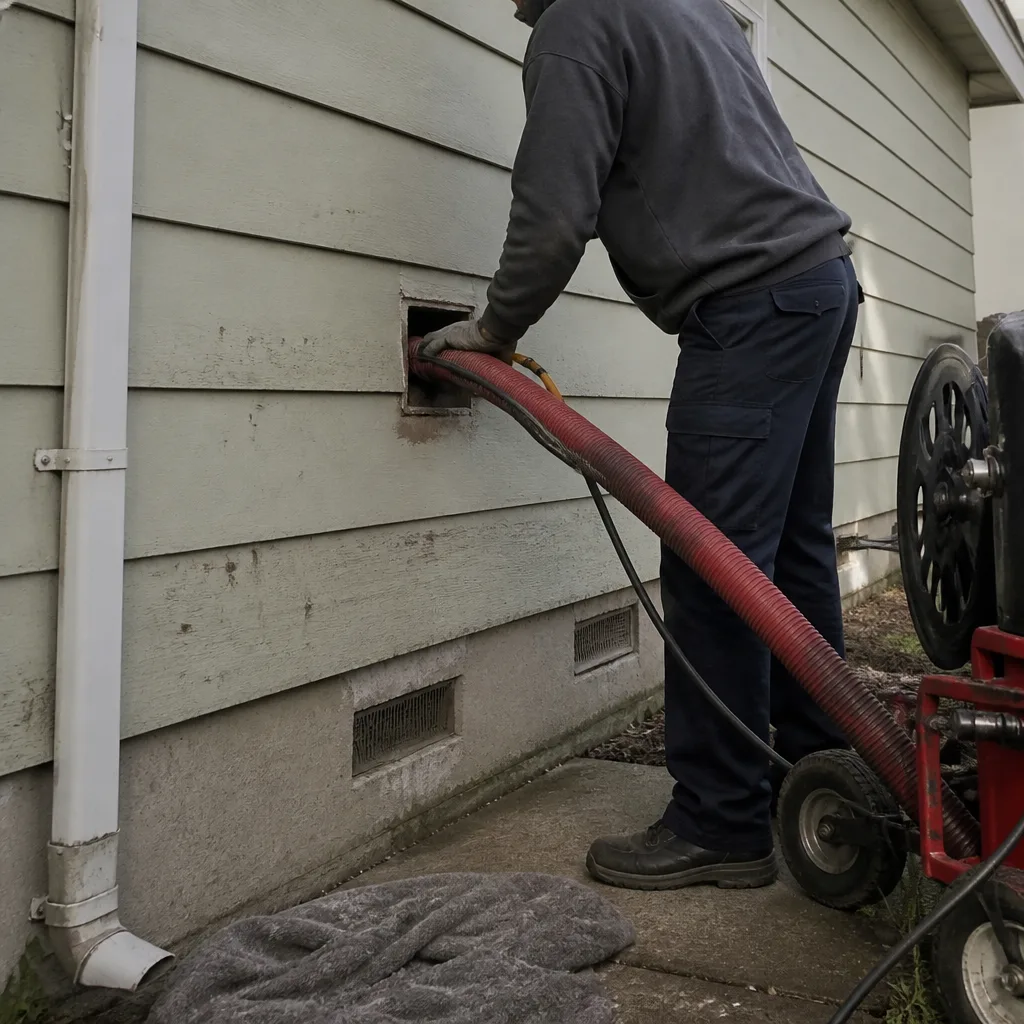
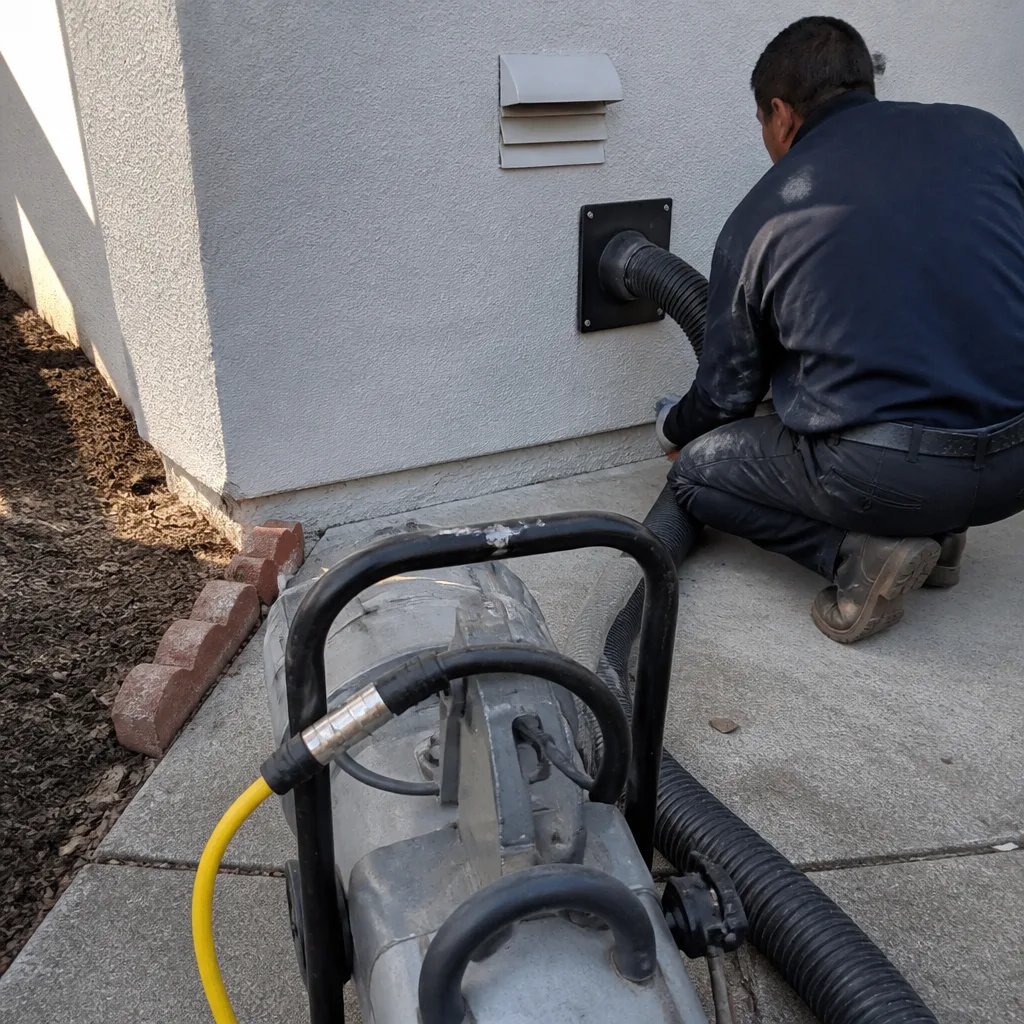
We treat Dryer Vent Cleaning in Dublin as a fire-prevention service, not a cosmetic one. The brushes we run through the vent are sized to scrape the duct walls clean, removing the compacted lint that home methods cannot reach. If you have noticed any of these indicators, the vent needs professional attention now, not at the next convenient time.
Water Intrusion Near Your Air Handler: The First 24 Hours
Water near your air handler or inside your duct run is a race against microbial growth. Mold can begin to develop within 24 to 48 hours in warm, dark, damp conditions, and the inside of a duct system provides exactly those conditions. What you do in the first day after discovering water intrusion determines whether you need a repair or a full remediation.
The most common mistake Dublin homeowners make is running the system to “dry it out.” This sounds logical but it is actively harmful. When you run the blower with water present in the ductwork or air handler, you distribute moisture throughout the system. The blower pushes humid air into every supply run, and that moisture condenses on duct walls, insulation, and the interior of the evaporator coil cabinet. What was a localized problem becomes a whole-system problem. If water has intruded anywhere near the air handler or ductwork, turn the system off at the thermostat and leave it off until a professional has inspected it.
- Turn off the system completely. This means the thermostat setting, not just the breaker. You want no blower operation at all. If the water came from a condensate drain backup, the drain pan may still be filling while the system runs. Shutting it down stops the water source and prevents airborne distribution.
- Remove standing water you can reach safely. Use a wet/dry vac on the floor around the air handler. Do not open the air handler cabinet unless you know how to do so safely. The interior contains sharp coil fins and electrical connections.
- Identify the source. Condensate drain clogs are the leading cause of water near an air handler. Check if the condensate line is draining. If water is coming from a roof leak, a plumbing leak, or a duct leak in a crawl space or attic, the response is different. Know the source before you act.
- Check the duct insulation near the water. If the water contacted flex duct or internal duct liner, that insulation is now saturated and cannot be effectively dried in place. Saturated insulation becomes a mold substrate. It has to be replaced, not dried.
- Document the damage. Take photos of the water location, the extent of affected ductwork, and any visible damage to the air handler or surrounding materials. If you need to make an insurance claim, this documentation matters.
- Call a professional who handles the full duct health picture. This is not a standard cleaning job. The duct system needs to be inspected for moisture, damaged sections identified, and saturated insulation replaced. Our Air Duct Repair in Dublin service addresses duct damage that cleaning alone cannot fix.
One Dublin-specific note: homes with air handlers located in unconditioned attics are common in this area. Attic temperatures in Dublin summers exceed 130°F. When water intrudes near an attic air handler, the heat accelerates microbial growth. The 24-48 hour window for mold development shrinks to as little as 12-18 hours in a hot attic. If your air handler is in the attic and you discover water, treat it as urgent, not routine.
Building an Emergency Duct Kit Before Wildfire Season
Every Dublin home should have a small, dedicated kit staged before the smoke season begins. Hardware stores empty out of high-efficiency filters within hours when AQI spikes. You do not want to be standing in an aisle at 8 AM on a Saturday in August realizing the MERV 13 filters sold out yesterday. The kit costs under $150 and takes 30 minutes to assemble.
- Two or three spare MERV 13 filters sized to your system. Not MERV 8, not “high efficiency” labels without a rating. MERV 13 is the minimum for smoke. If your system can handle the airflow restriction and you have respiratory concerns in the home, consider MERV 14. Keep the filters in their original packaging, stored flat, away from moisture.
- A roll of foil tape, not duct tape. Foil tape, specifically UL 181-rated foil tape, is what HVAC professionals use to seal duct joints. If you discover a disconnected duct or a gap at a supply boot, foil tape is the correct temporary fix. Duct tape dries out, loses adhesion, and is not rated for HVAC use. A single roll costs under $15.
- A paper copy of your HVAC company’s phone number. During a heat event with rolling outages, phone batteries die and internet access becomes unreliable. A physical paper with the number of a company that handles both cleaning and repair means you are not searching for a contractor during the emergency.
- A basic moisture detector. A simple pin-type moisture meter costs $30 to $50 and tells you whether drywall or wood near your air handler is wet. This is useful after any water event to determine whether the problem is active or resolved.
- A flashlight and a small inspection mirror. These are for looking into supply registers and return grilles without disassembling anything. You can see dust accumulation, moisture staining, or visible mold without opening the system.
- N95 or P100 disposable respirators. If you discover visible mold or heavy dust inside a duct, and you need to be in the room until a professional arrives, a respirator rated for particulates protects you from what you cannot see. Standard dust masks from the hardware store are not adequate.
The point of this kit is not to enable DIY duct repair. It is to give you the filters, temporary sealing materials, and contact information you need in the first hours of an emergency, when you may not be able to reach a professional immediately. When we arrive on an emergency call in Dublin, homeowners who have a staged kit and have taken basic first steps are consistently in better shape than those who ran the system through a smoke event with a clogged MERV 8 filter and a disconnected return.
Dublin’s Power Grid, Heat Events, and Your Blower Motor
Dublin’s summer temperatures routinely push past 100°F, and during those stretches the regional power grid operates near capacity. Heat events and grid stress are not background noise for your HVAC system, they are directly connected. A blower motor struggling against a restricted duct system draws more amperage, which means more heat at the motor windings, which shortens the motor’s life. During a heat wave, when the system is already running nearly continuously, the additional load from dirty filters, clogged evaporator coils, and restricted ductwork pushes motors to failure.
Here is the mechanism. A duct system with significant buildup of dust, pet hair, and construction debris restricts airflow. Restricted airflow means the blower motor has to work harder to move the same volume of air. The harder the motor works, the more current it draws. More current means more heat. During a heat event, when the motor is already running for 12, 16, or 20 hours a day, the additional heat accelerates winding insulation breakdown. Motors that would have lasted 15 years fail in 8. Motors that were fine in June fail during the July heat wave.
The duct system maintenance that reduces this load is straightforward. A professional Duct Cleaning Dublin home inspection removes the buildup that restricts airflow and makes the blower work harder than it should. The return side is the most critical area because restrictions there starve the blower of air, which is harder on the motor than restrictions on the supply side. After a cleaning, blower amperage draw typically drops measurably, which means less heat, less electrical consumption, and a longer motor life.
There is a Dublin-specific angle here. During heat events, many homeowners set their thermostats lower than normal, sometimes to 68°F or 70°F, and leave them there around the clock. This means the system runs almost continuously. In a home with clean ducts and a properly functioning system, that is manageable. In a home with restricted ducts and a dirty coil, it is a blower motor heading for a thermal shutdown, often at the worst possible moment: 4 PM on a 106°F day when service calls are backed up for days.
If your system has been short-cycling, making unusual noise, or the airflow from your registers has been weak, address the duct condition before the next heat event, not during it. Our equipment, including Rotobrush rotary brush systems used with proper extraction, removes the debris that accumulates over years of operation in Dublin’s dusty summer conditions. A system that breathes freely runs cooler, draws less current, and survives heat events that kill restricted systems.
Recognizing Duct Damage Before It Becomes an Emergency
Duct damage rarely announces itself with a dramatic failure. It develops gradually: a sagging flex duct in the attic, a disconnected joint that has been pulling apart for months, a crushed section under a crawl space where a technician or pest control operator stepped on it. The signs are present long before the system fails, and knowing what to look for gives you the chance to address the problem on your schedule, not during an emergency.
The most obvious sign is uneven heating and cooling. If one bedroom in your Dublin home is always 8 degrees warmer than the rest of the house in summer, or one room never gets warm enough in winter, you likely have a duct problem. It could be a disconnected run, a crushed section, or a damper that has failed. This is not a thermostat calibration issue, it is an airflow delivery issue. The air is being conditioned but not arriving at the register.
Higher energy bills without a corresponding change in usage point to duct leaks. A duct system that leaks 20% of its conditioned air into an attic or crawl space is forcing your system to run longer to maintain temperature. In Dublin’s summer climate, where cooling loads dominate, leaky ducts in hot attics are particularly expensive. The system is cooling air and then losing a significant portion of it before it reaches the living space.
Visible dust accumulation around supply registers, even when the filter is clean, indicates a leak or disconnect in the return side of the system. Return ducts operate under negative pressure. When they leak, they pull in air from unconditioned spaces like attics, crawl spaces, and wall cavities. That air carries dust, insulation fibers, and whatever else is in those spaces directly into your system and out through your supply registers.
Whistling, rattling, or banging sounds when the system runs are mechanical indicators. Whistling usually means a restricted duct, often a damper that has closed or a filter that is too restrictive for the system. Rattling often indicates a loose connection or a damper that is failing. Banging, especially when the system starts or stops, is usually a duct that is expanding or contracting against a hard surface, often a sign of poor support or installation.
If you see flex duct hanging from the insulation in your attic, sagging between supports, or touching the attic floor, it is damaged or incorrectly installed. Flex duct must be supported every 4 to 5 feet and cannot make sharp bends. A sagging flex duct restricts airflow and strains on its connections. Over time, the connection pulls apart, and you now have a duct that is conditioning your attic instead of your living room.
These are the situations where Air Duct Repair in Dublin addresses what cleaning cannot. A cleaning removes buildup from the interior of the duct system. It does not repair disconnected joints, replace crushed sections, or re-support sagging flex duct. Those are repair tasks, and they require different tools and materials. A complete duct health assessment covers both, which is why we handle both under the same roof.
Common Mistakes to Avoid
- Running the system during a smoke event with a MERV 8 filter. This is the single most common mistake we encounter in Dublin. A MERV 8 filter is fine for routine dust but captures almost none of the fine particulates that make wildfire smoke dangerous. During smoke events, run a MERV 13 minimum.
- Running the system after water intrusion to “dry it out.” As covered earlier, this distributes moisture and any mold spores throughout the duct system. The correct response is to shut the system down immediately and leave it off until inspected.
- Using duct tape to seal duct joints. Duct tape is the worst product for duct sealing. It dries out, loses adhesion within a year or two, and leaves a residue that prevents proper sealing later. Use UL 181-rated foil tape for any temporary fix.
- Ignoring longer dryer cycles. A dryer that takes 20 extra minutes per load is a dryer with a restricted vent. Every additional load pushes more lint into the duct and increases the fire risk. This is the most preventable fire hazard in the home.
- Waiting until AQI is already high to buy high-efficiency filters. By the time smoke is visible in Dublin, the hardware stores are sold out. Stage MERV 13 filters before smoke season starts, the same way you would stage batteries before a storm.
- Assuming a dirty filter is the only problem when airflow drops. A clogged filter is one possible cause of low airflow. A disconnected duct, a collapsed flex run, a failed damper, or a dirty blower wheel are all possibilities. Replacing the filter and calling it done leaves the real problem unaddressed.
- Treating duct cleaning and duct repair as interchangeable services. Cleaning removes contamination. Repair addresses structural damage. A home with leaks, disconnects, or crushed sections needs repair work, not just a cleaning. Homes with both problems need both services, and the order matters: repair first, then clean.
When to Call a Professional
Some duct situations are correctly handled by a homeowner: changing a filter, checking for visible disconnects, monitoring dry times. But several scenarios require professional equipment and training, and delaying a call makes the problem worse. Call a professional if you have run your system through a significant wildfire smoke event and the filter shows heavy gray or brown residue. Call if water has intruded anywhere near the air handler or ductwork, even if the water has dried. Call if your dryer takes noticeably longer per load or the laundry room heats up when the dryer runs. Call if you see visible mold, heavy dust accumulation, or moisture staining inside a supply register or return grille. Call if one room is consistently 8 degrees or more different from the rest of the home. Call if you hear banging, whistling, or rattling from the duct system. Duct Cleaning Dublin offers free estimates in Dublin: call (855) 356-4417 and describe what you are seeing. We will tell you whether you have an emergency or a routine maintenance issue, and we bring contractor-grade equipment to the job, including Abatement Technologies filtration systems for proper containment during service.
Frequently Asked Questions
Air duct cleaning in Dublin typically runs between $350 and $550 for an average single-family home’s full system, depending on the number of returns, supply runs, and the condition of the ductwork. Homes with extensive smoke contamination, visible mold, or pest debris will run higher because the work is more involved. Call (855) 356-4417 for a free estimate with a flat price agreed before work starts.
No. The interior of a duct system is not reachable with any consumer-grade tool, and attempting a DIY cleaning with a shop vac or a brush only disturbs debris without extracting it. Worse, improper agitation can push contaminants deeper into the system or damage the duct liner. High-tension situations like blower motor access and evaporator coil cleaning require proper equipment and training to avoid equipment damage or personal injury.
Cheaper quotes in the Dublin market typically come from operations using basic shop-vac equipment, skipping containment, charging per vent, or planning to upsell once they are in the home. Proper duct cleaning requires professional-grade equipment like Rotobrush rotary brush systems and negative-air extraction, which cost real money to operate and maintain. A $99 whole-house quote is a bait price. Our flat per-system pricing is agreed before we start and reflects the actual equipment and labor required to do the job correctly.
Ask for before-and-after photos of the interior of your ducts. Any professional operation using proper equipment can provide these. We photograph the interior of return and supply runs before and after cleaning, and we encourage homeowners to inspect the results at a register of their choosing. If a company cannot show you what changed inside your ducts, assume nothing was actually cleaned. Call (855) 356-4417 to speak with our team about what a proper cleaning includes.
For most Dublin homes, every 3 to 5 years is appropriate, but that schedule shifts with circumstances. Homes that ran their systems continuously through wildfire smoke events may need cleaning sooner. Homes with pets that shed heavily, homes with recent renovations that produced drywall dust, and homes where you smoke indoors create heavier loads. Buyers and sellers preparing a property for sale often include duct cleaning as part of the transaction. If you are not sure, an inspection answers the question without a cleaning commitment.
The industry has a well-earned reputation problem because of operations that advertise $99 specials and then pressure homeowners into expensive upsells once they are in the home. The service itself is legitimate when done with proper equipment, which is why equipment matters so much. Rotobrush and Nikro systems agitate and extract debris rather than simply blowing it around or vacuuming the first few feet of a run. A legitimate operation will show you what is inside your ducts before and after cleaning, explain what they found, and charge a flat price that does not change when the work starts.
The Bottom Line
Dublin’s specific risks, wildfire smoke, extreme summer heat, and older housing stock with long dryer vent runs, mean that duct-related emergencies follow predictable patterns. The homes that handle these events best are not the ones with the newest systems. They are the homes where someone staged MERV 13 filters before smoke season, knew to shut the system down after water intrusion, recognized the early warning signs of a restricted dryer vent, and understood the link between duct condition and blower motor failure during heat events. Preparedness is not complicated, but it is specific. Know your system, keep the right supplies on hand, and have a number you can call when the situation exceeds what a homeowner should handle. For Air Duct Cleaning and other services, we’re here to help. If you are in Dublin and want a professional assessment of your duct system before the next smoke or heat event, call (855) 356-4417 for a free estimate.
Written by the team at Duct Cleaning Dublin. Visit our more guides & resources page or call us serving Dublin since 2017.
See the difference
 Before
 After
 Before
 After
 Before
 After