
Last updated November 2, 2026
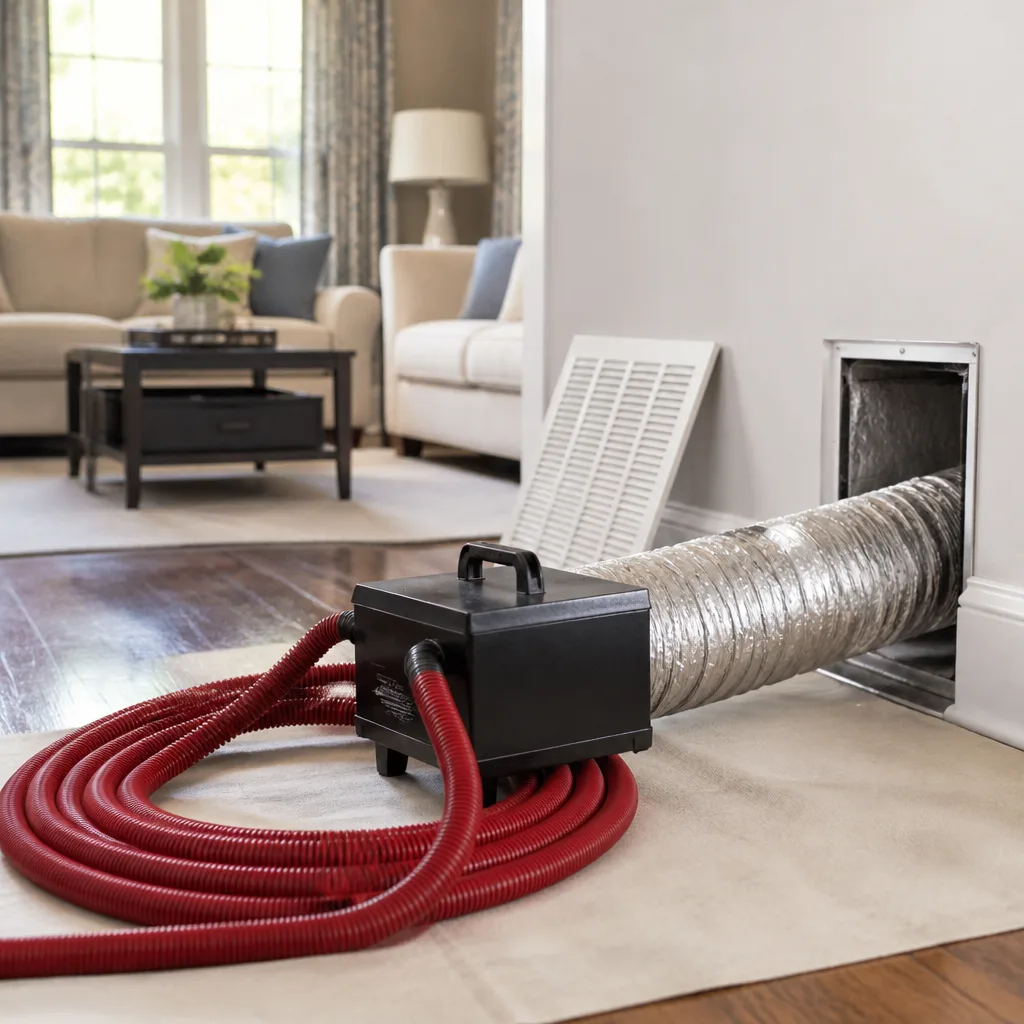 Whole-home duct cleaning
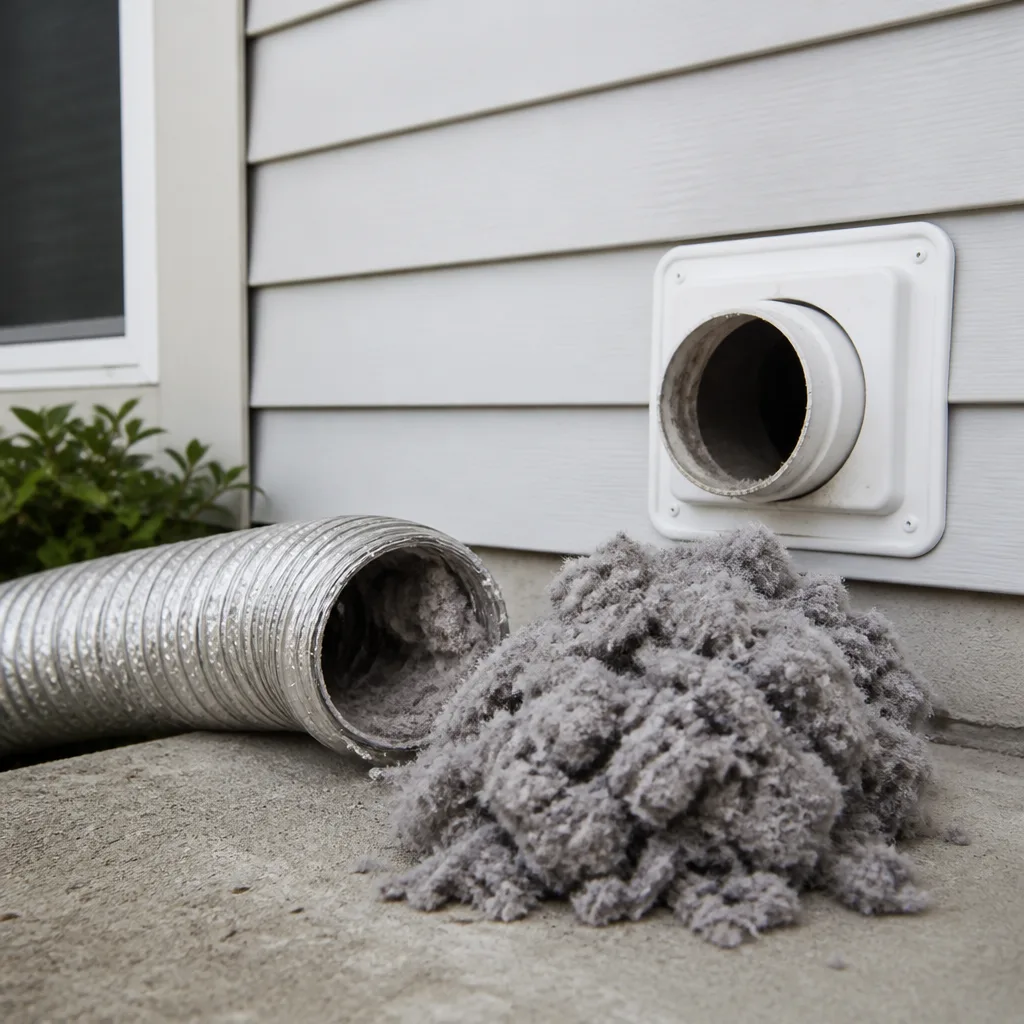 Dryer vent cleaning
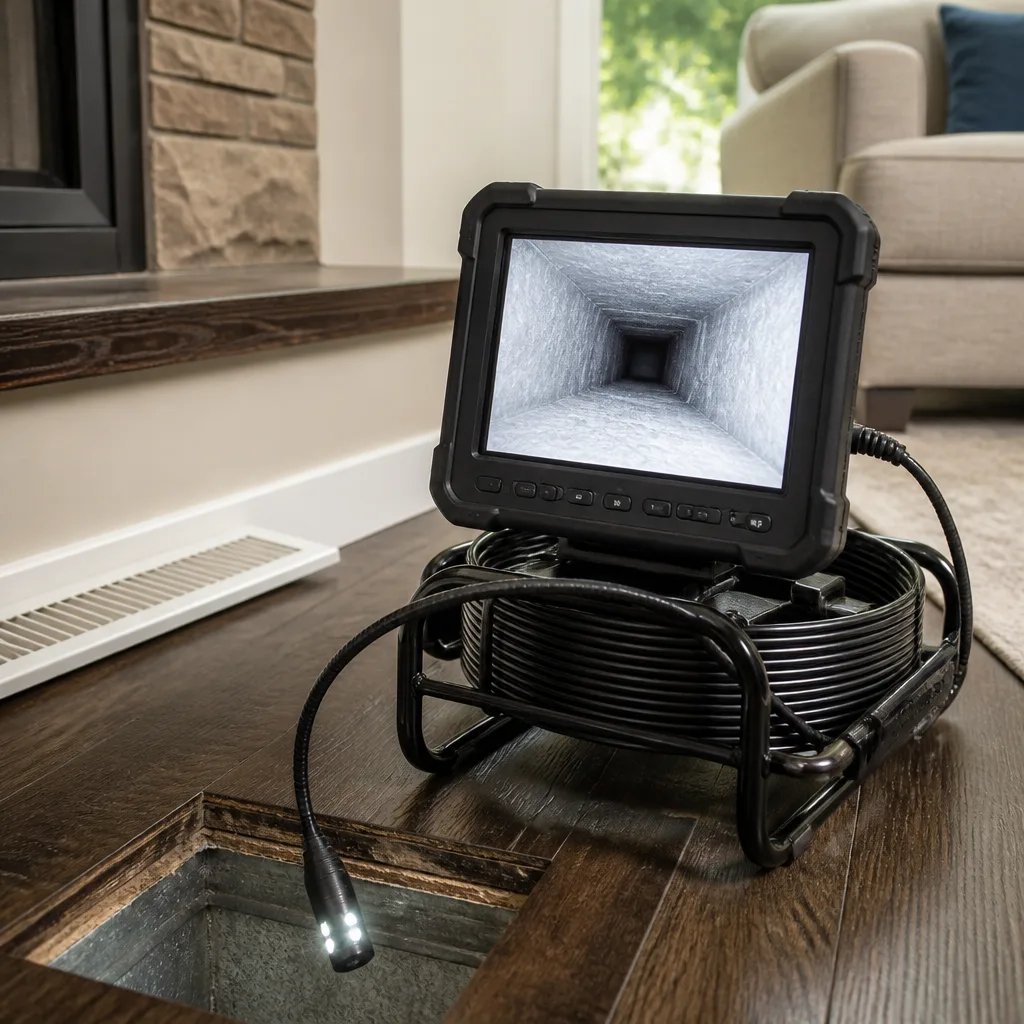 Camera inspection
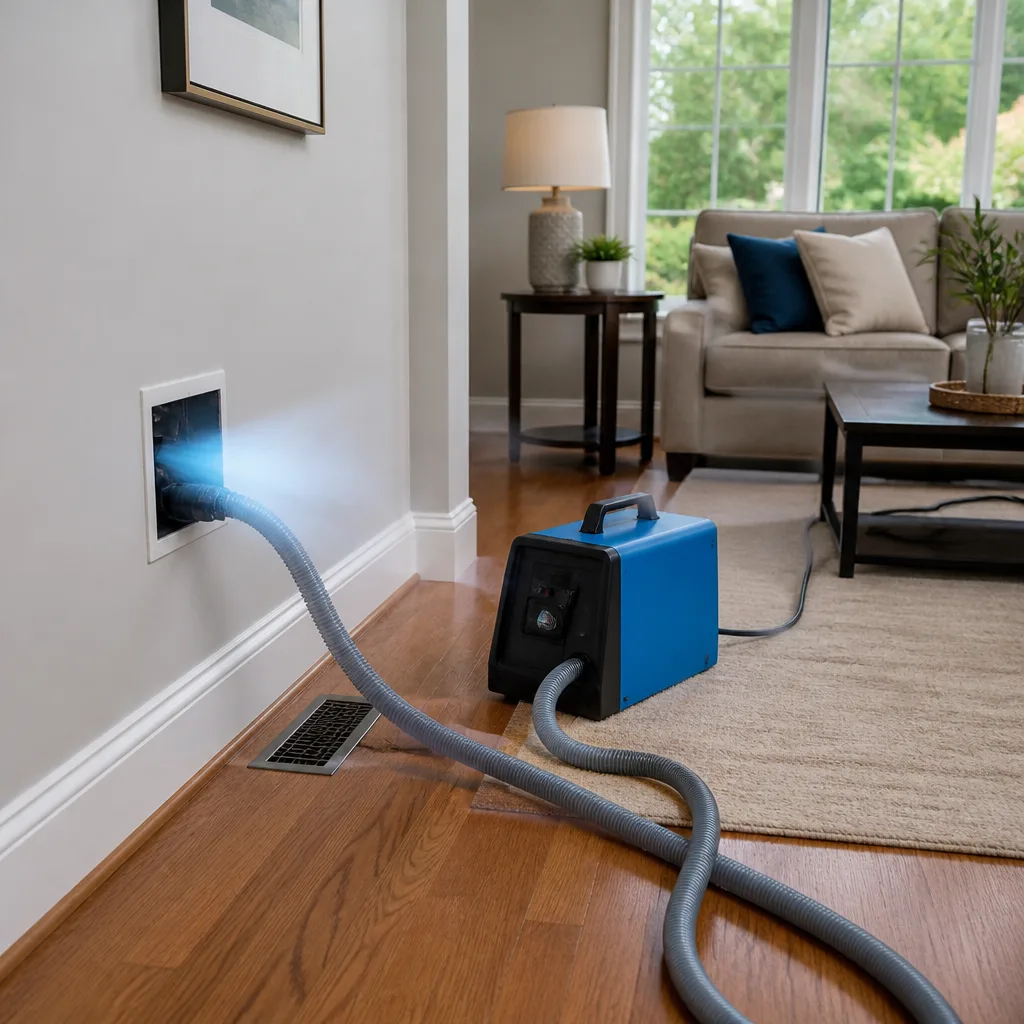 Sanitizing & deodorizing
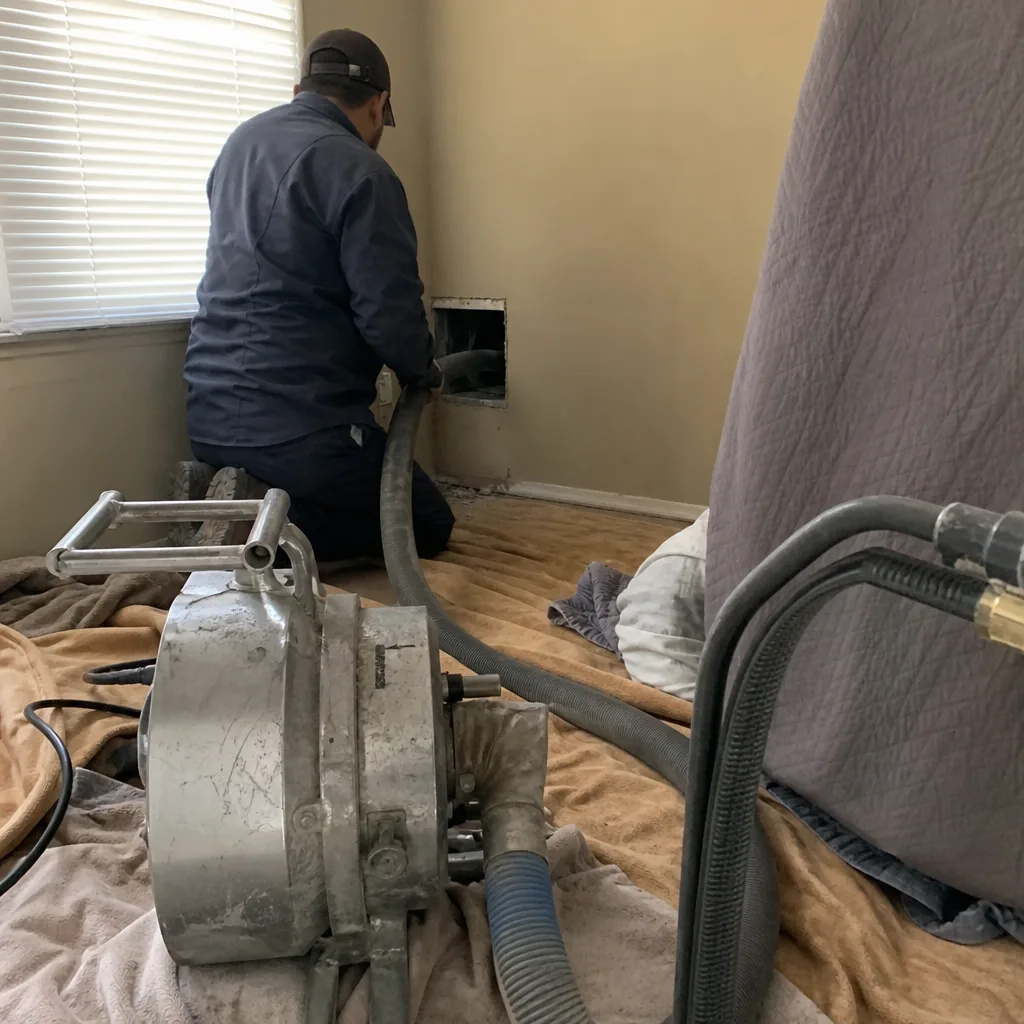
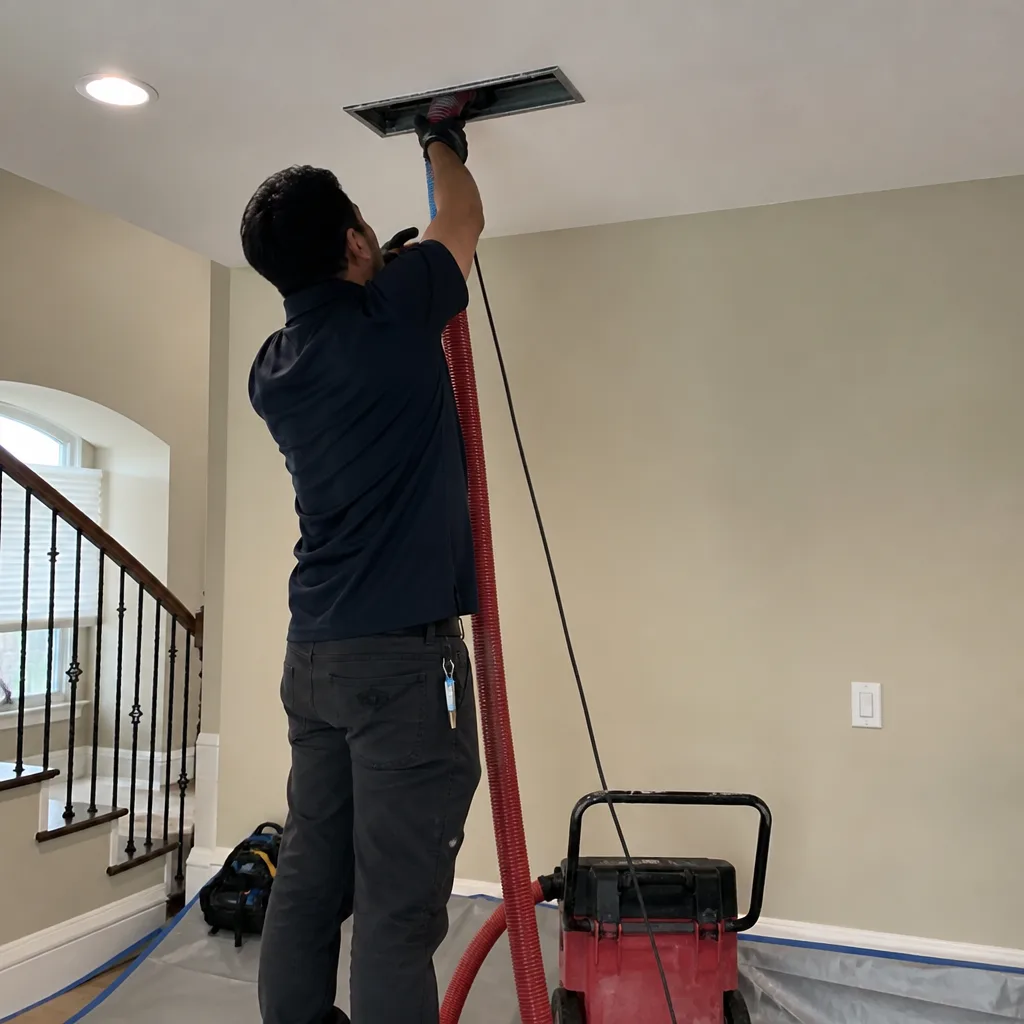
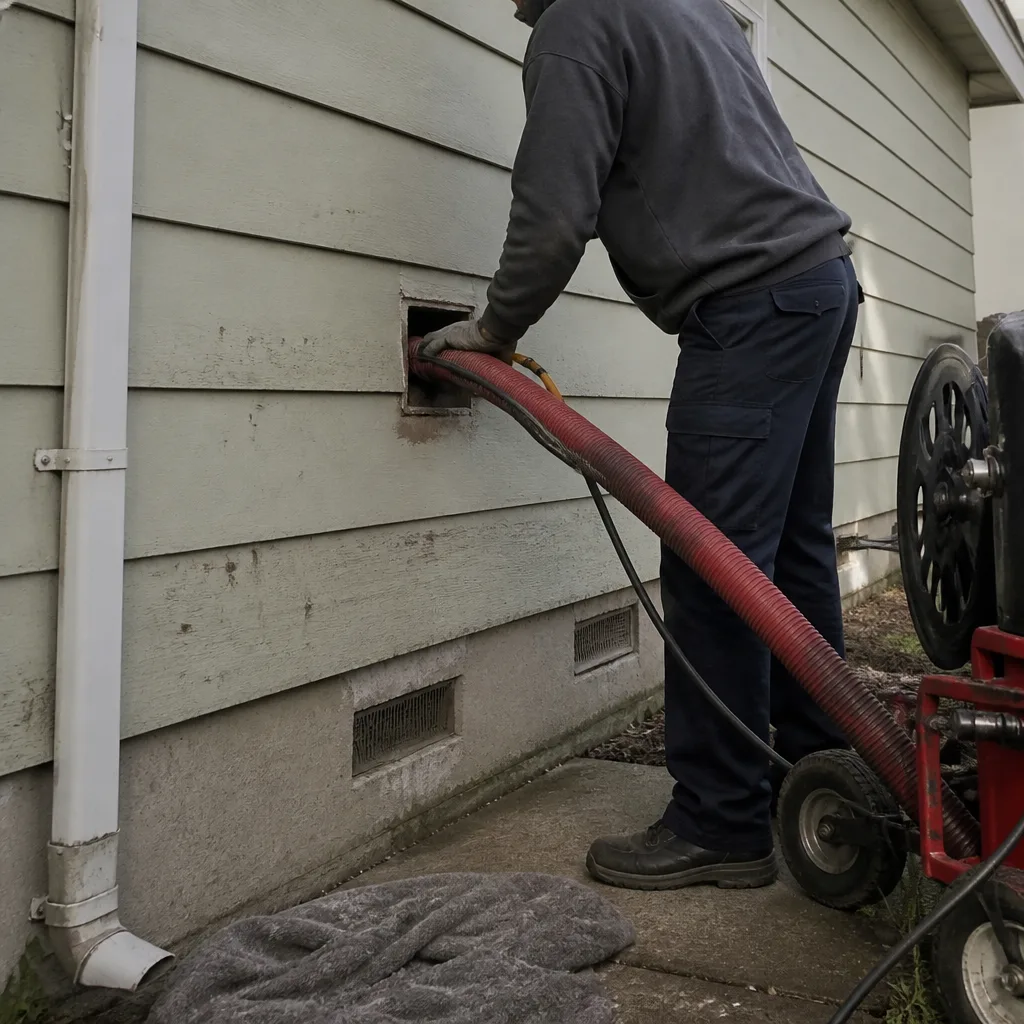
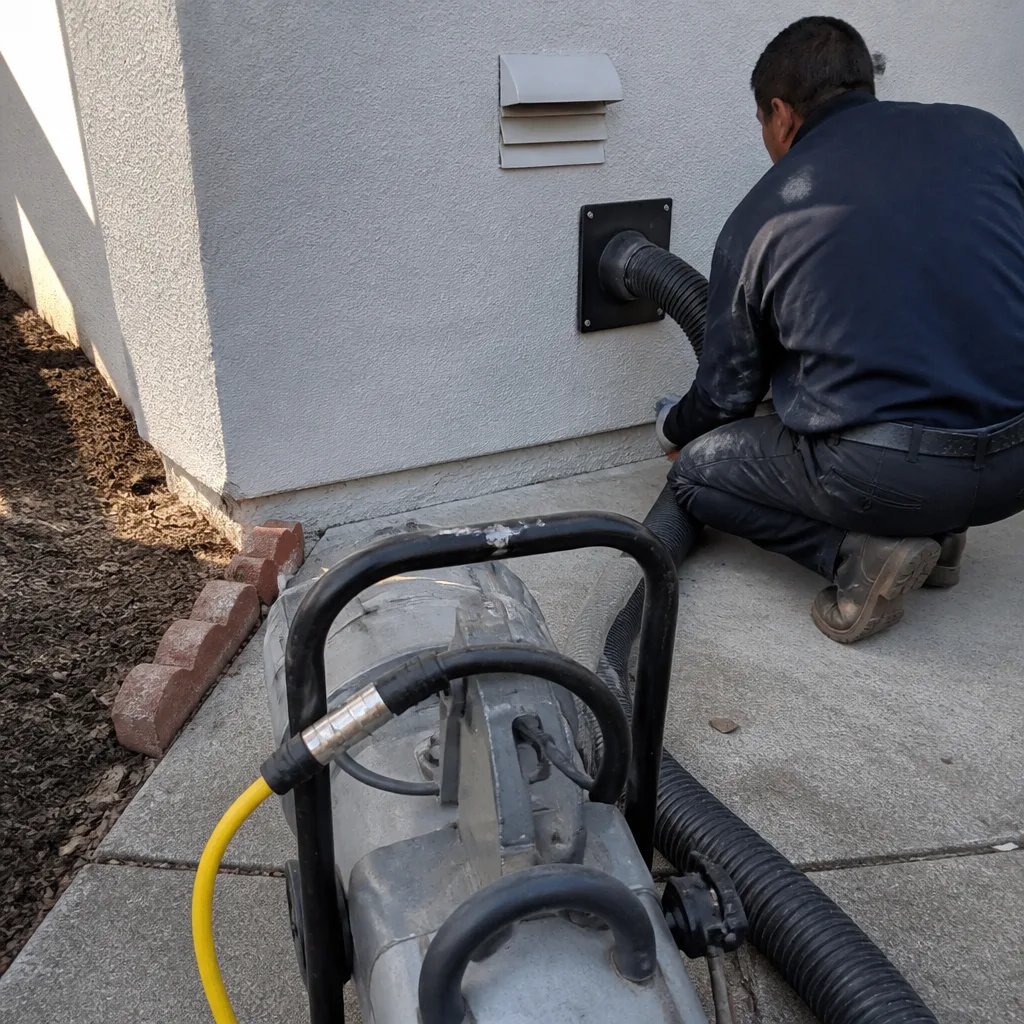
Whole-system duct and dryer vent check with before-and-after photos - you see exactly what came out of your vents
That "$99 whole-house special" is a bait ad - the real number appears once they are in your hallway, or the "clean" is a shop-vac at the register. We photograph the inside of your ducts before and after instead.
Air Duct Cleaning Cost Breakdown: The Dublin Homeowner’s Reference for 2026
Here’s a number that should make every Dublin homeowner pause: the same 2,000 sq ft home can draw quotes from $49 to $800+ for air duct cleaning, and both the cheap quote and the expensive one can be technically “honest.” The $49 crew shows up with a shop vac, waves a brush at your return grille for an hour, and leaves every branch run untouched. The $800 team cuts access panels, runs a HEPA-filtered negative-air system, and agitates every linear foot of ductwork with a rotary brush. Same advertised service, wildly different work. This guide breaks down exactly where your money goes in our Air Duct Cleaning services, what line items belong on a legitimate quote, and how to compare bids on equal terms instead of falling for an anchor price.
Styles & brands we work with
- Whole-home duct cleaning
- Dryer vent cleaning
- Camera inspection
- Sanitizing & deodorizing
Quick Answer
Air duct cleaning in Dublin, CA typically costs between $350 and $650 for a complete whole-system cleaning of a 2,000 – 2,500 sq ft home as of 2026. Smaller homes and condos may run $250 – $400, while larger two-story properties with multiple HVAC systems in neighborhoods like Positano or Irongate commonly reach $600 – $900. The price gap between quotes almost always comes down to equipment, scope, and access work – not profit padding.
Table of Contents
- The Two Pricing Models: Per-Register vs. Flat-Rate Whole System
- What Actually Drives Price Variation in Dublin
- Line Items That Belong on a Complete Quote
- 2026 Realistic Price Ranges by Home Size
- Add-Ons Worth the Cost vs. Upsells to Skip
- Why Equipment Matters More Than the Quote Number
- Common Mistakes to Avoid
- When to Call a Professional
- Frequently Asked Questions
- The Bottom Line
The Two Pricing Models: Per-Register vs. Flat-Rate Whole System
Dublin homeowners encounter two dominant pricing structures when gathering quotes: per-register pricing and flat-rate whole-system pricing. Understanding the incentives baked into each model tells you more about the contractor than the actual dollar figure.
Per-register pricing – typically $25 – $45 per vent – sounds transparent but hides a structural problem: the contractor now has a financial incentive to count registers generously and clean superficially. If you have 14 registers and they’re charging $35 each, that’s $490 before any “additional” line items appear. Some companies count floor returns and wall returns separately, some don’t count the main return at all, and suddenly the same house yields wildly different register counts depending on who’s holding the clipboard. Per-register pricing also rewards speed: the faster they move through each vent, the better their hourly economics.
Flat-rate whole-system pricing – one price for the entire duct system regardless of how many individual registers exist – removes the counting games but requires a detailed scope of work to be meaningful. A flat rate of $400 for “duct cleaning” that covers only the trunk lines is not a better deal than $600 that includes every branch run, the blower compartment, and the return plenum. When we provide air duct cleaning in Dublin, the quote specifies exactly what’s included, which is the only way a flat rate functions as real transparency.
Here’s the practical takeaway: neither model is inherently more honest. The question is whether the scope is written down. A per-register quote with 22 counted registers at $30 each is $660 – comparable to a flat-rate quote of $650 with a full scope sheet. We’ve seen both work fine, and both abused.
What Actually Drives Price Variation in Dublin
Dublin’s housing stock isn’t uniform, and neither are the duct systems running through it. Three structural factors create legitimate price differences that no contractor can standardize away.
Single-story vs. two-story access. A single-story ranch in central Dublin with ductwork running through an accessible crawl space or attic is the fastest, simplest job. Expect the lower end of any price range. A two-story home in the newer developments near Fallon Road or Dublin Boulevard often has ductwork split between two attics and a chase, sometimes requiring multiple access cuts and longer hose runs. That’s real labor, and it shows up in the quote.
Slab vs. raised foundation routing. Homes on raised foundations – common in older Dublin neighborhoods – often route supply ducts through the crawl space, where access is tight and every linear foot of duct needs to be reached from below. Slab-on-grade homes typically route ductwork through the attic, which is generally faster to work. If you know your foundation type, you already know which side of the price range you should expect.
Number of HVAC systems. Larger homes in Positano and Irongate frequently run two separate systems: one for each floor, or one for each wing. That’s not double the price, but it’s meaningfully more work – two blower compartments, two return plenums, two sets of supply runs. A 3,200 sq ft home with two systems can legitimately cost more than a 3,200 sq ft home with one oversized system, because the cleaning is fundamentally two jobs.
Dublin’s summer heat also matters. Systems here run hard from May through October, and that runtime translates to more particulate loading in the ductwork, more debris in the blower compartment, and more impact from dirty filters that didn’t get changed on schedule. For preparation tips, see our Air Duct Cleaning Emergency Preparedness Guide for Dublin Homes. A system that’s run for 15 heavy cooling seasons in Dublin simply takes longer to clean properly than an identical one that’s run five.
Line Items That Belong on a Complete Quote
Here’s where price comparison breaks down: two contractors can quote $500 for the same house, but one is quoting four hours of real work and the other is quoting ninety minutes of trunk-line-only cleaning with a shop vac. When you receive a quote, look for these specific line items. If they’re missing, ask why.
- Supply duct cleaning (every branch run). This is the bulk of the work. Every linear foot of supply duct should be agitated with a rotary brush and extracted under negative air. Vague language like “clean ducts” without specifying supply and return branches is a red flag.
- Return duct and return plenum cleaning. The return side pulls all the house air back to the system, and it’s often dirtier than the supply side because it sees unfiltered air before it reaches the filter. Skipping the return is not an option.
- Blower compartment and blower wheel cleaning. Dust that bypasses the filter doesn’t stop at the filter rack. It accumulates on the blower wheel, unbalances it, and reduces airflow. A complete quote includes this.
- Access panel cuts (when needed). Older Dublin homes often lack adequate service access. Cutting and reinstalling sealed access panels is part of the job, not an “extra.” If a quote mentions access work as an upsell, be suspicious.
- Post-clean verification. Before-and-after photos or camera inspection. You should see what was cleaned and what the result looks like. If a company can’t show you the inside of your own ducts after they’re done paying someone to clean them, that’s a scope gap.
- Dryer vent cleaning. Many duct cleaning companies offer this because it’s adjacent work and genuinely important – Dublin homes with gas dryers push lint into a vent that runs to the exterior, and that lint is combustible. Dryer vent cleaning in Dublin should be a distinct service with a fire-safety focus, not an afterthought checkbox.
If a quote doesn’t list supply runs, return plenum, blower compartment, and verification, you’re not comparing it against a complete quote from a company that does list them. You’re comparing a full service against a partial one, and that’s exactly how the $49 coupon games work.
2026 Realistic Price Ranges by Home Size
These are whole-system ranges for Dublin as of 2026, assuming complete scope as outlined above. They reflect the local market’s labor rates, typical Dublin home configurations, and the equipment tier required to do the job correctly. Use these as your baseline when evaluating quotes.
| Home Size | Typical Configuration | Realistic Complete Range | What It Covers |
|---|---|---|---|
| Under 1,500 sq ft | Condo, apartment, or small single-story; one system; 8 – 12 registers | $250 – $400 | Full supply and return cleaning, blower compartment, verification |
| 1,500 – 2,500 sq ft | Single-story or modest two-story; one system; 12 – 18 registers | $350 – $600 | Complete system, access panels if needed, before-and-after documentation |
| 2,500 – 3,500 sq ft | Larger two-story; possibly two systems; 18 – 24 registers | $500 – $800 | All ductwork, both systems if present, full scope line items |
| 3,500+ sq ft | Positano/Irongate large homes; two systems common; 24+ registers | $700 – $1,000+ | Complete multi-system cleaning, extended access work, full documentation |
What should make you suspicious: any quote below $250 for a complete whole-system cleaning of a 2,000+ sq ft Dublin home in 2026. At that price, someone is subsidizing your job with incomplete work, or they’re planning to upsell heavily once they’re in your driveway. Honest equipment costs, fuel, insurance, and labor don’t allow for a sub-$200 complete cleaning regardless of how efficiently a crew works.
On the other end, quotes above $1,000 for a standard single-family Dublin home without major access complications or multiple systems deserve scrutiny. Ask for the scope sheet and have the contractor justify every line item.
Add-Ons Worth the Cost vs. Upsells to Skip
Every duct cleaning quote comes with a menu of add-ons. Some address real problems. Some are margin generators. Here’s the honest breakdown from a technician’s perspective, not a sales perspective.
Worth the money
- Sanitization after confirmed mold. If you’ve had a documented moisture issue – a roof leak, a condensation overflow, high humidity in a crawl space – and testing confirms microbial growth in the ductwork, sanitization is a legitimate part of the job. Without confirmed moisture or mold, it’s an unnecessary chemical treatment.
- Dryer vent rerouting. If your dryer vent runs more than 25 feet, has multiple bends, or terminates somewhere awkward, a reroute is a real safety improvement. Long vent runs trap lint, restrict airflow, and create the exact conditions for a dryer fire. Air duct repair in Dublin work of this kind addresses a fire hazard, not a cosmetic concern.
- Damaged duct repair or sealing. If the cleaning process reveals disconnected sections, crushed flex duct, or gaps at register boots, repairing those during the same visit is practical and cost-effective. You’re already paying for access; fixing what you found is the whole point.
Skip without a clear reason
- UV light installation bundled with cleaning. UV lights have real applications in HVAC systems, but they’re not a duct cleaning service. They’re an air purification product. Bundling one into a cleaning quote usually means a $600 – $900 add-on for a bulb and a bracket. If you want UV purification, buy it as a separate, researched purchase from a company that specializes in air quality systems.
- “Deodorizer” treatments without a documented odor problem. If your ducts don’t smell, you don’t need it. If they do smell, the right response is finding the source – a dead rodent, a moisture issue, a dirty coil – not masking it with a fragrance.
- Air filter subscriptions sold as a cleaning add-on. Buy filters where they’re cheapest. A cleaning company’s recurring filter program is convenient for some homeowners, but it’s a convenience purchase, not a performance one.
Why Equipment Matters More Than the Quote Number
The single largest variable in Dublin duct cleaning pricing is the equipment running in the background. A contractor showing up with a Rotobrush rotary brush system and a Nikro HEPA-filtered negative-air unit is performing a fundamentally different service than a crew with a consumer-grade vacuum and some brushes. The outcomes share a label but nothing else.
Here’s what professional-grade equipment actually changes. Rotary brush systems physically agitate the entire interior surface of the duct wall, not just the bottom where debris settles. The brush reaches the sides and top of the duct run, loosening material that a vacuum alone never touches. Combined with negative-air containment – where the system runs under continuous vacuum with HEPA filtration – dislodged particulate is pulled out of the duct and captured at the filter, not blown into your living space. Abatement Technologies equipment brings the same containment philosophy used in remediation work to residential cleaning, which is the difference between removing debris and rearranging it.
This isn’t a technicality. A shop-vac setup inserted into a return grille creates positive pressure in some sections of the ductwork and negative pressure in others. Debris that gets dislodged in one section gets pushed into another. The cleaning “works” if you measure by what you can see in the first eight inches of return duct. It fails if you measure by what’s actually left in the supply branches at the far end of the house.
When comparing quotes in Dublin, ask directly: what equipment is running on this job? If the answer is “a vacuum” without a brand, model, or methodology, you have your answer. If it’s “Rotobrush with a negative-air setup” or “Nikro HEPA system with agitation tools,” you’re dealing with a company that invested in doing this correctly. The equipment tier is a better predictor of outcome than the price, which is exactly what the Duct Cleaning Dublin home service standard is built around.
For Dublin homes with whole-house filtration from Aprilaire or Honeywell, this matters even more. Those systems are designed to work with clean ductwork. Cleaning the ducts with inadequate equipment and then relying on a high-end filtration system to catch what got stirred up is backwards. Professional extraction under negative air means the filtration system isn’t doing the cleanup work for your duct cleaner.
Common Mistakes to Avoid
- Believing a per-register quote without a register count. Ask for the count on paper before you agree. A $30-per-register quote on a house with 18 registers is $540, not the $299 teaser you saw online. Get the number and do the math before the crew arrives.
- Assuming “cheap” means “bad” without asking why it’s cheap. Some legitimate companies price competitively because they operate efficiently. The question isn’t the price – it’s the scope. Ask what’s included and what line items are excluded, and make the cheap quote demonstrate what it’s skipping.
- Paying before seeing verification. Before-and-after photos or camera footage should be standard on a complete cleaning. If a company can’t show you the interior of your ducts after cleaning, you have no way to know the work happened. Don’t accept “it’s clean now” without evidence.
- Treating dryer vent cleaning as optional on a gas dryer. Dublin homes with gas dryers are producing combustion byproducts that must be vented. A clogged dryer vent is a fire hazard, not a performance issue. If a duct cleaning quote doesn’t mention the dryer vent at all, ask why.
- Falling for the “cleaning will cure your allergies” promise. Duct cleaning removes accumulated debris. It does not eliminate allergens that enter your home every time a door opens. If your indoor air quality concerns are severe, a cleaning is one component of a strategy that includes filtration, source control, and regular maintenance – not a silver bullet.
- Skipping the blower compartment because the quote didn’t mention it. Dust in the ductwork starts at the blower. Clean the ducts and leave the blower wheel loaded with years of accumulated dust, and you’ll have dirty ducts again quickly. A complete quote includes the blower compartment – insist on it.
When to Call a Professional
Duct cleaning is not a homeowner DIY project unless you enjoy cutting holes in drywall and buying specialized equipment you’ll use once. The realistic indicators that you need professional cleaning include: visible dust discharging from registers when the system runs, a visible dust film returning within days of cleaning surfaces, unexplained respiratory irritation that correlates with HVAC runtime, and a system that hasn’t been cleaned in 10+ years despite regular use. If you’ve recently renovated – Dublin kitchens and bathrooms generate drywall dust that gets pulled into the return system – a professional clean is worth doing before you run the system through another season. And if you’re buying or selling, a documented cleaning with before-and-after verification is one less inspection item to negotiate. Duct Cleaning Dublin offers free estimates in Dublin – call (855) 356-4417.
Frequently Asked Questions
Expect $350 – $650 for a complete whole-system cleaning of a typical 2,000 – 2,500 sq ft Dublin home in 2026. Smaller properties run $250 – $400; larger two-story homes with multiple systems run $600 – $900. Quotes below $250 for a complete cleaning are not providing the full scope of work at honest costs. Call (855) 356-4417 for a free estimate with a documented scope of work.
Cheaper quotes usually mean less equipment, less scope, or both. A crew using a portable vacuum and basic brushes on the trunk lines only can quote $99 – $199 because the job takes 90 minutes and touches maybe 30% of the duct system. A complete cleaning requires rotary agitation of every branch run, negative-air extraction, blower compartment service, and verification – and the equipment that makes that possible costs more to own and operate. The price difference isn’t profit margin; it’s that the two services share a name but not a scope.
Insist on before-and-after documentation. A professional cleaning company can show you camera footage or photos of the interior of your ducts before the work begins and after it’s complete. You should see the actual interior surfaces of your supply and return runs, not just the registers. If a company cannot produce visual verification of the work, you have no way to confirm anything was cleaned beyond what you can see from the floor.
For most Dublin homes, every 3 – 5 years is a reasonable interval if the system is filtered properly and the home isn’t undergoing unusual dust loads. See our Air Duct Cleaning Maintenance Checklist for Dublin Homeowners for a full schedule. Homes with pets, recent renovation work, smokers, or residents with significant allergy or asthma concerns may justify every 2 – 3 years. Homes with Aprilaire or Honeywell whole-house filtration systems may extend the interval because those systems capture more particulate before it reaches the ductwork. No home needs duct cleaning annually unless something specific is happening – construction dust, a pest problem, or a known contamination event.
Duct cleaning removes accumulated debris from the distribution system, which can improve airflow and reduce the amount of particulate being recirculated through the home. It does not create a sterile environment or eliminate allergens that enter through normal household activity. Where it does matter: systems with significant buildup, homes with compromised filtration, and situations where renovation dust or pest debris has entered the ductwork. If your ducts are heavily loaded, cleaning restores the system to its design performance. If they’re lightly loaded, the benefit is marginal.
It should be offered as a distinct service but not automatically bundled. A dryer vent is a separate system from your HVAC ductwork – different airflow, different contamination profile, different safety implications. A complete duct cleaning quote may include dryer vent cleaning as a separate line item, which is appropriate. If it’s buried in the price without discussion, ask what specifically is included. For Dublin homes with gas dryers, a clogged vent is a fire hazard regardless of how recently the HVAC ducts were cleaned. Call (855) 356-4417 to discuss both services with a specialist who treats them as separate jobs.
The Bottom Line
Air duct cleaning in Dublin costs what it costs because of three variables: the equipment doing the work, the scope of what actually gets cleaned, and the access conditions of your specific home. A $350 quote for a complete cleaning with professional-grade Rotobrush and Nikro equipment on a single-story Dublin ranch is a fair price. A $350 quote for the same house that covers only trunk lines with a portable vacuum is not. Before you compare numbers, get scope sheets. Before you sign anything, confirm what line items are covered. And before you pay, see the inside of your own ducts on camera. The gap between a $49 coupon and an $800 professional quote isn’t mystery – it’s equipment, scope, and verification, and now you know how to ask for all three.
Written by the team at Duct Cleaning Dublin, serving Dublin since 2017. Explore more guides & resources.
See the difference
 Before
 After
 Before
 After
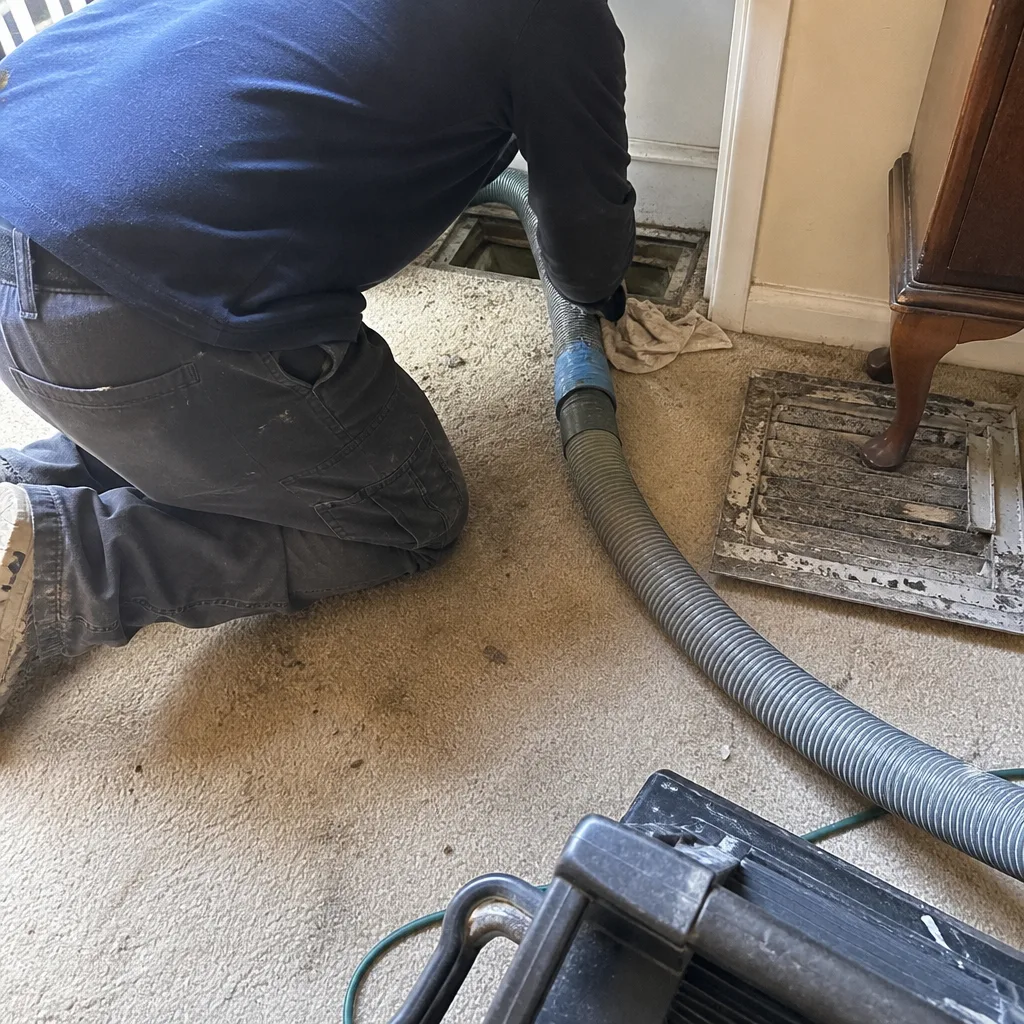 Before
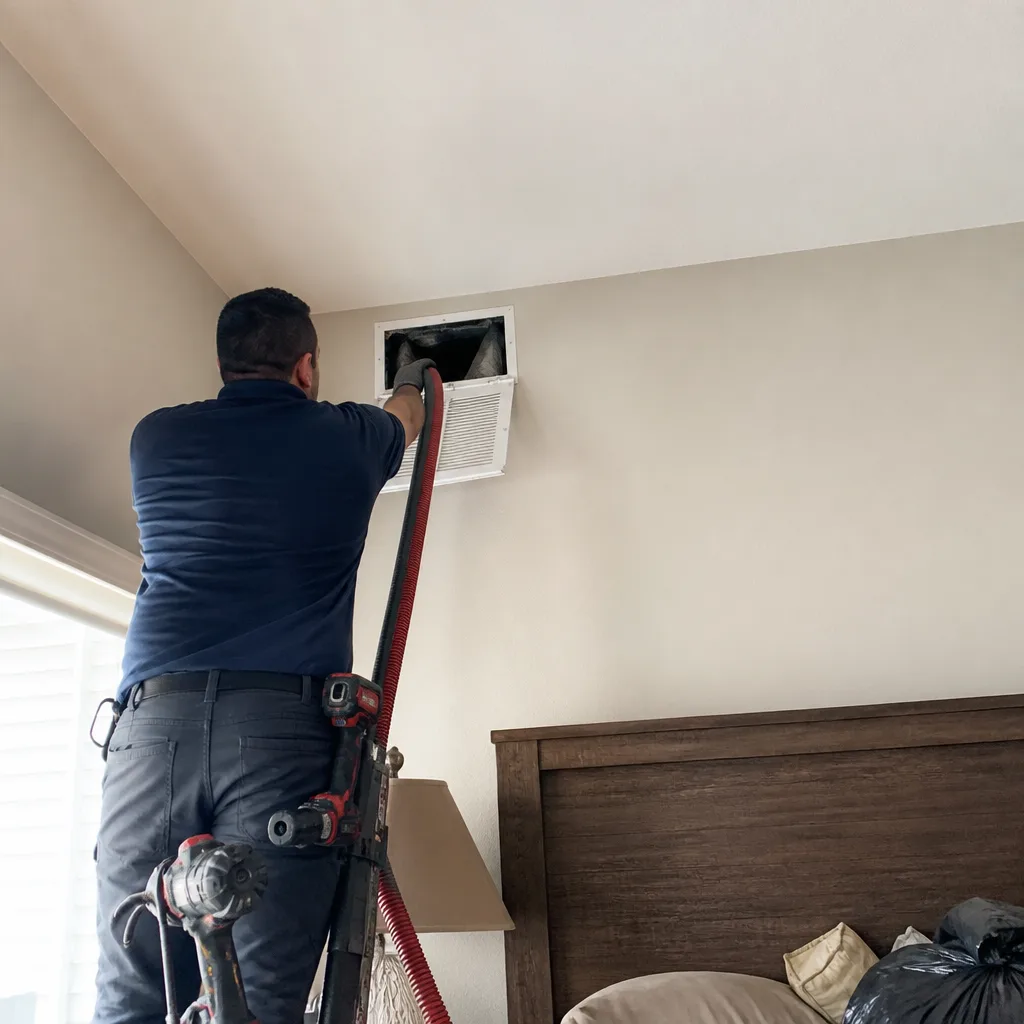 After