
Last updated November 2, 2026
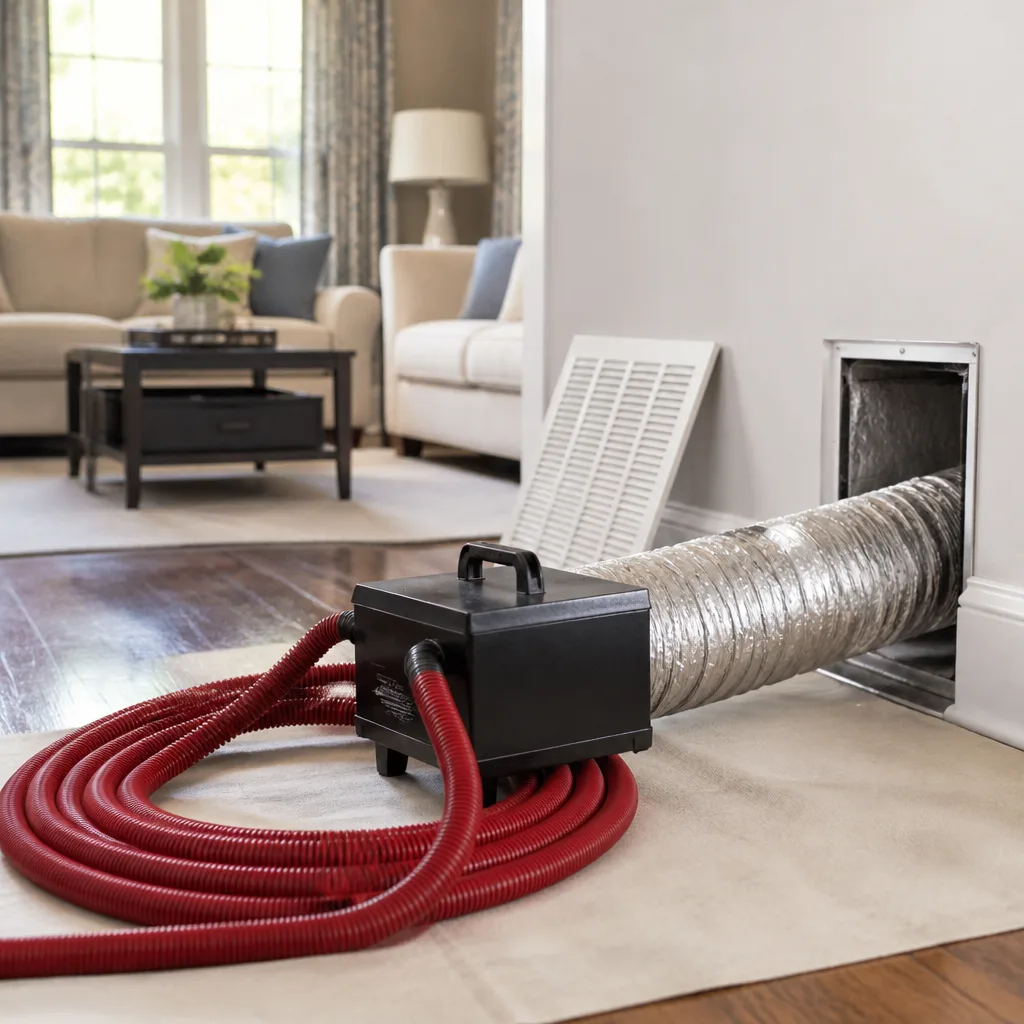 Whole-home duct cleaning
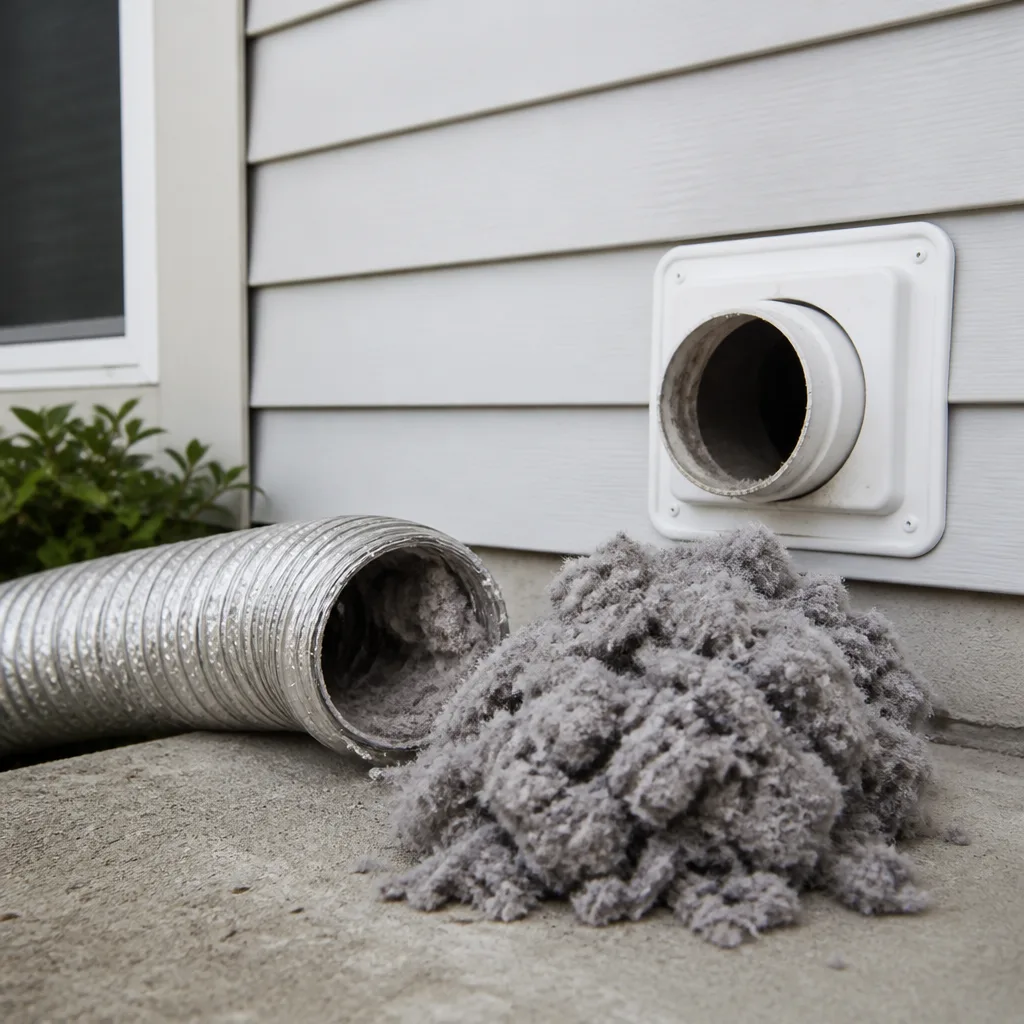 Dryer vent cleaning
 Camera inspection
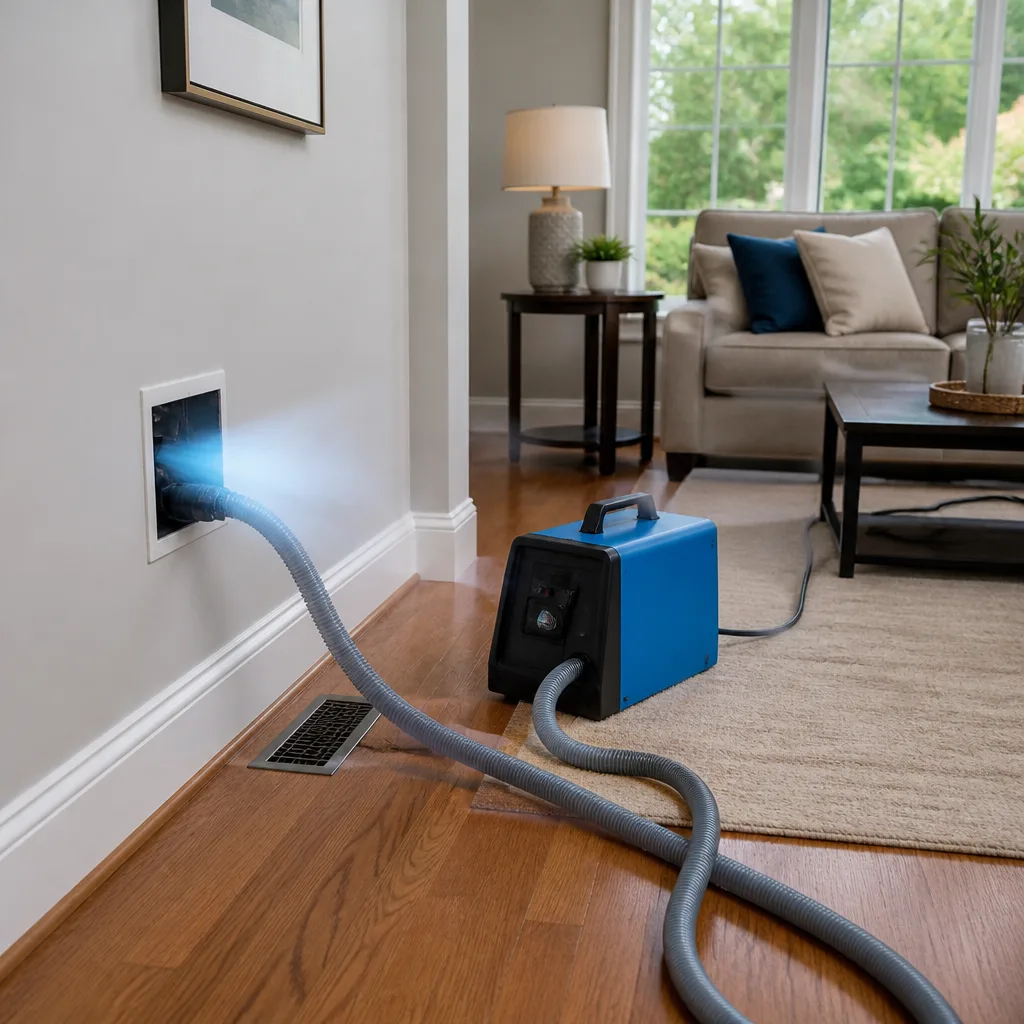 Sanitizing & deodorizing
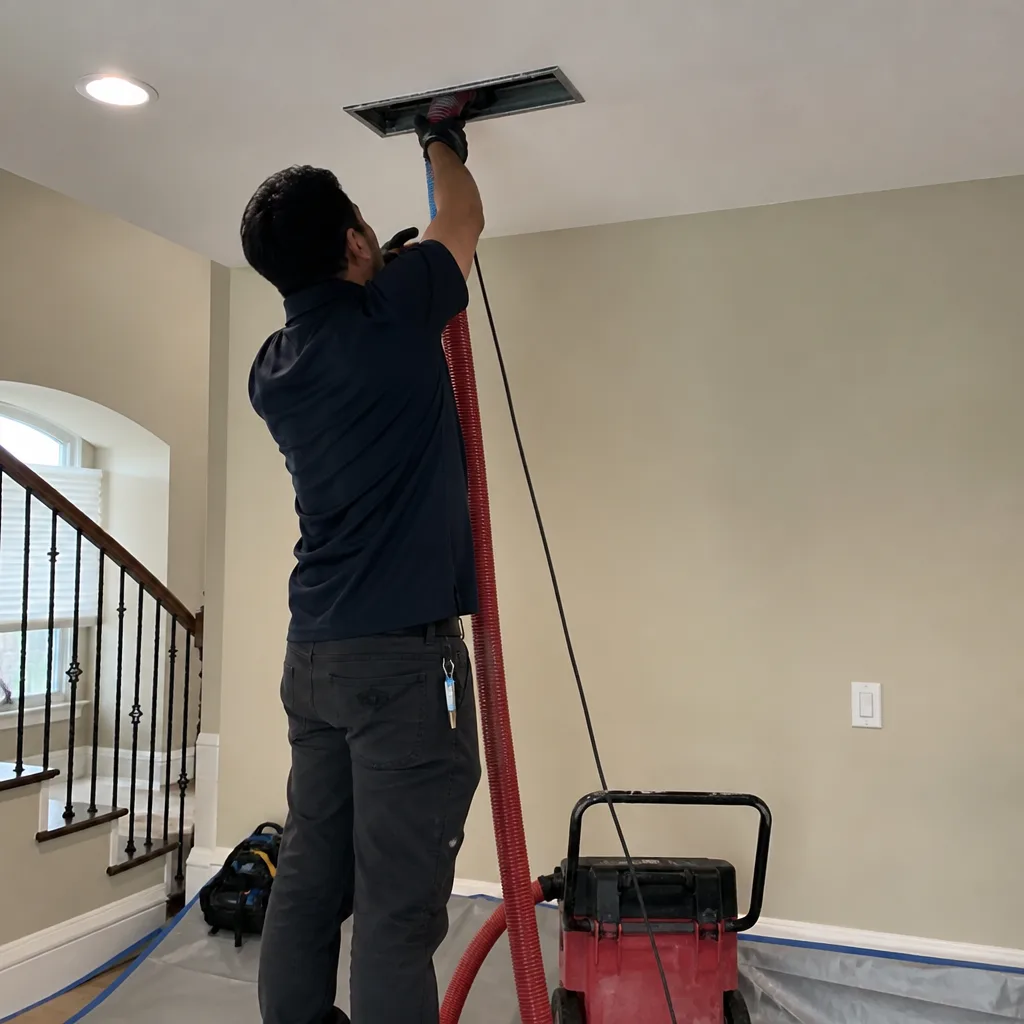
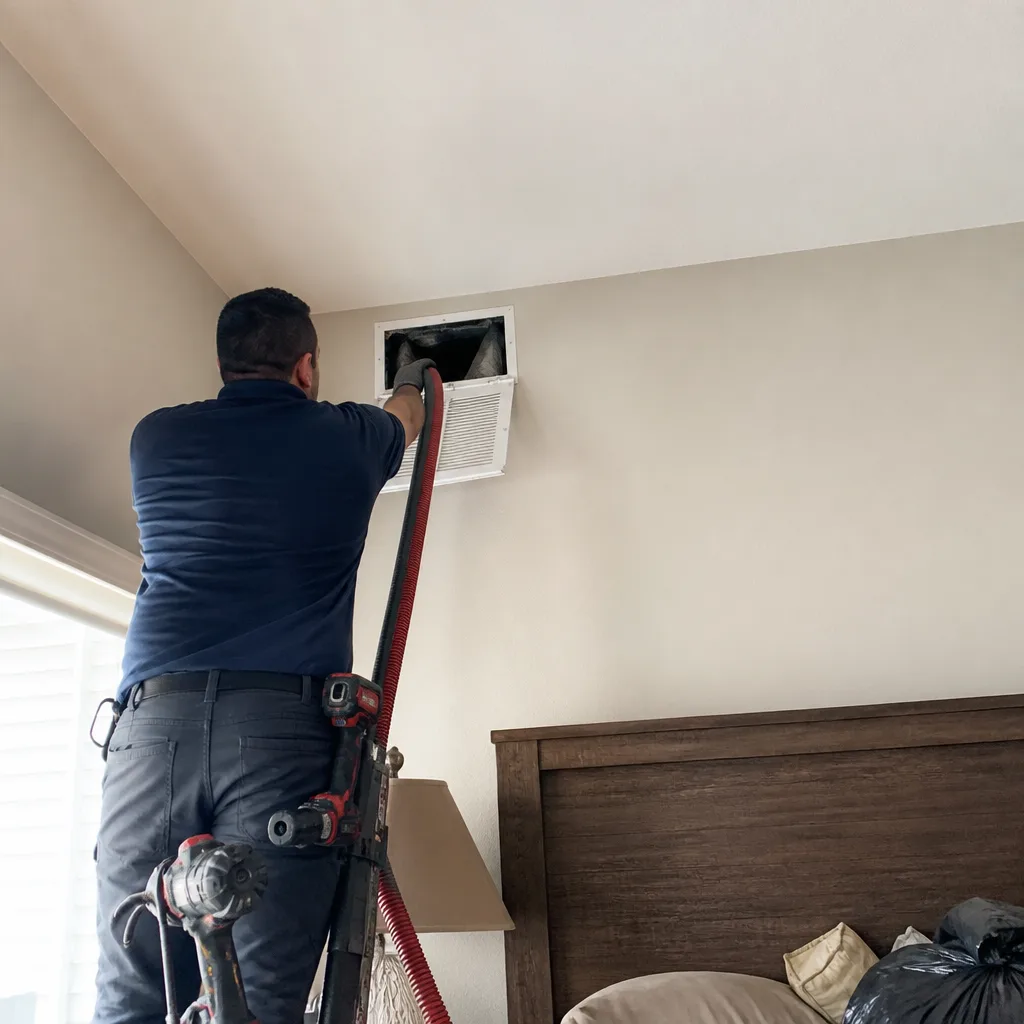
Whole-system duct and dryer vent check with before-and-after photos - you see exactly what came out of your vents
That "$99 whole-house special" is a bait ad - the real number appears once they are in your hallway, or the "clean" is a shop-vac at the register. We photograph the inside of your ducts before and after instead.
Air Duct Cleaning Troubleshooting: Common Problems and How to Fix Them
Here’s a stat that surprises most Dublin homeowners: roughly 7 out of 10 air duct complaints we hear about have nothing to do with dirty ducts. They’re symptoms of leaks, collapsed flex runs, dirty coils, or a failed filter seal. If your ducts were cleaned six months ago and the dusty smell is back, the problem was never the ducts – it was what’s feeding them. This guide walks through the most common duct problems, what each symptom actually points to, and which ones air duct cleaning will genuinely fix versus which ones need repair. If you’re in Dublin and you’ve been chasing an air quality issue through one service call after another, read this before you book another one.
Quick Answer
Most air duct problems fall into three buckets: debris that cleaning removes, damage that repair fixes, and system faults elsewhere in the HVAC that no duct service can resolve. The key troubleshooting step is matching the specific symptom – a musty smell, uneven airflow, black dust around vents, or a burning odor – to its actual cause before paying for any work. A professional duct specialist can distinguish these quickly, but knowing the basics yourself prevents paying twice for the wrong fix.
Styles & brands we work with
- Whole-home duct cleaning
- Dryer vent cleaning
- Camera inspection
- Sanitizing & deodorizing
Table of Contents
- Musty Smell vs. Dusty Smell: What Each One Means
- Why Uneven Room Airflow After a Cleaning Usually Means a Duct Leak
- How to Distinguish a Dirty Duct Problem from a Dirty Coil Problem
- What Black Dust Around Vents Actually Means
- Why Your Ducts Smell Like Burning When the Heat Comes On
- Popping, Banging, and Whistling: What Duct Noises Tell You
- The Troubleshooting Questions a Qualified Tech Should Ask Before Touching a Vent
- What You Can Check Yourself vs. What Needs Professional Equipment
Musty Smell vs. Dusty Smell: What Each One Means
Homeowners in Dublin often describe their duct problem as “a smell,” but the specific odor is diagnostic. A musty smell – that damp, basement-like odor – points to moisture. Somewhere in the system, water is sitting long enough to support microbial growth. That water might be in the condensate pan under the coil, in a humidifier pad that hasn’t been changed, or in a section of ductwork that’s sweating in an unconditioned attic space. Cleaning the ducts will not fix a wet source. The moisture has to be addressed first, then the affected components cleaned or replaced.
A dusty smell is different. It’s dry, acrid, and most noticeable when the blower first kicks on. That smell means accumulated debris – dust, pet dander, construction residue from a past remodel – is sitting in the return ducts or on the blower assembly. Cleaning typically resolves this, provided the filter is also upgraded or sealed properly so debris isn’t being pulled in from outside the system. The distinction matters because a homeowner who books a cleaning for a musty smell gets a clean duct that still smells musty two weeks later, and now they’re convinced duct cleaning is a scam. For help identifying the real issue early, see our Air Duct Cleaning Warning Signs: A Dublin Homeowner’s Reference Guide. It isn’t. It was just the wrong treatment for a moisture problem.
Here’s the symptom-to-cause map we use on diagnostic calls in Dublin:
- Musty or damp smell, constant: Condensate pan not draining, humidifier pad overdue, or duct sweating in attic. Needs moisture source resolution before any cleaning.
- Dusty smell, strongest at startup: Loose debris in return ducts or on blower. Cleaning resolves if filter sealing is corrected.
- Sharp chemical smell, intermittent: Could be a failing blower motor capacitor or off-gassing from recent duct sealant. Call a professional before running the system continuously.
- Burning smell, only during heating cycles: See the section below – this has its own set of causes.
One point worth repeating: if the musty smell returns within months of a cleaning, the cleaning was never going to fix it. The moisture source was overlooked. Any technician worth hiring should be able to tell you, before they hand over an invoice, where the water is coming from and what the plan is for it.
Why Uneven Room Airflow After a Cleaning Usually Means a Duct Leak
We hear this one regularly in Dublin: “You cleaned our ducts and now the upstairs bedroom barely gets air.” The homeowner’s logic is that the cleaning changed something. Most of the time, the cleaning didn’t cause the problem – it revealed it. When years of dust and debris are removed from the system, airflow patterns shift. A duct that was already leaking at a seam or a flex run that was partially collapsed now shows its true weakness because air has a clearer path to escape through those gaps instead of reaching the register.
The real culprits, in order of frequency we encounter them:
- Disconnected or torn flex duct: In crawlspaces and attics across Dublin homes built in the 1970s through the 1990s, flex duct sags, tears, or pulls loose from its connection. A cleaning doesn’t cause this – age and rodents do.
- Leaky duct seams: Sheet metal ductwork sealed with old tape or mastic that has cracked loses conditioned air into unconditioned space. The leak was always there; the dust was masking it.
- Collapsed internal liner: Some older flex ducts have an inner liner that detaches and partially blocks airflow. This reads as “that room stopped getting air” and no cleaning will fix it – the section needs replacement.
- Closed or obstructed dampers: Sometimes a balancing damper gets bumped during cleaning and closes partially. That’s a five-minute adjustment, not a repair.
The fix for a leak or collapse is Air Duct Repair in Dublin, not another cleaning. And to be clear: a competent cleaning crew should flag damaged duct sections they encounter and tell you before you pay. If you find out about a disconnected flex run months later from a different company, the first crew wasn’t looking.
How to Distinguish a Dirty Duct Problem from a Dirty Coil Problem
These two conditions get conflated constantly, and they shouldn’t be. The evaporator coil sits above your furnace or air handler. Air passes through the filter, then over the coil, then into the supply ducts. If the coil is caked with dust and pet hair, the air leaving the system is dirty – but the ducts themselves may be relatively clean. Homeowners in Dublin will pay for duct cleaning, see little improvement, and conclude the service didn’t work. The air was dirty because the coil was dirty.
Here’s how to tell the difference before you spend a dime:
- Check the coil: If you can access the coil cabinet (or have a tech open it), a visibly furred-over coil means that’s your source. Cleaning the coil is not part of a standard duct cleaning. It’s a separate procedure.
- Look at the register pattern: Dirt on the coil gets blown evenly into every supply register in the house. If every room shows similar gray dust accumulation on the vent covers, think coil. If one room is dramatically worse, think that branch duct.
- Check airflow temperature: A dirty coil restricts airflow and reduces cooling efficiency. If your AC runs longer than it used to and the air feels lukewarm, coil fouling is a strong suspect.
- Consider the filter history: A run of cheap fiberglass filters, or filters left in for a year, lets fine particles through to the coil. Homes in Dublin with pets and older HVAC systems are especially prone to this.
The takeaway: duct cleaning and coil cleaning are different jobs with different equipment. A technician who quotes you one without inspecting the other isn’t doing diagnostics – they’re doing sales. Our crews use Nikro HEPA-equipped systems for duct extraction, but a coil job requires a different access and cleaning process. We’ll tell you which one you actually need, and sometimes the honest answer is both.
What Black Dust Around Vents Actually Means
Black dust or staining around supply registers sends Dublin homeowners to Google with the word “mold” running through their heads. Here’s what’s actually happening in most cases. The dark deposits around a vent are usually one of three things:
- Soot or candle residue: If you burn candles, especially jar candles or anything scented, the microscopic soot they release gets pulled into the return air and deposited around supply vents. It’s sticky, dark, and accumulates in a halo pattern. This is the most common cause we see – and it isn’t mold.
- Dust shadowing: Cold air from the supply vent chills the surrounding wall or ceiling surface. That temperature difference causes airborne particles to condense and stick in a pattern around the vent. It looks dramatic but it’s just thermodynamics, and a cleaning plus better filtration addresses it.
- Actual mold growth: This occurs when moisture is present at the register, not just dust accumulation. If the staining has a fuzzy or textured appearance and persists after cleaning, or if there’s a moisture source nearby, mold testing is warranted. This is the least common of the three, but it does happen in Dublin’s humid summer months where attic ductwork sweats.
The practical test: wipe the surface with a damp white cloth. If the residue is greasy and dark gray, it’s candle soot. If it’s dry and flaky, it’s dust shadowing. If it smears and has an organic smell, that’s when you call someone qualified to test. Most black dust complaints in our experience resolve with duct cleaning and a conversation about candle use and filter upgrades – not mold remediation.
Why Your Ducts Smell Like Burning When the Heat Comes On
The first heating cycle of the season producing a burning smell is common and usually harmless – dust settled on the heat exchanger or electric heating elements over the summer burns off in the first few minutes. But if the smell persists beyond the first day or is strong enough to concern you, it’s not normal. Here’s what it could be:
- Dust burn-off: Light metallic-dust smell, gone after one or two heating cycles. Not a problem. The system is doing what it’s supposed to do.
- Plastic or wiring smell: This is a red flag. It could be a failing blower motor, a connection overheating, or foreign material in the duct near the heat source. Shut the system off and call a professional. Do not keep running it to “see if it improves.”
- Debris in the ductwork: Construction debris, rodent nests, or a child’s toy that made its way into a register can rest near the furnace and scorch when the heat exchanger warms up. A duct camera inspection finds this quickly.
- Electrical capacitor failure: A bulging capacitor on the blower motor can emit a distinct acrid odor before it fails completely. Systems in Dublin that run hard through summer often lose capacitors in the first cold snap.
The safety rule here is simple: if the burning smell is accompanied by smoke visible from a vent, or if it smells like plastic or wiring rather than dust, turn the system off at the thermostat and the breaker, and call for a diagnosis before using it again. A furnace is not a mystery to be solved by running it longer.
Popping, Banging, and Whistling: What Duct Noises Tell You
Duct systems talk, and each noise means something specific. Learning the language saves time, because a tech who arrives with your descriptions is a tech who can diagnose faster.
Popping or oil-canning happens when the system starts or stops. Large flat spans of sheet metal flex under pressure changes. The fix is usually adding cross-braces or reinforcing the panel so it doesn’t move. It’s cosmetic in most cases but annoying enough that homeowners in Dublin’s older homes call about it constantly.
Whistling is a pressure problem. Air is being forced through an opening too small for the volume moving through it. Common causes: a filter that’s too restrictive, too many registers closed, or a return that’s undersized. If you recently upgraded to a high-MERV filter or closed off bedrooms, that’s likely your whistle. Rebalance the registers or switch filter ratings before you spend money on a service call.
Banging or clanging from inside the ductwork when the blower starts could be loose debris, a damper that has broken free of its control arm, or a section of duct that’s come loose from its hanger. This one is worth a professional look, because whatever is banging around in there is likely also damaging the duct liner.
Rattling at the register usually means a loose set screw on the damper blade or a register that’s not fully seated. That’s a homeowner fix with a screwdriver. The rest of these noises are where a trained ear and a camera inspection save guesswork.
The Troubleshooting Questions a Qualified Tech Should Ask Before Touching a Vent
Here’s a standard we hold ourselves to on every Dublin service call, and you should hold any company you hire to it as well. A tech who shows up, moves furniture, and starts running a cleaning system without asking questions is skipping the diagnostic step. That’s how the wrong problem gets the right cleaning, and the homeowner is left confused months later.
Before a single vent cover comes off, a qualified technician should ask:
- “What symptom made you call us?” – Not “where are the ducts,” but what changed. A smell? Dust accumulation? Allergy symptoms? A specific room? The symptom drives the diagnosis.
- “How old is the house and the HVAC system?” – Age tells us what duct materials to expect and what failures are statistically likely. A 1992 Dublin track home has different typical problems than a 2015 build.
- “Have you done any remodeling, flooring, or drywall work in the last two years?” – Construction dust is the single most common finding in ducts we clean, and homeowners frequently forget to mention it.
- “What kind of filter do you use, and when did you last change it?” – Filter habits tell us whether the system has been protected or is running unfiltered particulate into the coil and ducts.
- “Do you have pets, and how many?” – Pet dander volume changes the cleaning approach and the filter recommendation. It also tells us how much to expect on the blower.
- “Have you noticed the problem in every room or specific rooms?” – Whole-house symptoms point to the coil or main trunk. Room-specific symptoms point to a branch duct issue. This is the fastest triage question in duct troubleshooting.
If the tech skips all of these and goes straight to the equipment, you’re not getting a diagnosis. You’re getting a process. There’s a difference, and in Dublin’s competitive duct cleaning market, that difference is worth knowing before you hire. This is also why our approach at Duct Cleaning Dublin home starts with questions and a visual inspection, not a vacuum.
What You Can Check Yourself vs. What Needs Professional Equipment
Some duct troubleshooting is within a homeowner’s reach. Most isn’t, and knowing the line between them prevents both wasted effort and safety hazards. Here’s a practical split:
You can reasonably check these yourself:
- Filter condition and fit: Pull the filter, look at it, and check that it sits snugly in its slot with no gap around the frame. A bypass gap lets unfiltered air hit the coil directly.
- Register and return locations: Confirm that supply registers are open and returns aren’t blocked by furniture or rugs. Blocked returns are the most common cause of “the system isn’t working” that has nothing to do with the ducts themselves.
- Visible register staining: Use the damp-cloth test described above to characterize black dust. Wrap a tissue on a pencil and swab the inside of a register for loose debris – it’s not a substitute for a camera inspection, but it gives you a baseline.
- Dampers at the registers: These are the little levers on the outside of the register housing. Make sure they’re open. A closed damper in a guest bedroom is not a duct problem.
These require professional equipment and trained hands:
- Anything inside the duct trunk or branches: You can see the first six inches of a register. You cannot see the other 95% of the system. A professional duct camera and the appropriate cleaning tools are necessary here.
- Coil inspection and cleaning: The coil is fragile, expensive, and buried inside the air handler cabinet. This is not a DIY project, and using the wrong cleaner on an aluminum coil causes permanent corrosion.
- Duct repair or sealing: Proper sealing uses mastic or foil tape applied correctly, and flex duct replacement requires knowing how to properly support and connect sections. Improper repairs reduce efficiency and can pull loose over time.
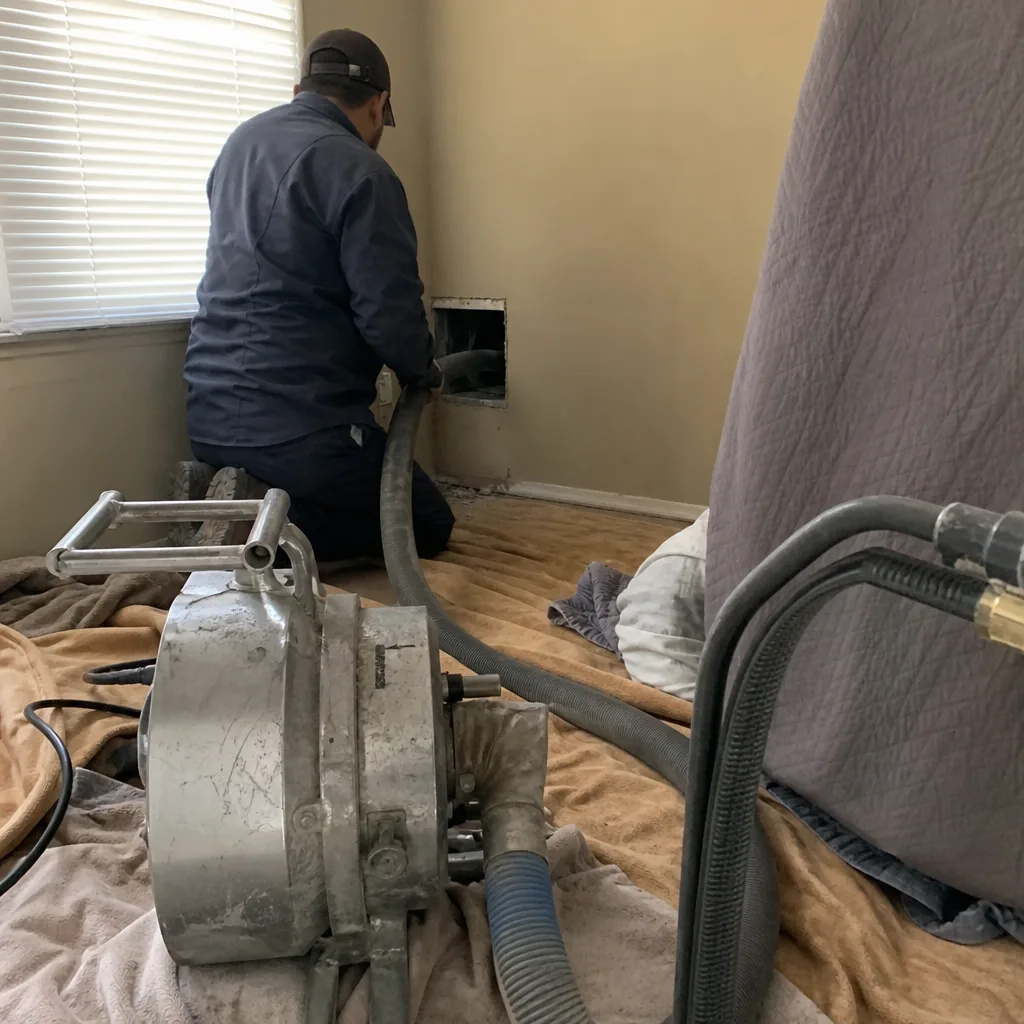
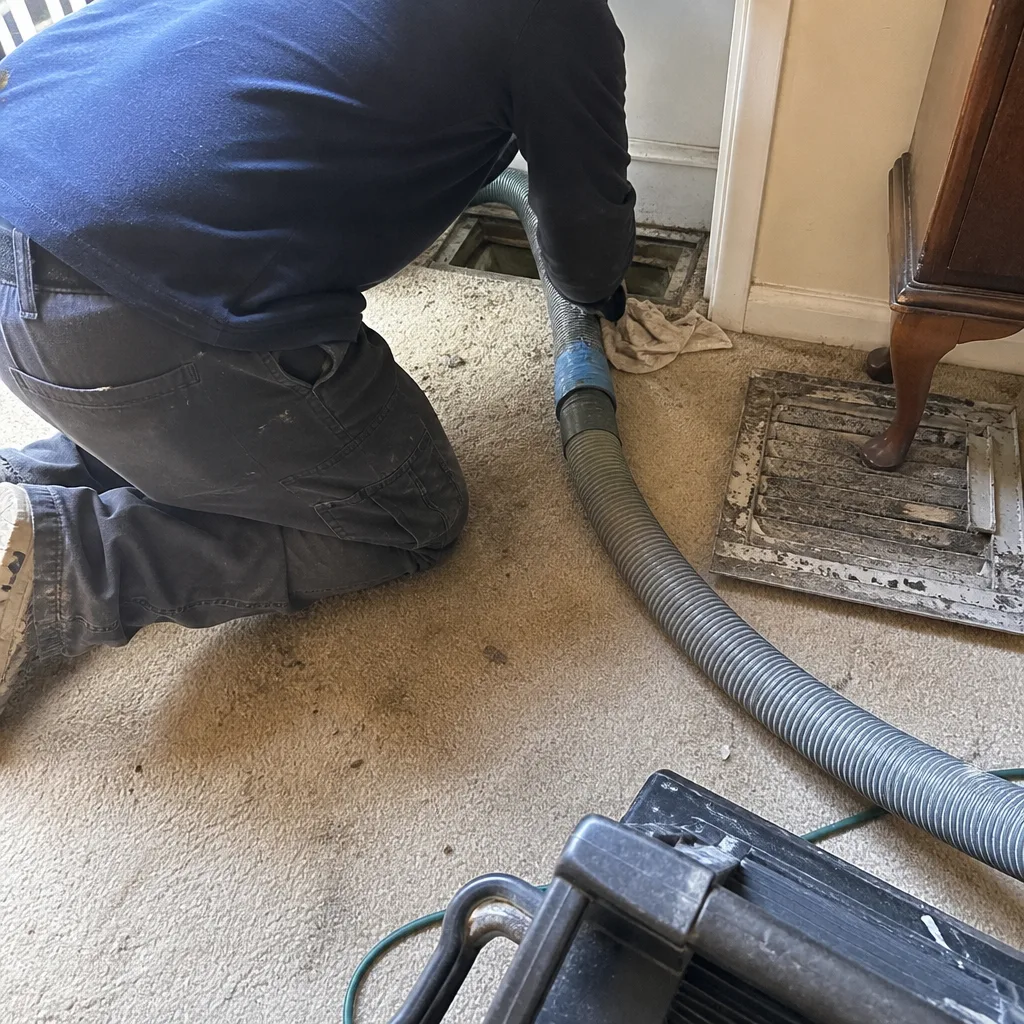
- Containment and HEPA extraction: Agitating dust inside ducts without proper extraction just pushes debris into the living space. A professional setup using negative-air containment, like the Abatement Technologies filtration systems we run, keeps that dust from becoming your new carpet problem.
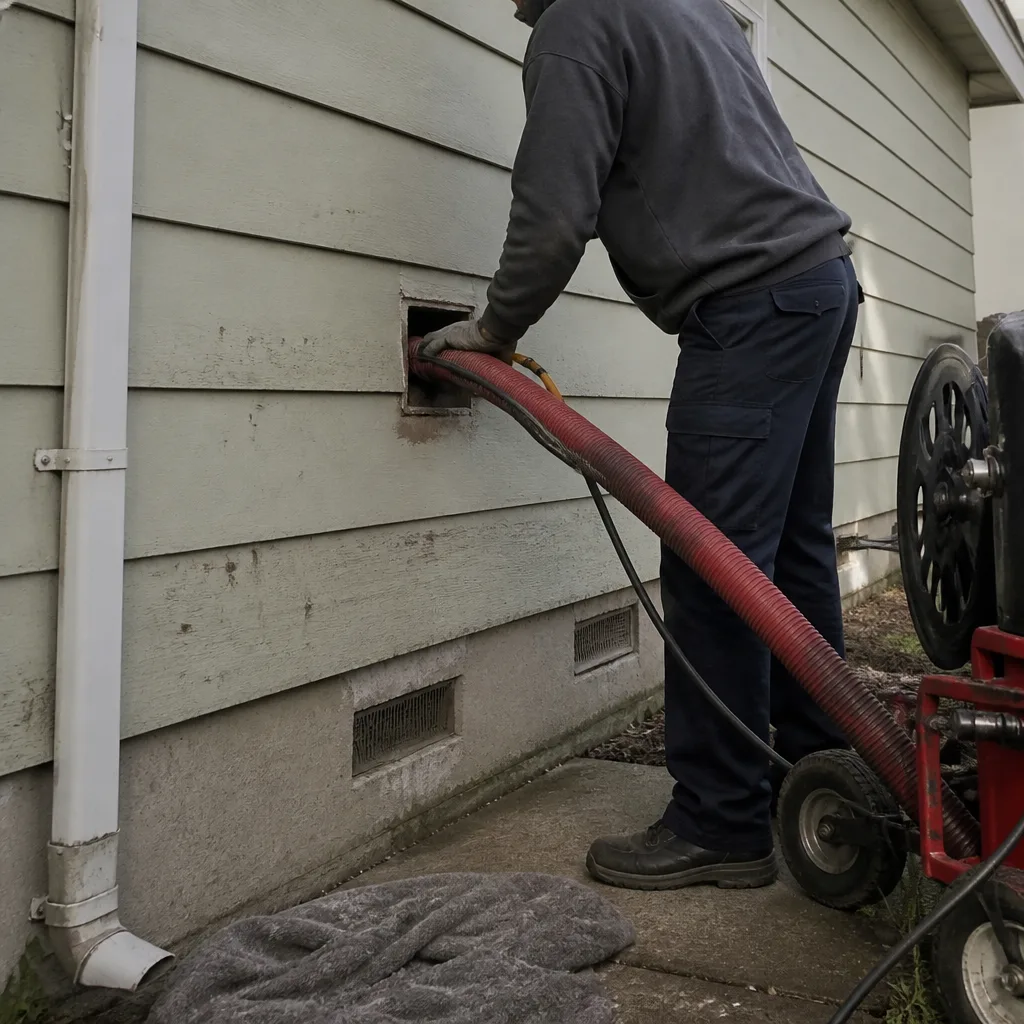
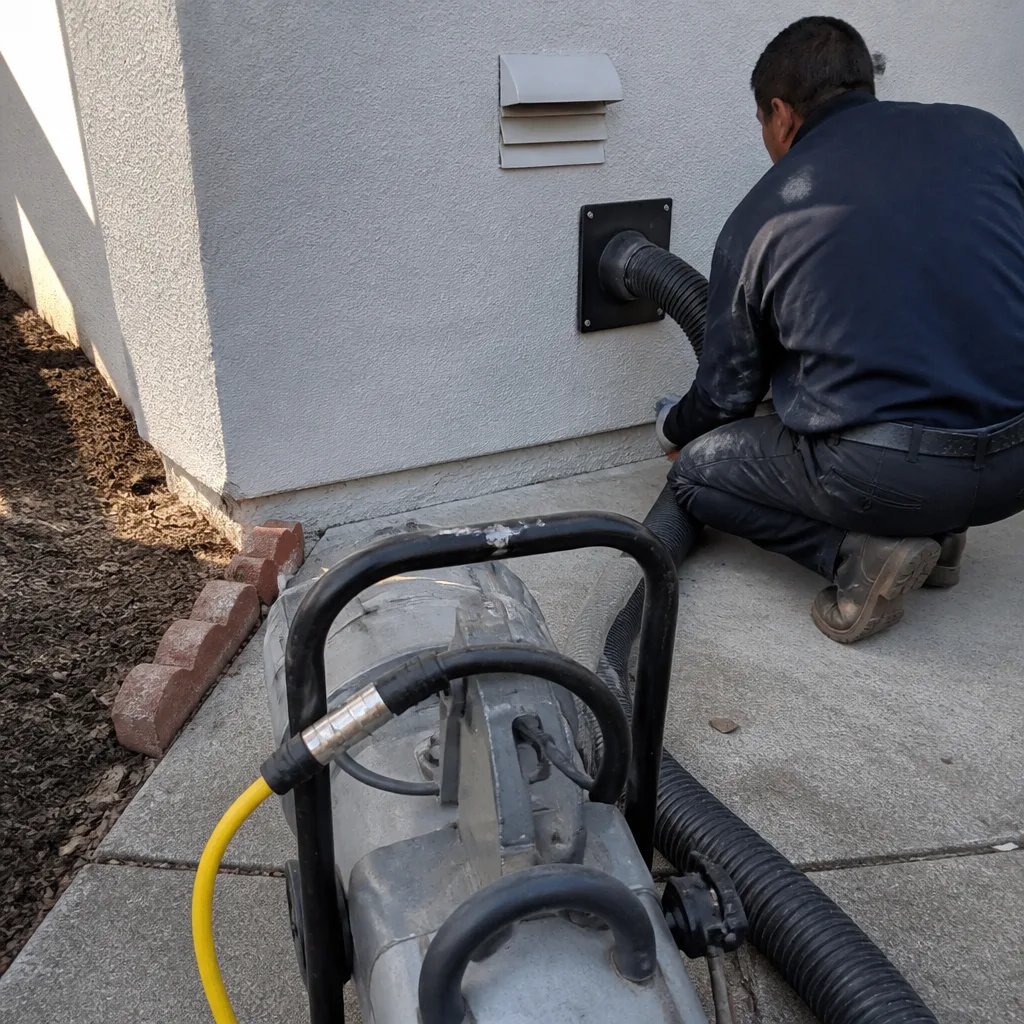
- Also strongly consider professional equipment for anything involving your clothes dryer: The vent line running from your dryer to the outside is a lint trap, and it’s a fire source. Lint is combustible by design, and a clogged line raises the dryer’s operating temperature. We treat this as a dedicated fire-prevention service, not a checkbox on a cleaning form. See our Dryer Vent Cleaning in Dublin page for what this involves.
The honest version: most duct troubleshooting that finds the actual answer ends with professional equipment. Homeowners who try to fix their own ducts with a shop vac and a YouTube video end up pushing dust deeper into the system and calling us anyway. The trick is knowing which checks are free and fast, which signals require a specialist, and which “problems” aren’t duct problems at all.
What Dublin’s Climate and Housing Stock Mean for Your Ducts
Dublin’s weather pattern – hot, dry summers with cool, damp winter mornings – creates specific conditions for duct systems. During summer, attics in Dublin regularly hit 140°F. Ductwork running through those attics sweats when the cool air inside meets the hot, humid exterior. That condensation is what feeds mold growth on the outside and inside of poorly insulated ducts. Homes in Dublin’s older neighborhoods, particularly those built before 1990, often have original duct systems that have never been sealed or insulated to current standards.
Winter brings a different problem. Cold mornings drop the attic temperature fast, and the metal ductwork contracts. Repeated expansion and contraction loosens joints and tears aging tape seals. By February, a system that was leaking 15% of its air in October might be leaking 30%. This seasonal cycling is why duct leaks in Dublin are progressive – they get worse every year until someone addresses them.
The Tri-Valley pollen load also plays a role. Spring in Dublin means oak, grass, and olive pollen, much of which is fine enough to pass through a standard fiberglass filter. That pollen settles in the ducts and on the coil, ready to redistribute when the AC fires up. For homes with allergy or asthma concerns, this seasonal reality makes regular Air Duct Cleaning in Dublin a medical-quality improvement, not just a maintenance task. And for homes with whole-house filtration from Aprilaire or Honeywell, keeping the ducts clean means those premium systems aren’t being asked to filter air that’s picking up debris after the filter. The duct system downstream of a Honeywell filter should be clean – otherwise you’re paying for a premium filter that protects a dirty system.
Common Mistakes to Avoid
- Booking a cleaning without a diagnosis. If the tech hasn’t asked questions or looked at the coil, the blower, and the duct condition, you’re paying for a process, not a solution. Insist on a visual inspection before agreeing to work.
- Treating a musty smell as a dirty duct problem. Moisture sources must be resolved before cleaning, or the smell returns and you blame the cleaning. It was never the cleaning’s job to fix a leak.
- Assuming uneven airflow means dirty ducts. Restricted airflow to one room is almost always a leak, a collapsed flex run, or a closed damper – none of which a cleaning resolves. Calling our Air Duct Repair in Dublin team is the move when airflow patterns change.
- Ignoring the filter bypass gap. A filter that doesn’t fit snug, or a cheap filter that has collapsed, lets unfiltered air hit the coil and ducts directly. You’ll be cleaning ducts every year and wondering why they keep getting dirty.
- Using a shop vac or consumer equipment on your own ducts. Without professional agitation and extraction, you’re not cleaning the ducts – you’re loosening debris and then either pushing it deeper or pulling it into your living room. The result is worse than doing nothing.
- Hiring on price alone in Dublin’s competitive market. The cheapest option usually means a single pass, no containment, and no camera inspection. When the price is too low, the equipment and the diagnosis are too thin, and you’ll pay twice.
- Assuming the first cleaning company was competent. If symptoms persist after a cleaning, don’t assume the original problem was unsolvable. Get a second opinion from a specialist who uses camera inspection and can show you what’s actually happening inside the system.
See the difference
 Before
 After
 Before
 After
 Before
 After
When to Call a Professional
Call a professional when you have a musty smell that hasn’t resolved after checking the condensate pan, a burning smell that isn’t just first-cycle dust burn-off, black dust that smears instead of flakes, airflow to specific rooms that has changed and isn’t a closed damper, or any noise from the ductwork that you can’t identify. Also call a professional if you have a dryer vent that hasn’t been cleaned in two or more years, or if your energy bills have crept up without a change in usage – both can indicate duct leaks or restrictions. Duct Cleaning Dublin offers free estimates in Dublin – call (855) 356-4417 to schedule an inspection.
Frequently Asked Questions
In Dublin, whole-system air duct cleaning typically ranges from $350 to $700 for a standard single-system home, depending on system size, number of vents, and condition. Homes with multiple HVAC systems, significant pet dander, or construction debris will run higher. Be wary of quotes under $200 – at that price, the company is likely doing a single pass with limited agitation and no containment, which is not a real cleaning. Call (855) 356-4417 for an exact quote based on your system.
Cheaper quotes usually mean cheaper equipment, no negative-air containment, fewer passes, and no camera inspection. A crew running a consumer-grade vacuum from a big-box store cannot achieve the agitation and extraction that professional systems deliver. The labor is roughly the same either way, so the price difference comes from what’s left out. In Dublin’s market, you’ll see quotes from $99 to $900 for the same house. They are not the same service.
Insist on before-and-after photos from inside the duct system. A professional crew using camera inspection equipment can show you the condition of the trunk line and representative branches before and after the cleaning. If a company refuses to provide photos, or hands you a bill with no visual proof, you have no way to verify the work. We provide before-and-after documentation on every cleaning we perform in Dublin.
Every three to five years for most Dublin homes, with several exceptions. Homes with shedding pets, recent remodeling, asthma or allergy concerns in the family, or nearby construction should consider every two to three years. Homes with whole-house filtration from Aprilaire or Honeywell can often extend the interval slightly, because the system is catching more particulate before it reaches the ducts. The honest answer from a company that isn’t commission-driven: clean when inspection shows accumulation, not on a fixed advertising schedule.
Yes, in a specific way. The ducts themselves don’t manufacture allergens, but they act as a reservoir. Pollen, pet dander, and dust mite particulate settle in the ductwork during calm periods and re-enter the airflow every time the blower runs. A person with allergic sensitivity is then getting a steady micro-dose of what they’re reactive to, all day, in every room. Cleaning the ducts plus upgrading filtration is the standard protocol for reducing this exposure in Dublin homes.
No. A proper duct specialist handles all three. The advantage is diagnostic continuity: the person who sees your ducts with a camera during a cleaning is the same person who can identify a leak, a collapsed flex run, or a disconnected section and recommend the correct repair. Companies that only clean will often not mention damage they can’t fix. Companies that only repair won’t clean the debris first. We handle cleaning, repair, and dryer vent work as distinct services under one roof, which means you get one diagnosis, not three opinions.
The Bottom Line
Duct troubleshooting is symptom-matching, not guesswork. A musty smell is moisture. Uneven airflow is a leak or collapse. Black dust is usually candle soot or dust shadowing, not mold. A dusty smell that returns months after a cleaning is a filter or coil problem, not a failed cleaning. The homeowner who learns these distinctions before making a call is the homeowner who pays for the right fix once, not the wrong fix twice. Dublin’s climate, housing stock, and pollen load make all of these problems more likely here than in other parts of the country, which means the local market is full of both genuine specialists and cut-rate crews running shop vacs. For more guides & resources on keeping your system healthy, visit our blog. Know the difference before you book. If you’ve read this far and you recognize your symptom in these pages, call (855) 356-4417 for a free estimate from a Dublin duct specialist who owns the equipment to actually diagnose and fix it.
Written by the team at Duct Cleaning Dublin, serving Dublin since 2017.